
AFOQT Study Guide: Essential Materials for Every Subtest 2026 September
🎓 Prepare for the AFOQT Study Guide: Essential Materials certification. Practice questions with answer explanations covering all exam domains.

Choosing the right AFOQT study materials can feel overwhelming when you're staring down an exam with 12 distinct subtests. The Air Force Officer Qualifying Test covers everything from verbal analogies and arithmetic reasoning to instrument comprehension and aviation knowledge — and each section demands a different kind of preparation. That's why having a targeted afoqt study guide matters more than cramming random facts into your brain the night before test day.
Whether you're a college senior eyeing an Air Force commission or an enlisted member looking to cross over, you need study materials that match how the real exam works. The AFOQT isn't a single-subject test. It generates composite scores — Pilot, Combat Systems Officer, Academic Aptitude, Verbal, and Quantitative — and your results shape which career fields open up. A scattered approach won't cut it here. You need structure, and that starts with picking the right resources.
This page breaks down every major resource type: books, PDFs, online platforms, and free options. We'll cover how to build a study schedule, what the best-rated guides actually contain, and how to use afoqt study tools to simulate real test conditions. If you've been wondering how to study for the AFOQT without wasting weeks on the wrong material, you're in the right spot. Let's get into it.

Before you pick up a single book, understand what effective afoqt study actually looks like. It's not about reading cover to cover — it's about diagnosing your weak subtests and hammering those first. Most candidates already have a natural advantage in either verbal or quantitative sections. Your job is to figure out which side needs more attention and allocate your hours accordingly. Take a diagnostic test early so you're working from real data, not guesses.
Many candidates search for an afoqt study guide pdf they can download and start using immediately. That's a reasonable instinct — digital resources are portable and often free. But PDFs vary wildly in quality. Some are outdated versions of prep books with incorrect answer keys. Others are solid summaries put together by military prep communities. The key is verifying the source. Official Air Force education offices sometimes distribute prep materials, and those carry more weight than random uploads on file-sharing sites.
A strong study plan mixes reading with active recall. Don't just highlight passages in your guide — close the book and quiz yourself. Write out formulas from memory. Sketch instrument panels without looking at references. Active engagement beats passive reading every time, and that's true whether you're using a $40 book or a free online resource. The candidates who score highest almost always credit active practice over passive study.
Finding the best afoqt study guide means matching the resource to your learning style and timeline. Some candidates prefer thick, all-in-one prep books that cover every subtest with explanations and practice sets. Others do better with focused workbooks — one for math, one for verbal, one for aviation. There's no single "right" answer, but there are a few guides that consistently get high marks from test-takers who've actually passed.
The most popular afoqt study guides on the market include titles from Barron's, Trivium, and Accepted Inc. Each takes a slightly different approach. Barron's leans heavy on practice questions with detailed answer explanations. Trivium focuses on concise content review with test-taking strategies built in. Accepted Inc. sits somewhere in the middle, offering readable overviews plus diagnostic exams. If you want a downloadable option, searching for an afoqt study guide pdf from a verified publisher is your safest bet.
Don't overlook community-created resources either. Military forums and Reddit's r/AirForce have threads where successful candidates share their exact study plans, favorite chapters, and the resources they wish they'd skipped. Real-world reviews from people who've sat for the exam tend to be more useful than generic product descriptions on retail sites.
Top Study Guides Compared
Barron's AFOQT guide is one of the most widely recommended prep books on the market. It includes full-length practice tests with detailed answer explanations for every question. The content review sections cover all 12 subtests, though the math and science chapters tend to be the strongest. Expect around 600 pages of material. Best for candidates who want extensive practice and don't mind a dense reading experience. The latest edition includes updated aviation content reflecting current exam formatting.
If you're wondering how to study for the afoqt efficiently, start by mapping out your available weeks. Most successful candidates spend between four and eight weeks preparing, depending on their baseline knowledge. Rushing through material in under three weeks usually leads to weak spots — especially in quantitative subtests where you need formula recall and pattern recognition under time pressure.
An afoqt study guide 2024 edition will cover the same core content as earlier versions, with minor updates to question formatting and aviation topics. The test structure itself hasn't changed dramatically in recent years. If you find a 2023 or 2024 guide on sale, it's still perfectly valid. What matters more than the publication year is how well the guide explains concepts and whether its practice questions match actual exam difficulty.
Build your schedule around daily 60 to 90 minute sessions rather than marathon weekend study blocks. Spaced repetition — reviewing material at increasing intervals — is more effective than binge-studying. Monday might be verbal subtests, Tuesday math, Wednesday science, Thursday aviation. Rotate through subtests so nothing goes stale. And always reserve one full day per week for a timed practice test to build your endurance.
Picking the right afoqt study material depends on where you are right now. If you haven't touched math since high school, start with the fundamentals — fractions, percentages, basic algebra — before jumping into AFOQT-specific content. There's no shame in spending a week just refreshing core skills. Trying to learn AFOQT test strategies on top of shaky math foundations is like building a house on sand.
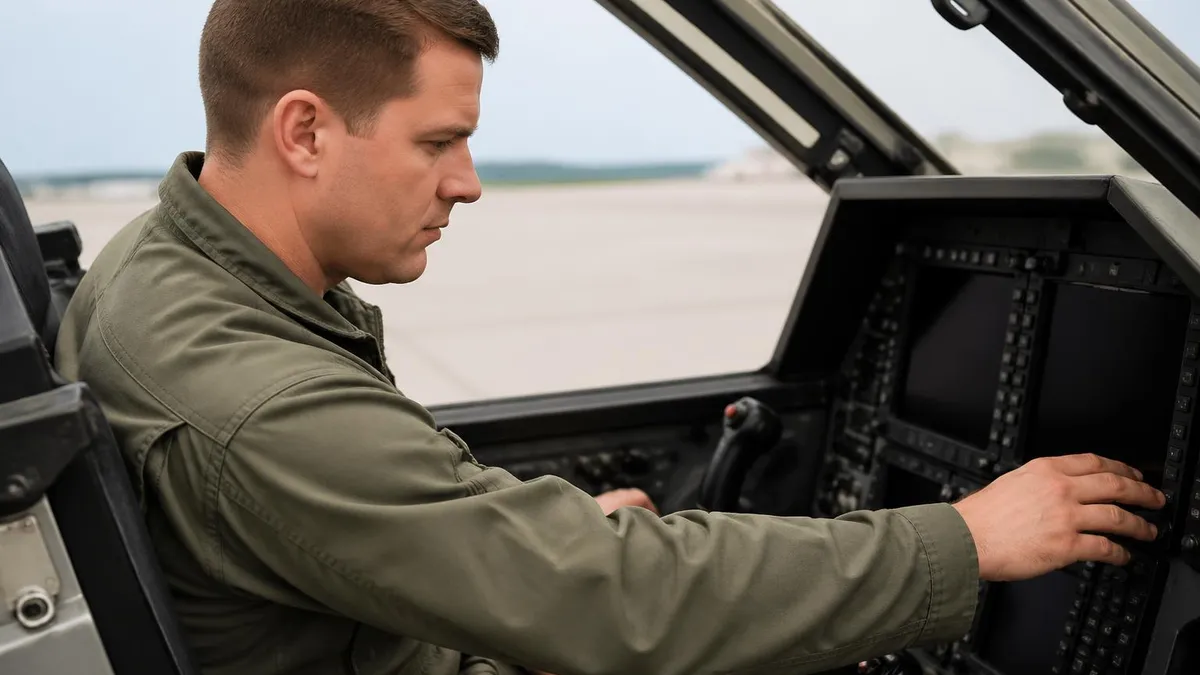
When you're figuring out how to study for afoqt aviation subtests, prioritize visual learning. The Instrument Comprehension section shows you cockpit gauges and asks what the aircraft is doing. You can't learn this from text alone. Watch YouTube tutorials on reading altimeters, attitude indicators, and heading indicators. Find interactive instrument trainers online. If you know any pilots, ask them to walk you through basic flight instruments. Hands-on exposure makes these questions click in ways that reading never will.
Table Reading and Block Counting subtests reward speed and spatial reasoning. For Table Reading, practice scanning rows and columns under time pressure — set a phone timer and drill. Block Counting requires you to count hidden blocks in 3D figures, which is a trainable skill. Start slow, build accuracy, then layer in speed. Many candidates skip these subtests during prep because they seem "easy," but the time constraints make them surprisingly tricky on test day.
Pros & Cons of Study Methods
- +Prep books offer structured, all-in-one coverage of every subtest
- +Online practice tests let you simulate real exam timing and format
- +Study groups provide accountability and peer explanations
- +Free resources make AFOQT prep accessible regardless of budget
- +Flashcard apps enable quick review sessions during downtime
- +Video tutorials make aviation and spatial subtests much easier to grasp
- −Some prep books contain outdated questions that don't match current formatting
- −Free online resources can be inconsistent in quality and accuracy
- −Self-study requires discipline without external accountability
- −Over-relying on one resource can leave blind spots in weaker areas
- −Generic study schedules may not fit your personal timeline or pace
- −Digital distractions make online-only studying harder to sustain
You'll find plenty of candidates recommending a specific afoqt study book as "the one" that got them through. Barron's afoqt study guide tends to dominate those conversations, and for good reason — it's been around for years, gets regular updates, and packs in more practice questions than most competitors. The latest edition runs about 500 pages with three full-length practice exams. It's dense but effective if you commit to working through it systematically rather than skipping around.
That said, Barron's isn't the only option worth your money. Trivium and Mometrix both offer solid alternatives at lower price points. Trivium is great for candidates who want less fluff and more direct review. Mometrix includes online access to bonus content and video tutorials, which helps if you prefer visual learning. Whatever you pick, make sure it was published within the last three years — anything older might reference deprecated question types.
Budget-conscious? You don't need to buy anything at all. Your base education center likely has AFOQT prep materials you can borrow. Public libraries carry Barron's and Kaplan guides. And free online question banks — like the ones on this site — let you practice under timed conditions without spending a dime. A mix of one good book plus free practice tests is the sweet spot for most candidates.
AFOQT Preparation Checklist
- ✓Take a diagnostic practice test to identify your weakest subtests
- ✓Select one primary study guide covering all 12 subtests
- ✓Create a 4-8 week study schedule with daily 60-90 minute sessions
- ✓Gather supplemental resources for your weakest areas (videos, flashcards)
- ✓Review arithmetic reasoning formulas and practice word problems daily
- ✓Study cockpit instruments and aviation terminology with visual aids
- ✓Complete at least two full-length timed practice exams before test day
- ✓Practice Table Reading and Block Counting under strict time limits
- ✓Review Situational Judgment scenarios and Air Force core values
- ✓Schedule your exam date and confirm testing location with your recruiter
One question pops up constantly: how long should i study for the afoqt? The honest answer is it depends on your starting point. If you scored well on the SAT or ACT, your verbal and math foundations are probably solid and four weeks might be enough. If it's been years since you've done academic testing, give yourself six to eight weeks minimum. Rushing leads to careless mistakes on subtests where timing is already tight.
If you're hunting for an afoqt study guide free of charge, you've got options. Military OneSource and Air Force education offices sometimes distribute digital study packets. Several test prep sites offer free question banks, including this one. The quality won't always match a $30 book, but free resources work perfectly as supplements. Use them for additional practice reps after you've reviewed the core material in your primary guide.
Here's a timing framework that works for most candidates. Weeks one and two: content review across all subtests, spending more time on weak areas. Weeks three and four: shift to practice tests and timed drills. Weeks five and six (if available): focus exclusively on your two weakest subtests and take one full-length practice exam per week. The final three days before the test: light review only, no new material, and get solid sleep. Cramming the night before does more harm than good.
When it's finally time to study for afoqt in earnest, your daily routine matters as much as your material. Find a quiet spot, silence your phone, and set a timer. Focused 60-minute blocks beat distracted three-hour sessions every time. If you're studying after a full workday or training, keep sessions shorter but stay consistent. Skipping two days in a row makes it hard to rebuild momentum.
People asking how long to study for afoqt often underestimate the aviation sections. If you don't have a flight background, Instrument Comprehension and Aviation Information will take the most effort. These aren't subtests you can fake — you either know what an attitude indicator shows or you don't. Dedicate extra time here if aviation concepts are new to you. Watch YouTube breakdowns, study instrument panels, and take as many practice questions as you can find.
Your final week should be about confidence, not panic. Review your notes, retake the questions you got wrong on practice tests, and make sure you know the logistics — where to report, what to bring, and what the test-day timeline looks like. The AFOQT is long and mentally exhausting, so going in rested and organized gives you an edge that no study guide can replace.
Pack your bag the night before — ID, pencils, a water bottle, and a snack for any breaks. Arrive early so you're not rushing. Trust your preparation and execute on test day the same way you performed during your best practice sessions.
You get a maximum of two retakes (three total attempts) in your lifetime, and there's a mandatory 150-day waiting period between each attempt. Your most recent scores replace previous ones — they don't average. This means a bad retake can erase a decent first score. Only retake if you have a clear plan to improve significantly. Make sure you've addressed your weak subtests before scheduling another attempt.
If you've been using an afoqt study guide 2023 edition, don't worry — the content is still relevant. The AFOQT doesn't change dramatically between testing years. Question types, time limits, and scoring composites remain consistent. A 2023 guide covers the same 12 subtests with the same structure you'll see on your exam date. The main differences in newer editions are updated practice questions and minor formatting adjustments that don't affect your preparation strategy.
What does matter is how you use whatever guide you've chosen. Passive reading — highlighting, re-reading chapters — creates an illusion of learning without actual retention. Active recall is the technique that works. After reading a chapter on arithmetic reasoning, close the book and solve ten problems from memory. After reviewing aviation instruments, sketch an attitude indicator and label its components. Testing yourself is uncomfortable but dramatically more effective than just reading.
Combine your study guide with practice tests for the best results. A book teaches you concepts; practice tests teach you timing, endurance, and the skill of reading under pressure. Most candidates find that their first full-length practice exam is a rude awakening — they run out of time on multiple subtests. That's exactly why practice tests matter. Better to discover your timing gaps in a low-stakes environment than on the real exam day.
AFOQT Practice Test Questions
Prepare for the AFOQT - Air Force Officer Qualifying Test exam with our free practice test modules. Each quiz covers key topics to help you pass on your first try.
AFOQT General Science Biology and Chemistry
AFOQT Exam Questions covering AFOQT General Science Biology and Chemistry. Master AFOQT Test concepts for certification prep.
AFOQT Officer Aptitude Rating and Leadership
Free AFOQT Practice Test featuring AFOQT Officer Aptitude Rating and Leadership. Improve your AFOQT Exam score with mock test prep.
AFOQT - Air Force Officer Qualifying Arith...
AFOQT Mock Exam on - Air Force Officer Qualifying Arithmetic Reasoning Word Problems. AFOQT Study Guide questions to pass on your first try.
AFOQT - Air Force Officer Qualifying Aviat...
AFOQT Test Prep for - Air Force Officer Qualifying Aviation Information Concepts. Practice AFOQT Quiz questions and boost your score.
AFOQT - Air Force Officer Qualifying Block...
AFOQT Questions and Answers on - Air Force Officer Qualifying Block Counting Spatial Apperception. Free AFOQT practice for exam readiness.
AFOQT - Air Force Officer Qualifying Instr...
AFOQT Mock Test covering - Air Force Officer Qualifying Instrument Comprehension. Online AFOQT Test practice with instant feedback.
AFOQT - Air Force Officer Qualifying Mathe...
Free AFOQT Quiz on - Air Force Officer Qualifying Mathematical Knowledge Principles. AFOQT Exam prep questions with detailed explanations.
AFOQT - Air Force Officer Qualifying Physi...
AFOQT Practice Questions for - Air Force Officer Qualifying Physical Science Principles. Build confidence for your AFOQT certification exam.
AFOQT - Air Force Officer Qualifying Readi...
AFOQT Test Online for - Air Force Officer Qualifying Reading Comprehension Skills. Free practice with instant results and feedback.
AFOQT - Air Force Officer Qualifying Situa...
AFOQT Study Material on - Air Force Officer Qualifying Situational Judgment Scenarios. Prepare effectively with real exam-style questions.
AFOQT - Air Force Officer Qualifying Table...
Free AFOQT Test covering - Air Force Officer Qualifying Table Reading Skills. Practice and track your AFOQT exam readiness.
AFOQT - Air Force Officer Qualifying Verba...
AFOQT Exam Questions covering - Air Force Officer Qualifying Verbal Analogies. Master AFOQT Test concepts for certification prep.
Using an afoqt study guide 2023 as your foundation is perfectly fine, but supplement it with current practice questions to ensure you're seeing the latest question styles. Online question banks get updated more frequently than printed books, so they're your best bet for staying current. The subtests themselves — Verbal Analogies, Arithmetic Reasoning, Word Knowledge, and so on — haven't changed in structure, so a slightly older guide still teaches valid strategies.
One thing many candidates overlook is the Situational Judgment Test. It's not something you can cram for with flashcards. This section presents realistic military leadership scenarios and asks you to rank responses. The best preparation is reading about Air Force core values — integrity first, service before self, excellence in all we do — and thinking through how those values apply to interpersonal conflicts, team dynamics, and ethical dilemmas. Practice tests help here too, because they expose you to the kinds of scenarios the test writers favor.
Finally, don't underestimate test-day logistics. Know where your testing center is and do a dry run if possible. Bring two forms of ID. Get eight hours of sleep the night before — not six, not seven, eight. Eat a solid breakfast with protein and complex carbs. The AFOQT is a four-and-a-half-hour marathon, and your brain needs fuel to perform at its best through those final subtests. Preparation isn't just about content — it's about showing up physically and mentally ready to perform.
AFOQT Questions and Answers


About the Author
Retired Military Officer & Armed Forces Test Preparation Specialist
United States Army War CollegeColonel Steven Harris (Ret.) served 28 years in the US Army, earning a Master of Arts in Military Science from the Army War College and a Bachelor of Science in Criminal Justice. He has coached thousands of military enlistment and officer candidate program applicants through the ASVAB, AFQT, AFCT, OAR, and officer selection assessment processes across all military branches.