
AFCAT Mock Test 2026 September: Free Practice Tests for Air Force Common Admission Test
Take free AFCAT mock tests covering all subjects. 🎯 Practice with real exam-style questions, track scores, and boost your Air Force admission prep.

The AFCAT mock test is the single most effective preparation tool for candidates aiming to join the Indian Air Force through the Air Force Common Admission Test. Scoring well on the AFCAT requires not only content knowledge but also speed, accuracy, and strategic time management — qualities that can only be developed through repeated, timed practice under exam-like conditions. Our free mock tests replicate the actual AFCAT structure, giving you an authentic rehearsal experience before the real examination day arrives.
AFCAT is conducted twice a year by the Indian Air Force to select officers for Flying, Ground Duty (Technical), and Ground Duty (Non-Technical) branches. The competition is fierce, with hundreds of thousands of applicants vying for a limited number of positions. A strong mock test regimen helps you identify knowledge gaps early, prioritize weaker subjects, and build the mental stamina required to sustain peak performance across the full two-hour examination window without fatigue or panic setting in.
One of the greatest advantages of practicing with a structured afcat mock test series is immediate feedback. Unlike traditional study from textbooks, online mock tests give you detailed performance analytics — section-wise accuracy rates, average time per question, and comparative percentile scores. This data-driven insight lets you pivot your study plan dynamically, spending more time on areas like Numerical Ability or Military Aptitude where your accuracy may be lagging behind the competitive threshold.
Our practice tests cover every section of the AFCAT syllabus including Verbal Ability in English, Numerical Ability, Reasoning and Military Aptitude, and General Awareness. Each question is designed at difficulty levels that mirror the real exam, drawing from previous years' papers, official model questions, and expert-curated problem banks. Whether you are a first-time test-taker or preparing for your second attempt, consistent mock test practice is the bridge between theoretical knowledge and exam-day execution.
Time management is arguably the most underrated skill in AFCAT preparation. The exam presents 100 questions in 120 minutes, which sounds generous until you encounter a tricky passage comprehension question or a multi-step numerical problem that eats through five minutes before you realize it. Mock tests train you to make real-time triage decisions — which questions to attempt first, which to skip and return to, and when to cut your losses on a problem that is consuming too much of your limited time budget.
Beyond individual scoring, mock tests serve as a calibration tool for understanding the competitive landscape. AFCAT cut-off scores fluctuate each cycle based on the number of vacancies and overall candidate performance. By tracking your mock test scores over multiple attempts and comparing them against published cut-offs from previous cycles, you can gauge exactly how far your current preparation level is from the mark you need to hit. This realistic benchmark is far more motivating — and accurate — than generic study checklists.
Consistency matters more than intensity in mock test preparation. Candidates who take one timed mock test per week over a 10–12 week preparation period consistently outperform those who cram dozens of tests into the final two weeks before the exam. Spaced practice allows for proper review, targeted rework of error patterns, and genuine skill consolidation. Use this page as your central hub for structured AFCAT mock testing, and treat each practice session as a low-stakes rehearsal for the high-stakes real thing.
AFCAT Mock Test Preparation by the Numbers

AFCAT Exam Format & Structure
| Section | Questions | Time | Weight | Notes |
|---|---|---|---|---|
| Verbal Ability in English | 30 | ~36 min | 30% | Comprehension, grammar, vocabulary |
| Numerical Ability | 15 | ~18 min | 15% | Arithmetic, algebra, data interpretation |
| Reasoning & Military Aptitude | 35 | ~42 min | 35% | Verbal, non-verbal, spatial reasoning |
| General Awareness | 20 | ~24 min | 20% | Current affairs, history, science, defense |
| Total | 100 | 2 hours | 100% |
Understanding how to use mock tests strategically is what separates high-scoring AFCAT candidates from those who merely put in hours without seeing proportional improvement. The most common mistake is treating mock tests purely as a measuring tool — something you take, glance at the score, and move on from. In reality, the review phase after each test is at least as important as the test itself. Every wrong answer is a diagnostic data point that tells you something specific about where your preparation needs reinforcement.
Start your mock test journey with a diagnostic attempt — take one full-length test under timed conditions before you have done any significant topic-wise preparation. Yes, your score will be low, and that is completely fine. This baseline test reveals which sections you are naturally strongest in and which areas are likely to require the most preparation hours. Many candidates are surprised to discover that their assumed weak areas are not as bad as they feared, while sections they felt confident about reveal unexpected gaps when confronted with exam-style questions.
After each timed mock test, perform a methodical review using the three-bucket system. Sort every question into one of three categories: questions you got right and understood fully, questions you got wrong due to a knowledge gap, and questions you got wrong despite knowing the concept — likely due to careless errors or misreading. The second bucket informs your topic-revision schedule. The third bucket is often more actionable: small habit changes like reading questions twice or double-checking calculations before confirming your answer can eliminate this entire error category relatively quickly.
Section pacing is a critical skill that only develops through repeated mock test practice. Most AFCAT toppers recommend a specific sequence: start with General Awareness to bank easy marks quickly, then move to Verbal Ability, follow with Reasoning and Military Aptitude, and tackle Numerical Ability last since those questions tend to be the most time-intensive. Practice this sequence in every mock test so it becomes automatic on exam day, reducing the cognitive load of decision-making when you are under time pressure.
Difficulty calibration is another benefit of mock testing that is rarely discussed. AFCAT question difficulty is not uniform — within each section, there is a mix of straightforward questions that should take under 30 seconds and complex problems that could absorb 2–3 minutes. Learning to identify question difficulty within the first 10–15 seconds of reading, and making an instant decision about whether to attempt now, flag for later, or skip entirely, is a metacognitive skill that directly translates into higher scores. Mock tests are the training ground for building this rapid-fire judgment.
Track your performance across at least 8–10 full-length mock tests using a simple spreadsheet. Record your total score, section-wise scores, number of attempts, number of correct answers, and total time taken. Over time, you will see clear trends — perhaps your Numerical Ability score improves steadily while Verbal Ability plateaus, signaling that your English comprehension strategy needs a fresh approach. Data from your own performance history is far more valuable than generic advice, because it is personalized to your specific strengths and weaknesses.
Mock tests also serve a crucial psychological function: desensitization to exam pressure. Many candidates know the material well but underperform on exam day due to anxiety, time panic, or the psychological weight of high-stakes performance. By simulating exam conditions repeatedly — same time constraints, no interruptions, phone away, question paper only — you train your nervous system to treat the real exam as just another familiar practice session. This psychological preparation is intangible but enormously impactful on your final score.
Subject-Wise AFCAT Preparation Strategy
Verbal Ability in English accounts for 30 questions and is often the highest-scoring section for candidates with strong reading habits. Focus on reading comprehension passages — practice identifying the main idea, inferring the author's tone, and answering detail-based questions quickly without re-reading the full passage. Grammar topics tested include articles, prepositions, subject-verb agreement, and sentence correction. Vocabulary questions typically draw from a medium-difficulty word bank, so daily reading of quality newspapers or magazines is one of the most efficient preparation strategies available.
For error-spotting and sentence improvement questions, study common grammatical error patterns systematically rather than trying to memorize every rule. The most frequently tested grammar errors in AFCAT include misplaced modifiers, incorrect pronoun case, faulty parallelism, and wrong use of conjunctions. Practice at least 20–30 sentence correction questions daily during your preparation weeks, and always note the specific rule violated in each wrong sentence. After four to five weeks of this practice, you will begin recognizing error patterns almost instantly, which dramatically speeds up your per-question time in this section.

AFCAT Online Mock Tests vs. Offline Practice Papers
- +Instant scoring and detailed section-wise performance analytics after each attempt
- +Simulates the actual Computer Based Test interface candidates will use on exam day
- +Tracks progress across multiple attempts to reveal improvement trends over time
- +Allows question flagging and review exactly as permitted in the real AFCAT exam
- +Accessible 24/7 from any device, eliminating the need to source and print physical papers
- +Adaptive difficulty in premium platforms adjusts to your level for more targeted practice
- −Screen fatigue can build up during long practice sessions, affecting concentration and accuracy
- −Requires a stable internet connection, which may be unreliable in some regions or during outages
- −Free mock test platforms may have outdated question banks not reflecting current AFCAT trends
- −Without self-discipline, it is easy to pause, look up answers, or retake without genuine effort
- −Paper-based practice helps reinforce handwriting-based spatial visualization in some question types
- −Over-reliance on score percentages can obscure qualitative error patterns that need review
AFCAT Mock Test Preparation Checklist
- ✓Complete at least one full diagnostic mock test before beginning topic-wise preparation to establish a baseline score.
- ✓Take a minimum of one timed, full-length mock test per week throughout your 10–12 week preparation period.
- ✓Review every wrong answer in detail, identifying whether the error was a knowledge gap or a careless mistake.
- ✓Track section-wise scores across all attempts in a spreadsheet to identify persistent weak areas.
- ✓Practice the recommended question sequence — General Awareness first, Numerical Ability last — in every mock test.
- ✓Simulate real exam conditions: quiet environment, no phone, water only, strict 120-minute timer.
- ✓Attempt all Aviation and Aeronautics practice tests if applying for the Flying Branch officer track.
- ✓Review current affairs from the past six months before each mock test sitting to sharpen General Awareness.
- ✓Practice speed-calculation techniques for percentage, ratio, and profit/loss problems to improve Numerical Ability pace.
- ✓Compare your mock test scores against previous years' AFCAT cut-off scores to calibrate your competitive standing.

The 3-Mark Rule Changes Everything
Each correct AFCAT answer earns 3 marks while each wrong answer costs 1 mark — a 4-point swing per question. This asymmetry means that attempting a question you are only 30% confident about is a mathematically losing strategy. Mock tests train you to calibrate your confidence threshold accurately, so you know precisely when to attempt and when to skip. Candidates who master this selective-attempt discipline typically outscore those who attempt all 100 questions by a significant margin.
Understanding AFCAT scoring mechanics is essential for any candidate who wants to approach the exam strategically rather than just working hard in the general direction of preparation. The total marks for AFCAT stand at 300, with each of the 100 questions carrying 3 marks for a correct response and a penalty of 1 mark for an incorrect one.
This means that a candidate who attempts 80 questions and gets 65 correct will score 195 minus 15, for a net total of 180 marks — while a candidate who attempts all 100 questions with 70% accuracy will score 210 minus 30, for a total of 180 marks as well. The math equalizes, which means reckless guessing on uncertain questions provides no advantage.
AFCAT cut-off scores are not fixed — they vary by cycle, by branch, and by year. Historically, the overall cut-off for Ground Duty branches has ranged from 130 to 155 out of 300, while the Flying Branch typically demands a higher performance threshold since candidates must also qualify in AFSB.
Published cut-off data from the past four to six AFCAT cycles should be your reference point when evaluating your mock test scores. If you are consistently scoring above 180 in your mock tests, you are well positioned. If you are hovering near the historical cut-off range, you have identified a gap that requires aggressive remediation in your weakest sections.
Percentile scores matter as much as raw marks in competitive examinations like AFCAT. A score of 160 out of 300 might sound modest in absolute terms, but if 60% of all candidates scored below 160 in a given cycle, that performance places you in a comfortable competitive position for Ground Duty branches. This is why tracking your performance relative to a simulated cohort — something premium mock test platforms provide through percentile rankings — is more informative than tracking your absolute score alone. Raw score tells you how you did; percentile tells you where you stand.
Section-wise analysis reveals a pattern that surprises many first-time AFCAT takers: Reasoning and Military Aptitude, despite being the largest section, is often where candidates leave the most marks on the table not through ignorance but through mismanaged time. With 35 questions requiring diverse cognitive skills — from verbal analogy to spatial rotation — candidates often find themselves spending disproportionate time on difficult non-verbal questions while neglecting the straightforward verbal reasoning problems they could answer in under 30 seconds. Mock test analytics help you identify this time-distribution imbalance and correct it before it costs you marks in the real exam.
General Awareness is the one section where your score is almost entirely determined by preparation that happens outside the mock test itself. Reading quality newspapers, following defense and aviation news, reviewing Indian history and geography, and staying current with major scientific and technological developments are the inputs that determine your General Awareness output. However, mock tests still serve a purpose here: they expose the specific sub-topics that appear most frequently in AFCAT General Awareness questions, allowing you to prioritize your reading and revision around the highest-yield areas rather than trying to cover all of general knowledge comprehensively.
Score improvement trajectories follow a predictable pattern across successful AFCAT candidates. The first two or three mock tests typically show rapid score improvements as you become familiar with the question format, interface, and pacing requirements. Improvement then plateaus for several tests as the easy gains are exhausted and the remaining growth requires genuine subject-matter remediation.
Candidates who persist through this plateau phase with deliberate topic-focused practice break through to a second improvement curve in weeks seven through ten of preparation. If your scores have been stagnant for more than two weeks, it is a signal to change your preparation strategy, not to work harder at the same approach.
The relationship between mock test performance and AFSB (Air Force Selection Board) performance is worth understanding for Flying Branch aspirants. AFSB is a five-day assessment that evaluates Officer Like Qualities through psychological tests, group tasks, and interviews. A strong AFCAT written score is your entry ticket to AFSB, but success at AFSB depends on qualities that are harder to prepare for through mock tests alone. That said, candidates who score significantly above the AFCAT cut-off have more flexibility in the AFSB process, since their written performance demonstrates the academic and analytical aptitude the Air Force requires at the officer level.
AFCAT deducts 1 mark for every wrong answer against a reward of 3 marks for a correct one. Never guess randomly on questions where you have no basis for elimination. If you can confidently eliminate two of the four options, the probability math favors attempting; if you cannot eliminate any options, skip the question and return only if time permits. Developing accurate confidence calibration through mock tests is the best protection against costly guessing errors.
Common mistakes in AFCAT preparation are well-documented across the community of successful candidates, and most of them are entirely avoidable once you know what to watch for. The single most damaging mistake is starting mock test practice too late in the preparation timeline.
Many candidates spend the first eight weeks buried in textbooks and notes, intending to start mock tests in the final two weeks before the exam. By then, there is no time for meaningful review, error pattern analysis, or strategic adjustment. Mock tests should begin within the first two weeks of preparation, even when your content knowledge is still incomplete.
Selective section practice is another preparation pitfall. Some candidates take only section-wise mini-tests rather than full-length timed mock tests, reasoning that they can focus on weak areas more efficiently. While section-wise practice has its place, it cannot replace full-length simulation. Pacing across sections, mental stamina across the full 120 minutes, and the strategic decision of how to allocate time when you are running short — these skills can only be developed through end-to-end practice. Never substitute section drills for full mock tests; use them as supplements, not replacements.
Neglecting the review phase is perhaps the most common mistake among serious AFCAT candidates. After a tiring 120-minute test, reviewing wrong answers feels exhausting and unrewarding compared to simply noting the score and moving on. But without systematic review, you are condemned to repeat the same errors indefinitely. Set aside a mandatory review block of at least 45–60 minutes immediately after each mock test, while the questions and your reasoning are still fresh in memory. This is when the learning actually happens — the test itself just generates the data.
Over-focusing on a single section at the expense of others creates an unbalanced score profile that can hurt overall performance even when individual section scores look strong. AFCAT does not have published section-wise cut-offs (unlike some other competitive exams), but extremely low performance in any single section signals weaknesses that can drag down your total. A balanced preparation strategy — one that allocates study time proportionally to section weight and personal weakness — is more reliable than becoming expert-level in one section while neglecting others.
Ignoring Aviation and Aeronautics preparation is a critical oversight for candidates applying to the Flying Branch. While aviation questions are primarily tested in the AFCAT EKT (Engineering Knowledge Test) for technical roles, General Awareness questions with aviation and defense content appear across all candidate categories. Familiarity with basic aeronautics principles, aircraft nomenclature, Indian Air Force history, and major aviation milestones gives you an edge in both the General Awareness section and any defense-oriented questions that appear in Reasoning and Military Aptitude scenarios.
Using outdated question banks is a risk that candidates who rely exclusively on old paper books or unofficial apps face. AFCAT question patterns evolve subtly from cycle to cycle, with shifts in emphasis between topics, changes in the complexity of data interpretation questions, and occasional introduction of new question types. Using practice questions from the most recent three to four years of AFCAT papers ensures your preparation is calibrated to the current exam pattern. Cross-reference any mock test platform you use by checking whether their question bank has been updated within the last 12 months.
Finally, the mistake of poor test-day simulation undermines even the most rigorous mock test schedule. If you consistently take mock tests while pausing to check your phone, taking breaks mid-test, or working in noisy environments with frequent interruptions, you are not building the focus and stamina that exam day demands. The real AFCAT is administered in a computer lab with strict proctoring, no breaks, and full two-hour continuous concentration required. Simulate these conditions from your very first mock test, and the real exam will feel like familiar territory rather than a stressful new experience.
Practical preparation tips from candidates who have successfully cleared AFCAT reveal a consistent set of habits and strategies that go beyond generic advice. One pattern stands out immediately: successful candidates treat the last two weeks before the exam as a consolidation phase, not an intensification phase. Rather than attempting to learn new topics or cover previously neglected areas, they focus exclusively on reviewing their mock test error logs, doing light refresher practice on already-mastered topics, and ensuring peak physical and mental readiness. Cramming new material in the final fortnight typically increases anxiety without producing proportional score gains.
Subject-matter resources matter, but they need to be finite. One of the most common traps in competitive exam preparation is resource hopping — starting with one study guide, switching to another after a week, then adding a third app, then buying a fourth book. This creates an illusion of activity while actually diluting focus.
For AFCAT, choose a maximum of two reference books, one reputable online platform for mock tests, and one newspaper for daily current affairs. Stick to this resource stack for your entire preparation period. Depth of practice with a focused set of materials consistently outperforms breadth of exposure to many different sources.
Physical fitness should not be entirely sidelined during AFCAT written preparation, particularly for candidates who intend to eventually clear AFSB and join the Indian Air Force. Regular exercise improves cognitive performance, reduces exam anxiety, and builds the disciplined routine that high-stakes preparation demands. Even 30 minutes of jogging or structured exercise three to four times per week during your preparation period pays dividends in concentration quality during long study sessions and mock test attempts. The Air Force ultimately needs officers who are physically and mentally capable, and building both dimensions simultaneously is never wasted effort.
Current affairs preparation requires a different strategy than syllabus-based subjects. Unlike Mathematics or English, where mastery is built through practice, General Awareness is accumulated through sustained exposure over time. Start reading a quality newspaper daily from the very first week of preparation. Focus on sections covering national and international news, science and technology, Indian defense and aerospace developments, sports achievements at the national level, and major government policy announcements. After three to four weeks of daily reading, you will notice that AFCAT General Awareness questions become dramatically more approachable because you recognize the events and facts being tested.
Peer study groups and mentorship from previous AFCAT qualifiers add dimensions of preparation that solo study cannot replicate. Discussing reasoning problems with peers often surfaces alternative solution approaches that are faster than the method you learned. Candidates who cleared AFCAT in previous cycles can provide invaluable advice about the actual exam atmosphere, what surprised them on test day, and what they wish they had practiced more. Online forums, official AFCAT preparation groups, and community platforms dedicated to defense exam aspirants are excellent resources for building this informal support network around your solo preparation efforts.
Mock test timing strategy deserves special attention in the week immediately before the exam. Rather than taking full-length mock tests on the day before the examination, use that day for light review of your error log summaries, a brief session on General Awareness, and early-evening relaxation to ensure a good night's sleep. Take your last full mock test three to four days before the exam, review it carefully, make a short list of the top five error patterns you want to avoid, and read that list the morning of the actual examination as your final preparation touchstone.
Approach the real AFCAT examination with the same methodical calm you have practiced across all your mock tests. Begin with your strongest section to build momentum and confidence, flag any question that takes more than 90 seconds without progress, and use the remaining time after your first pass through all sections to return to flagged questions with fresh eyes.
Trust your preparation — candidates who have completed 10 or more structured mock tests rarely encounter question types or difficulty levels that genuinely surprise them on exam day. The work is done in the practice sessions; the exam is simply where you demonstrate what you have already mastered.
AFCAT Questions and Answers

AFCAT Registration 2026: Complete Step-by-Step Guide to Apply Online

AFCAT Syllabus: Complete Subject-Wise Guide for Air Force Common Admission Test 2026
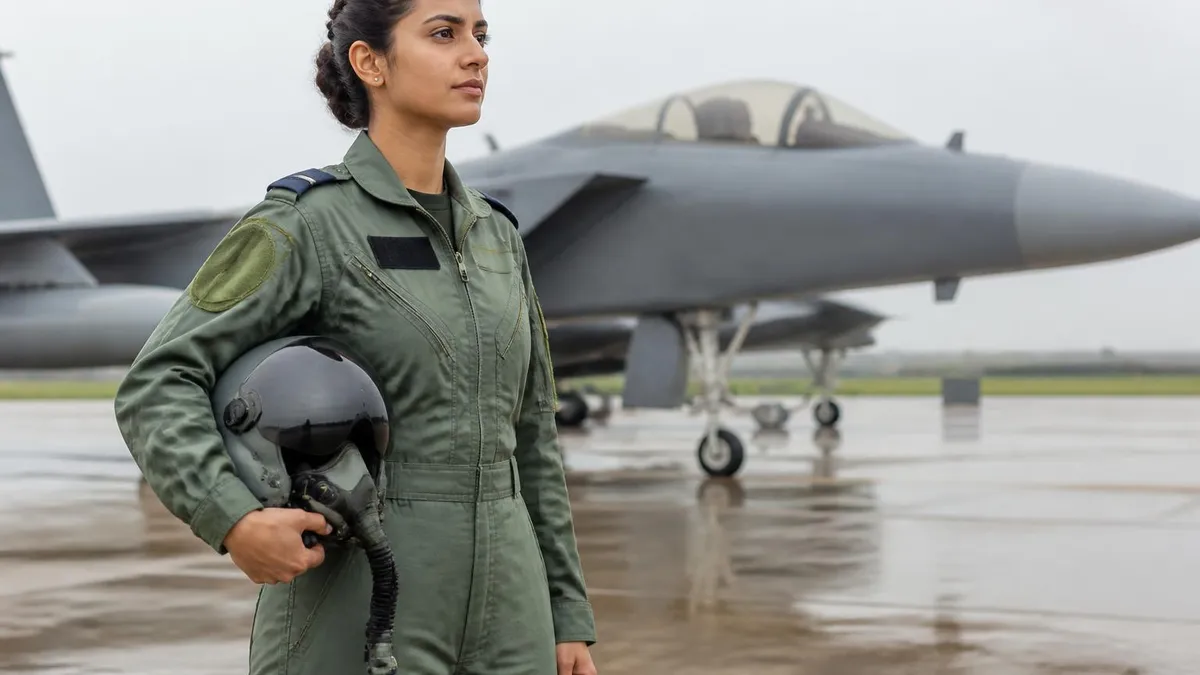
AFCAT Complete Guide: Air Force Common Admission Test Preparation, Syllabus & Strategy

AFCAT (Air Force Common Admission Test): Your Complete Guide to Joining the Indian Air Force

AFCAT Air Force Common Admission Test Practice Test PDF (Free Printable 2026)
About the Author

Educational Psychologist & Academic Test Preparation Expert
Columbia University Teachers CollegeDr. Lisa Patel holds a Doctorate in Education from Columbia University Teachers College and has spent 17 years researching standardized test design and academic assessment. She has developed preparation programs for SAT, ACT, GRE, LSAT, UCAT, and numerous professional licensing exams, helping students of all backgrounds achieve their target scores.