
AFCAT Exam Pattern 2026 September: Complete Guide to Structure, Sections & Scoring
Master the AFCAT exam pattern 2026 September 🎯 — sections, marks, timing, negative marking & prep tips to boost your Air Force selection score.

The AFCAT exam pattern is the foundation of every serious Air Force Common Admission Test preparation plan. Understanding exactly how the test is structured — how many questions appear in each section, how time is divided, and how negative marking affects your final score — gives you a decisive advantage over candidates who simply start solving mock tests without a strategic framework.
The Indian Air Force conducts AFCAT twice a year, and each cycle draws hundreds of thousands of applicants competing for a limited number of Flying, Technical, and Ground Duty branch vacancies. Knowing the pattern cold is the first step toward converting that competition into a commission.
AFCAT is a computer-based test comprising 100 questions spread across four broad domains: Verbal Ability in English, Numerical Ability, Reasoning and Military Aptitude, and General Awareness. The total duration is two hours, meaning candidates have an average of 72 seconds per question. That sounds generous in isolation, but when you factor in reading comprehension passages, multi-step arithmetic problems, and complex spatial reasoning figures, time pressure becomes one of the exam's most defining characteristics. Smart time allocation is therefore not optional — it is a core competency that separates selected candidates from waitlisted ones.
Each correct answer earns three marks, while each wrong answer costs one mark under the negative marking scheme. This 3:1 reward-to-penalty ratio has important strategic implications. Blindly guessing on difficult questions is mathematically destructive: four incorrect guesses wipe out the points earned by one correct answer. However, eliminating even one or two wrong options before choosing transforms the expected value of an educated guess into positive territory. Candidates who internalize this arithmetic early in their preparation make better real-time decisions during the test and consistently outperform equally knowledgeable peers who ignore marking strategy entirely.
Beyond the written AFCAT, candidates shortlisted on merit proceed to the Air Force Selection Board (AFSB), which includes psychological tests, group tasks, and a personal interview. However, clearing the written stage is the mandatory gateway — no AFSB call letter arrives without a qualifying AFCAT score.
This guide covers every dimension of the written exam pattern in granular detail, including section-level question distribution, difficulty curves, ideal time budgets, and subject-specific preparation approaches calibrated to the 2026 examination cycle. Use this alongside the official afcat exam pattern merit list guide to understand how your raw score translates into a rank and eventual selection probability.
One aspect of the AFCAT exam pattern that frequently surprises first-time candidates is the absence of a sectional time limit. Unlike many competitive examinations that lock you into each section for a fixed window, AFCAT allows you to move freely between questions and sections throughout the 120-minute test. This design rewards strategic candidates who begin with their strongest subjects, accumulate a confidence-building buffer of correct answers, and then return to trickier questions with remaining time. Developing and practicing a personal question-sequencing strategy during mock tests is therefore just as important as content mastery.
The General Awareness section is arguably the most volatile portion of the AFCAT pattern. It draws questions from current affairs, Indian history, geography, science and technology, sports, civics, and — critically — topics with direct relevance to the Indian Air Force and defense sector. This breadth means that no single textbook covers the section completely. Successful candidates build a diversified awareness through a combination of quality newspapers, monthly current affairs capsules, defense news portals, and dedicated AFCAT-specific awareness modules. The unpredictability of this section is also why many toppers recommend attempting it last, after banking marks in more predictable domains.
Finally, it is worth emphasizing that the AFCAT pattern has remained remarkably stable over recent cycles, with the IAF making only minor calibrations to question difficulty rather than structural overhauls. This stability is good news for candidates: past papers, official sample questions, and authentic mock tests provide highly reliable preparation benchmarks. The sections that follow in this guide break down every component of the exam pattern with precise data, preparation strategies, time-management frameworks, and expert tips drawn from analysis of multiple past AFCAT cycles.
AFCAT Exam Pattern by the Numbers

AFCAT Exam Format & Section Breakdown
| Section | Questions | Time | Weight | Notes |
|---|---|---|---|---|
| Verbal Ability in English | 20 | ~24 min | 20% | Reading comprehension, grammar, vocabulary |
| Numerical Ability | 18 | ~30 min | 18% | Arithmetic, percentages, ratio, data interpretation |
| Reasoning & Military Aptitude | 32 | ~36 min | 32% | Verbal reasoning, spatial ability, military aptitude |
| General Awareness | 30 | ~30 min | 30% | History, geography, science, defense, current affairs |
| Total | 100 | 2 hours | 100% |
The Verbal Ability in English section of the AFCAT exam pattern tests candidates across reading comprehension, cloze tests, error spotting, sentence completion, and vocabulary-based questions. With 20 questions allocated, this section rewards candidates who read widely and have internalized grammar rules rather than memorized them. A common mistake is over-preparing grammar theory while neglecting reading speed — comprehension passages can be dense, and slow readers burn disproportionate time here. Daily reading of quality English-language newspapers for at least 30 minutes dramatically accelerates both speed and comprehension accuracy over an 8–12 week preparation window.
Numerical Ability, with its 18 questions, is the smallest section by count but carries the highest per-question time cost for most candidates. The syllabus spans percentage calculations, ratio and proportion, profit and loss, time-speed-distance problems, averages, and basic data interpretation.
AFCAT does not test advanced calculus or complex algebra — the focus is on clean arithmetic executed quickly and accurately. The most effective preparation approach is identifying your three or four weakest topic areas within the first two weeks, drilling those to competence, and then maintaining sharpness across all topics through timed practice sets in the final month before the exam.
Reasoning and Military Aptitude is the highest-weighted section at 32 questions and therefore the single biggest determinant of your raw score. This section includes verbal reasoning (analogies, series completion, odd-one-out, coding-decoding), non-verbal reasoning (pattern recognition, figure matrices), and spatial ability questions that assess three-dimensional visualization. The military aptitude subset tests general knowledge of service customs, ranks, insignia, and basic defense concepts. Strong performance here can compensate for a relatively weaker showing in Numerical Ability, making it the section where strategic investment of preparation time pays the highest return.
General Awareness questions span an unusually broad canvas: Indian and world history, physical and political geography, general science (physics, chemistry, biology at the Class 10–12 level), the Indian Constitution and polity, sports championships, and — with notable regularity — questions specifically about the Indian Air Force, its history, aircraft fleet, commands, and key operations.
Defense-specific awareness questions are predictable in the sense that they consistently appear cycle after cycle, making them among the highest-priority topics for any AFCAT aspirant. A dedicated two-week sprint through IAF history, current fleet, and major air operations typically yields three to five direct question hits on exam day.
The absence of a sectional time limit in the AFCAT pattern creates a strategic decision point that every candidate must think through before test day. One widely validated approach is the 40-32-20-28 minute allocation — spending roughly 40 minutes on General Awareness (where speed can be high once you know the answer), 32 minutes on Reasoning, 28 minutes on Numerical Ability, and 20 minutes on English — with a 10-minute buffer for review and second attempts on skipped questions.
However, this allocation should be personalized based on your mock test performance data. If your Numerical Ability is a strength, reallocate time from there to Reasoning and vice versa.
Candidates preparing for the EKT (Engineering Knowledge Test), which is required for Technical branch applicants, should note that the EKT is a separate 45-minute, 50-question paper administered immediately after AFCAT. The EKT covers discipline-specific engineering topics (Mechanical, Computer Science, or Electronics, depending on your branch preference) and is scored independently.
A strong EKT score can significantly improve your merit rank among Technical branch candidates, even if your AFCAT score is only marginally above the cutoff. Many candidates neglect EKT preparation in favor of AFCAT, which is a strategic error given how much the combined score influences final merit. Refer to our detailed afcat exam pattern merit list breakdown to see exactly how EKT marks are weighted in the final ranking formula.
Mock tests are the single most powerful preparation tool for the AFCAT exam pattern, but only when used diagnostically rather than merely as score-building exercises. After each mock test, spend as much time analyzing wrong answers and near-misses as you spent taking the test itself.
Categorize errors into three types: knowledge gaps (you did not know the content), conceptual errors (you misunderstood a principle), and careless mistakes (you knew the answer but misread the question or made a calculation error). Each error type demands a different remediation strategy, and conflating them leads to inefficient preparation. Targeted remediation based on error classification is what separates candidates who plateau at mock-test scores from those who show steady, measurable improvement cycle over cycle.
AFCAT Marking Scheme, Time Strategy & Difficulty
Every correct answer in the AFCAT exam pattern earns exactly three marks, while every incorrect answer results in a deduction of one mark. Unattempted questions carry no penalty whatsoever. This 3:1 reward-to-penalty ratio means that a random guess on a four-option question has an expected value of exactly zero — making uninformed guessing a break-even proposition rather than a net negative. However, the moment you can eliminate even one wrong option, the expected value of attempting the question turns positive, which justifies educated guessing throughout the test.
The practical implication of the marking scheme is that you should virtually never leave a question blank if you can confidently eliminate at least one of the four answer choices. A candidate who attempts 85 questions with 70% accuracy scores 168 marks, while a candidate who attempts only 65 questions with 85% accuracy scores only 132 marks — despite the second candidate's higher per-question accuracy rate. Volume of confident attempts, calibrated by elimination strategy, consistently outperforms a highly selective approach in the AFCAT's mathematical framework.

AFCAT Exam Pattern: Advantages and Challenges for Aspirants
- +No sectional time limit allows strategic question-sequencing based on individual strengths
- +Computer-based format enables instant flagging and review of uncertain questions
- +Stable exam pattern over multiple cycles makes past papers highly predictive
- +3:1 reward-penalty ratio rewards educated guessing after eliminating even one wrong option
- +100-question format with clear syllabus boundaries keeps preparation focused and measurable
- +Single exam opens doors to Flying, Technical, and Ground Duty branch opportunities
- −High negative marking punishes random guessing severely if no elimination is possible
- −General Awareness section covers an extremely broad and unpredictable topic range
- −No sectional cutoffs are published, making it hard to gauge section-level safety thresholds
- −EKT requirement adds a significant additional preparation burden for Technical branch aspirants
- −Cutoff scores fluctuate by cycle, making it difficult to set a definitive target score
- −Strong competition from lakhs of candidates per cycle compresses the effective scoring margin
AFCAT Exam Pattern Preparation Checklist
- ✓Download the official AFCAT notification PDF and verify the current exam pattern and syllabus.
- ✓Complete at least one full-length diagnostic mock test before beginning topic-specific preparation.
- ✓Build a section-wise preparation schedule that allocates more hours to your weakest domain.
- ✓Solve a minimum of 500 Reasoning and Military Aptitude questions with timed practice.
- ✓Read one quality English newspaper daily for at least 30 minutes to build vocabulary and comprehension speed.
- ✓Compile a running current affairs capsule covering defense news, IAF events, and national affairs from the past 12 months.
- ✓Memorize key IAF data points: aircraft types, command headquarters, major operations, and rank insignia.
- ✓Practice the three-pass question-sequencing strategy in every full-length mock test you attempt.
- ✓Analyze every mock test error by type — knowledge gap, conceptual error, or careless mistake — and remediate accordingly.
- ✓Take at least six full-length timed mock tests in the four weeks immediately before your exam date.

Scoring Above the Cutoff Requires Smart Attempt Strategy
Historical AFCAT cutoff analysis shows that candidates who attempt 80–90 questions with approximately 70% accuracy consistently clear the written stage. Attempting fewer questions to avoid negative marking — while maintaining higher accuracy — typically produces lower raw scores. Prioritize eliminating at least one wrong option before guessing, and never leave a question blank when you have any basis for elimination.
The Reasoning and Military Aptitude section deserves special attention because it carries the heaviest weight in the AFCAT exam pattern and encompasses the widest internal variety of question types. Within this single section, candidates encounter verbal analogies, letter and number series, coding-decoding problems, blood relations, directional sense questions, Venn diagram problems, figure classification, mirror and water image questions, paper folding and cutting, embedded figures, and spatial orientation tasks. This diversity demands a broad preparation approach rather than deep specialization in any single reasoning subtype.
Verbal reasoning questions — analogies, series, and coding problems — can typically be solved quickly once you recognize the underlying pattern. The key skill is pattern recognition speed, which improves dramatically with volume-based practice. Solving 20–30 verbal reasoning questions daily for six weeks builds the automatic recognition reflexes that allow you to resolve these items in under 40 seconds on exam day.
Non-verbal and spatial reasoning questions, by contrast, require more careful visual analysis and cannot be rushed without risking errors. Candidates with weaker spatial visualization should invest specific practice time with spatial reasoning question banks and even physical spatial puzzles to build the underlying cognitive skill.
The military aptitude subset within the Reasoning section is one of the most uniquely AFCAT-specific preparation requirements. Questions in this area test knowledge of defense service customs, ranks across the three services, military terminology, famous battles and operations involving Indian forces, and basic facts about major defense platforms. Unlike general reasoning, this is essentially a knowledge-based domain where preparation effort translates almost linearly into correct answers. Building a structured study sheet covering IAF ranks, Army and Navy equivalents, famous operations, and key aircraft designations gives you a near-guaranteed return on the time invested.
The Numerical Ability section rewards candidates who master mental math and approximation techniques. Many AFCAT numerical questions involve numbers that lend themselves to rounding and estimation, and candidates who can approximate accurately without using a calculator move significantly faster than those who try to compute exact answers. Percentage problems, a perennial AFCAT favorite, can often be solved in under 30 seconds using benchmark fractions (25% = 1/4, 33.3% = 1/3, etc.) rather than formal calculation. Learning and internalizing a library of 15–20 such arithmetic shortcuts is one of the highest-ROI preparation activities for this section.
Data interpretation questions, while not always present in every AFCAT cycle, appear with enough regularity to merit dedicated preparation. These questions present data in the form of bar graphs, pie charts, or simple tables and ask candidates to extract values, compute ratios, or identify trends.
The good news is that DI questions in AFCAT are rarely at the difficulty level of banking exams — the data sets are simpler and the calculations more straightforward. A focused preparation period of one to two weeks on DI, using AFCAT-specific practice material, is typically sufficient to handle this question type confidently on exam day.
English Verbal Ability requires a different preparation philosophy than the other sections because it responds more to consistent long-term habits than to intensive short-term drilling. Vocabulary cannot be force-memorized in a week before the exam — it builds over months of regular reading and word-study.
Candidates who begin their AFCAT preparation six months or more before the exam have a structural advantage in English: they can develop genuine language intuition rather than relying on memorized word lists that rarely match the specific vocabulary tested. For candidates with a shorter preparation window, the most efficient English strategy is focusing on grammar rules, comprehension techniques, and high-frequency AFCAT vocabulary rather than broad vocabulary expansion.
Understanding the full AFCAT exam pattern also means understanding what the exam does not test. AFCAT does not include essay writing, descriptive answers, interview-style responses, or any subjective component in the written stage. Every question is objective, four-option, single-correct-answer format. This consistency is reassuring: there are no format surprises on exam day, and all preparation can be oriented toward the objective question structure. The evaluation is purely quantitative, and your final score is determined entirely by your correct answers minus one-third of your wrong answers, leaving no room for partial credit or examiner discretion.
AFCAT applications typically open 60–75 days before the exam date, and the registration window closes without exception. Admit cards are released approximately 15 days before the exam. Missing the registration deadline means waiting a full six months for the next cycle — with no exceptions granted regardless of circumstances. Set calendar reminders at the IAF official website as soon as the notification drops.
Translating a strong AFCAT written score into an actual Air Force commission involves understanding the complete selection pipeline that begins after the written exam. Candidates who clear the AFCAT cutoff are issued call letters for the Air Force Selection Board, typically located in Dehradun, Mysuru, Gandhinagar, or Varanasi.
The AFSB is a five-day assessment covering psychological tests on day one, officer intelligence rating and picture perception on day one and two, group tasks throughout days two through four, and a personal interview conducted by a board of senior officers on day five. A candidate must clear both the AFCAT written stage and the AFSB to be considered for final merit ranking.
The final merit list combines the AFCAT written score and AFSB performance, with exact weightage determined by the Indian Air Force's internal assessment framework. Medical fitness evaluation at an Air Force Central Medical Establishment follows AFSB clearance, and only candidates declared medically fit in the appropriate category (SHAPE-1 for Flying branch, relaxed standards for Ground Duty) proceed to the final merit ranking. This multi-stage nature means that AFCAT written preparation, while essential, is only the beginning of a longer selection journey that tests physical, psychological, and leadership dimensions alongside academic knowledge.
The Flying branch has the most stringent medical and physical standards of the three AFCAT branches. Vision requirements, physical measurements, and cardiovascular fitness benchmarks are rigorously assessed, and candidates aspiring for a pilot career in the IAF should verify their medical eligibility before investing heavily in AFCAT preparation. Ground Duty (Administration, Logistics, Education, Accounts, and Meteorology) and Technical branches have relatively more accessible medical standards, broadening the field of eligible candidates. Each branch also has slightly different AFCAT cutoff trends based on the number of vacancies advertised per cycle.
For Flying branch candidates specifically, the AFCAT exam pattern includes a Computerised Pilot Selection System (CPSS) test conducted separately after written qualification. The CPSS — formerly known as the Pilot Aptitude Battery Test (PABT) — tests aviation-specific aptitudes including multi-limb coordination, instrument comprehension, and control precision. Crucially, the CPSS is a lifetime one-attempt test: failing it at any point permanently disqualifies you from the Flying branch across all future attempts, regardless of how well you perform on the written AFCAT. This makes the CPSS one of the highest-stakes individual assessments in the entire IAF selection process.
Understanding the afcat exam pattern merit list structure helps you set a realistic target score during preparation. Cutoff scores for AFCAT fluctuate based on the difficulty level of a given paper, the number of vacancies, and the overall performance of the candidate pool in that cycle. Historical data suggests that General Awareness and Reasoning scores tend to be the primary differentiators among candidates clustered near the cutoff, since most candidates achieve similar baseline scores in English. Monitoring announced cutoffs from recent AFCAT cycles provides a realistic scoring target and helps you assess your mock test performance against a meaningful benchmark.
Candidates appearing in AFCAT for the second or third time have a strategic advantage that first-timers lack: real exam experience. They know the computer interface, the pressure of the actual testing environment, the concentration demands of two continuous hours, and the specific question phrasings that the IAF favors.
If you have appeared in a previous AFCAT cycle, use that experience as data — identify the specific sections and question types where you underperformed under actual exam conditions versus mock tests, and design your current preparation to close those gaps. Experience under exam conditions is a finite, non-replicable resource, and treating each attempt as a learning asset rather than just a pass-or-fail event significantly improves multi-cycle preparation quality.
The AFCAT exam pattern is ultimately a system designed to identify candidates who combine academic breadth, logical reasoning, language competence, and awareness of the defense environment. It is not designed to be impossible — it is designed to be selectively demanding.
Candidates who approach it with structured preparation, data-driven mock test analysis, and a clear understanding of how each section contributes to their overall score are consistently the ones who make it through. The framework laid out in this guide provides exactly that structure: use it as a living preparation document, revisiting and adjusting your approach as your mock test data evolves over your preparation cycle.
Building a week-by-week preparation schedule calibrated to the AFCAT exam pattern is the single most effective structural decision a candidate can make at the start of their preparation journey. A 12-week schedule works well for candidates starting from a moderate baseline. Weeks one and two should be dedicated entirely to diagnostic assessment and planning: take two full-length mock tests, analyze your scores by section, and map each section's syllabus to a weekly study block. This diagnostic phase reveals your personal strength-weakness profile and prevents the common error of over-investing preparation time in areas you already know well.
Weeks three through six are the core content-building phase. Allocate the heaviest daily study time to your two weakest sections while maintaining light daily practice in your stronger areas. For most candidates, this means heavy focus on Numerical Ability and either Reasoning or General Awareness, depending on individual baseline. During this phase, solve minimum daily question quotas by section: at least 20 Reasoning questions, 15 Numerical questions, 10 English questions, and 30 minutes of General Awareness reading every single day. Consistency over six weeks builds the cognitive automaticity that makes exam-day performance feel natural rather than effortful.
Weeks seven and nine form the integration phase, where full-length mock tests become the primary study vehicle. Take one or two full-length mocks per week, strictly timed at 120 minutes, under as close to exam conditions as possible — no phone, no interruptions, a dedicated quiet space.
After each mock, spend equal time on error analysis as you spent taking the test. Track your section-wise scores, attempt rates, and accuracy rates in a simple spreadsheet. The trend lines in this data are far more informative than any single mock test score and will tell you clearly whether your preparation is on track or needs adjustment.
Weeks ten and eleven are the refinement phase: targeted drilling on persistent weak points identified from mock test data, intensive review of high-frequency General Awareness topics, and careful revision of the arithmetic shortcuts and reasoning patterns that most frequently appear in AFCAT. Avoid introducing entirely new topics this late in the preparation cycle — the cognitive load of learning new material competes with consolidating what you already know. The goal in these weeks is to sharpen existing knowledge to exam-ready precision, not to expand the knowledge base.
The final week before the exam should be light on new content and heavy on review and rest. Read through your condensed notes on IAF-specific facts, key current affairs, and arithmetic shortcuts. Take one final full-length mock test mid-week, not to learn anything new but to calibrate your confidence and rehearse your pacing strategy. Ensure you have all required documents — admit card, valid ID, passport-size photographs — organized the night before. Plan your travel to the test center so that you arrive 30–45 minutes early, eliminating logistical stress from your mental load on exam morning.
On exam day itself, the AFCAT exam pattern rewards candidates who execute their prepared strategy rather than improvising under pressure. Begin with your strongest section to build early momentum. Apply the three-pass system you practiced in mock tests. Use elimination actively on every question where you are uncertain.
Watch the clock at the 60-minute and 90-minute marks to ensure you are on pace to attempt at least 80 questions before time runs out. Do not let a cluster of difficult questions in any section derail your composure — move on, mark them for review, and return with a clear head after banking easier marks elsewhere.
Post-exam, the wait for results is typically four to six weeks. Use this window productively: if you are a Flying branch aspirant, begin physical fitness preparation for AFSB; if applying for Technical branch, start EKT review for the next cycle as insurance; and begin psychological test preparation and group task workshops regardless of branch, since AFSB success requires practice that cannot be crammed in the days between result declaration and your AFSB reporting date.
The candidates who ultimately earn a commission are almost always those who treat every stage of the selection pipeline with the same disciplined, structured preparation intensity they brought to the AFCAT written exam itself.
AFCAT Questions and Answers

AFCAT Final Merit List Marks: Complete Guide to Understanding Your Score and Selection

AFCAT Registration 2026: Complete Step-by-Step Guide to Apply Online

AFCAT Syllabus: Complete Subject-Wise Guide for Air Force Common Admission Test 2026
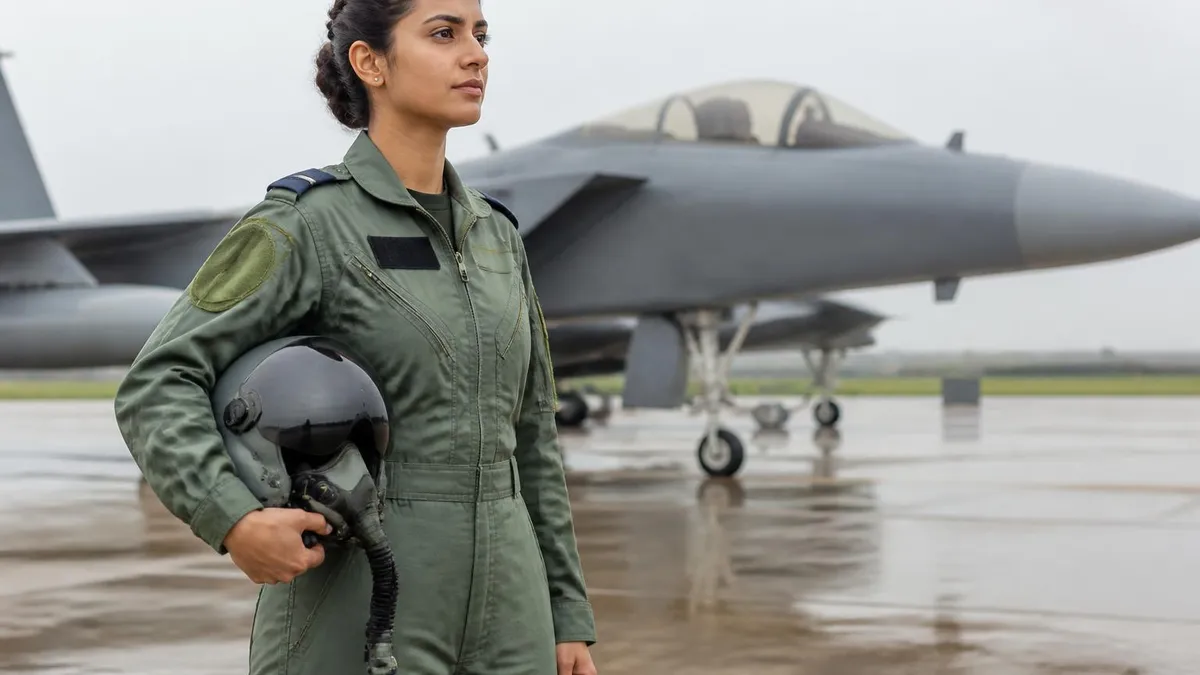
AFCAT Complete Guide: Air Force Common Admission Test Preparation, Syllabus & Strategy

AFCAT (Air Force Common Admission Test): Your Complete Guide to Joining the Indian Air Force
About the Author

Educational Psychologist & Academic Test Preparation Expert
Columbia University Teachers CollegeDr. Lisa Patel holds a Doctorate in Education from Columbia University Teachers College and has spent 17 years researching standardized test design and academic assessment. She has developed preparation programs for SAT, ACT, GRE, LSAT, UCAT, and numerous professional licensing exams, helping students of all backgrounds achieve their target scores.