
Journal of the American Chemical Society Abbreviation: Complete Guide to JACS
Learn the journal of the american chemical society abbreviation (JACS), its history, impact, and how to cite it correctly. 📚 Complete 2026 September guide.

The journal of the american chemical society abbreviation is JACS — one of the most recognized and cited shorthand labels in all of scientific publishing. Whether you are writing a research paper, formatting a bibliography, building a reference list in a graduate thesis, or submitting a manuscript to another journal, knowing how to correctly abbreviate this prestigious publication is a fundamental skill for any chemist or chemistry student. JACS has been the standard abbreviation used by researchers, librarians, and citation managers worldwide for well over a century.
Founded in 1879, the Journal of the American Chemical Society is the flagship peer-reviewed publication of the American Chemical Society, the world's largest scientific society dedicated to chemistry. The journal publishes fundamental research in all branches of chemistry, including organic, inorganic, physical, analytical, computational, and biological chemistry. Every article that appears in JACS has undergone a rigorous peer-review process, ensuring that only the most significant and scientifically sound research reaches its readership of hundreds of thousands of chemists globally.
Understanding abbreviations like JACS is essential for several reasons. Citation standards such as those used by the American Chemical Society itself, the ISO 4 international standard, and databases like PubMed and Web of Science all rely on consistent journal abbreviations to keep bibliographies accurate and searchable. When you search a database using "JACS" rather than the full journal name, you save time and reduce the chance of missing key literature. For students taking ACS exams or pursuing chemistry careers, familiarity with JACS and its role in the field signals professional fluency.
The abbreviation JACS is so widely recognized that many researchers use it conversationally, saying things like "I just had a paper accepted in JACS" or "check the JACS article from 2022." This informal usage has become entirely standard in academic chemistry circles, from undergraduate labs to Nobel Prize-winning research groups. Understanding the origin, context, and correct usage of this abbreviation helps both new students and experienced researchers communicate clearly and credibly within the discipline.
Beyond the simple matter of abbreviating a journal name, JACS itself represents one of the most important venues for chemical discovery. Papers published in JACS tend to be highly cited, and the journal's impact factor consistently ranks among the highest in chemistry. For researchers hoping to make a mark in the field, publishing in JACS is a major career milestone. For students studying for ACS-related examinations or pursuing careers in research, understanding what JACS is and what it publishes is genuinely foundational knowledge worth mastering early.
This guide covers everything you need to know about the journal of the american chemical society abbreviation: its official form, its history, how it appears across citation styles, how to use it in reference lists, and why this particular journal occupies such a central place in the chemical sciences. Whether you are a first-year chemistry student encountering JACS for the first time or a postdoctoral researcher double-checking citation formatting, you will find clear, accurate, and practical information throughout this article.
We will also explore the types of research JACS publishes, why its peer-review standards are among the most demanding in science, and how understanding the journal connects to broader ACS knowledge that may appear on standardized chemistry exams and professional credential processes. By the end of this guide, you will be fully equipped to use the JACS abbreviation correctly and confidently in any academic or professional setting.
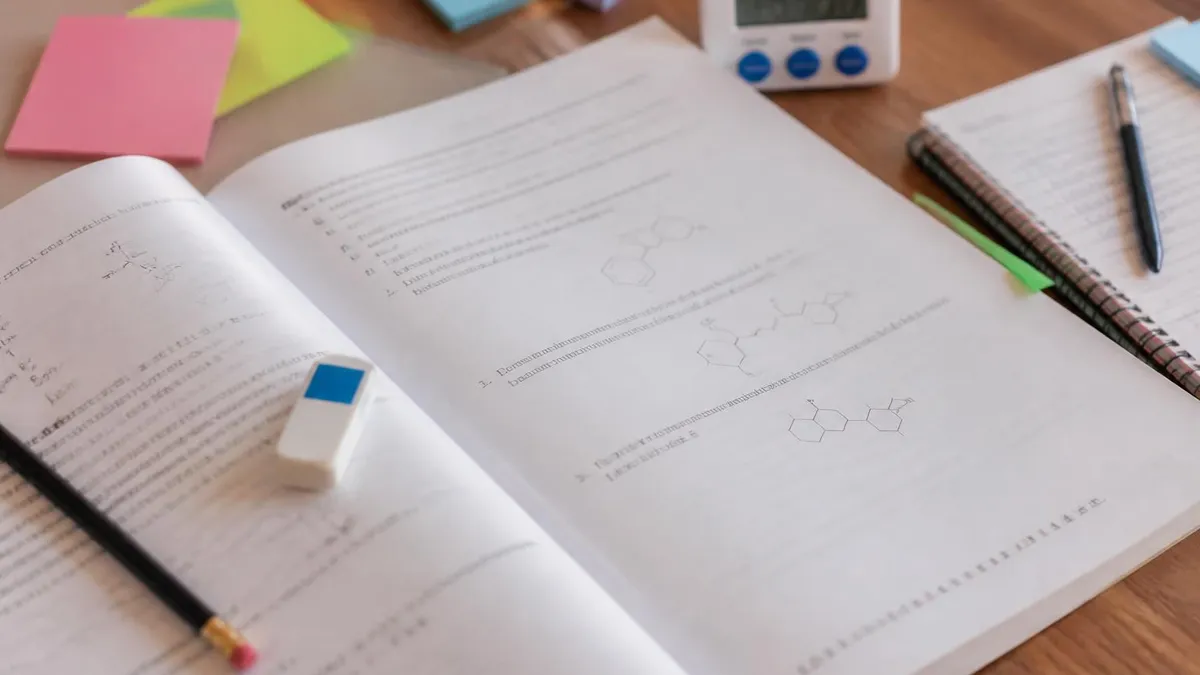
JACS by the Numbers
Official Abbreviation and How It Appears Across Citation Systems
The universally accepted abbreviation for the Journal of the American Chemical Society is JACS. This four-letter acronym is used in citations, literature searches, and informal academic conversation across all branches of chemistry worldwide.
Under the ISO 4 international standard for journal abbreviations, the journal is listed as J. Am. Chem. Soc. This dotted form appears in formatted reference lists and bibliographies in ACS Style, APA, and many other citation formats.
The National Library of Medicine and PubMed database use the abbreviation J Am Chem Soc (without periods). This format is standard for biomedical and chemical literature searches in government and academic databases.
The American Chemical Society's own style guide recommends citing the journal as J. Am. Chem. Soc. with periods following each abbreviation component, consistent with standard chemical literature conventions.
Major research databases including Web of Science and Scopus index JACS under the full name and multiple abbreviation forms, making it easily searchable regardless of which abbreviation format a researcher uses.
The history of the Journal of the American Chemical Society stretches back to 1879, making it one of the oldest peer-reviewed scientific journals in the United States. When the American Chemical Society was founded in 1876, establishing a flagship journal was among its earliest priorities. The founding members recognized that chemistry as a discipline needed a dedicated venue for sharing discoveries, debating theories, and building a cumulative body of verified knowledge. JACS became that venue, and it has remained so for nearly 150 years of continuous publication.
In its early decades, JACS published relatively short papers and communications, many of which laid groundwork that later chemists would build upon. Early volumes contain landmark contributions to atomic theory, the understanding of chemical bonding, and the foundations of organic synthesis. Reading these early papers today reveals how radically chemistry has changed while also showing how the core commitment to rigorous experimental methodology has remained constant. The journal has never wavered from its mission of publishing only work that represents genuine advances in chemical knowledge.
During the twentieth century, JACS published some of the most important papers in the history of science. Research on the structure of penicillin, contributions to the development of polymer chemistry, foundational work in quantum chemistry, and early papers on the mechanisms of enzyme catalysis all appeared in JACS pages. The journal became a record of chemistry's greatest achievements, and its authors list reads like a who's who of Nobel Prize winners and National Medal of Science recipients. This legacy makes the JACS abbreviation immediately recognizable to any trained chemist anywhere in the world.
The modern JACS publishes across all major sub-disciplines of chemistry. Rather than narrowing its focus as many newer journals have done, JACS has maintained its broad scope as a deliberate choice, reflecting the belief that the most important breakthroughs in chemistry often occur at the boundaries between sub-disciplines. A paper on computational chemistry might appear alongside work on synthetic methodology and a study of biological catalysis, all in the same issue. This diversity makes each issue of JACS a snapshot of where chemistry as a whole is heading.
The peer-review process at JACS is notoriously rigorous. Acceptance rates hover around 20 to 25 percent even after initial screening, meaning that only a small fraction of submitted manuscripts ultimately appear in print. Each manuscript is evaluated not just for technical correctness but for significance — reviewers ask whether a paper advances the field in a meaningful way, not just whether the experiments were performed correctly. This high bar explains why a JACS publication carries so much weight in academic chemistry and why landing a paper there is considered a significant achievement.
Editorially, JACS has always been led by distinguished chemists who bring deep expertise and broad perspective to the selection process. The current and recent editors have come from leading research universities and have themselves published landmark work in a variety of chemical disciplines. This editorial leadership helps ensure that the journal remains at the cutting edge of chemical science rather than becoming conservative or overly narrowly focused. The result is a publication that continues to set the standard for what impactful chemistry research looks like in the twenty-first century.
For students and early-career researchers, understanding the history and significance of JACS provides important context for the discipline they are entering. When you see a citation to JACS in a textbook or a lecture slide, you are looking at work that has been validated by the most rigorous peer-review process in the field and judged to be among the most significant chemistry of its time. That context shapes how you should read and evaluate JACS papers compared to work published in less selective venues. Mastering this kind of professional literacy is a key part of developing into a skilled chemist.
What Does JACS Publish? Research Scope and Article Types
Full research articles in JACS are the most common content type and represent complete studies with comprehensive experimental sections, results, and discussion. These papers typically run between 6 and 15 pages and must present a self-contained, significant contribution to chemical knowledge. Authors must provide sufficient detail for other researchers to reproduce their results, and every major claim must be backed by experimental or computational evidence reviewed by experts in the relevant sub-field.
The breadth of topics covered in JACS research articles is remarkable. In a single recent issue, you might find papers on asymmetric catalysis, machine-learning-driven drug discovery, the synthesis of novel two-dimensional materials, mechanistic studies of enzyme reactions, and new methods for detecting trace contaminants in water. This diversity is intentional — JACS serves the entire chemistry community, not a specialized subset, and the editorial team actively seeks work that opens new research directions rather than incrementally extending existing ones.

Publishing in JACS vs. Other Chemistry Journals: Key Considerations
- +Extremely high visibility — JACS is read by virtually every active research chemist worldwide
- +Prestige and career impact — a JACS publication strengthens grant applications, job applications, and tenure cases
- +Broad audience — no need to write for a narrow sub-discipline, enabling cross-disciplinary citations
- +Rigorous peer review improves manuscript quality through expert feedback before publication
- +Long archival record — JACS papers from decades ago are still easily accessible and widely cited
- +Strong association with the ACS brand enhances credibility with funding agencies and industry partners
- −Low acceptance rate (~20-25%) means many strong papers are rejected, requiring resubmission elsewhere
- −Revision process can be lengthy, sometimes taking many months from initial submission to final acceptance
- −High bar for significance means incremental but technically sound work is often declined regardless of quality
- −Page charges and open-access fees can be substantial for research groups with limited budgets
- −Competition is intense — authors must clearly articulate broad impact, which can be difficult for specialized work
- −Turnaround time for initial decisions, while faster than some journals, can still delay dissemination of time-sensitive findings
How to Use the JACS Abbreviation Correctly in Your References
- ✓Use JACS as the informal shorthand in conversation and informal writing, but use J. Am. Chem. Soc. in formal citations.
- ✓Follow the citation style guide required by your target journal — ACS Style uses J. Am. Chem. Soc. with periods after each abbreviation.
- ✓When citing in PubMed or NLM-formatted databases, use J Am Chem Soc without periods as required by National Library of Medicine standards.
- ✓Include the full volume number, issue number, page range, and publication year in every JACS citation for accuracy and retrievability.
- ✓Use a reference manager like Zotero, Mendeley, or EndNote to automatically format JACS citations in the style you need.
- ✓Verify your citation against the article's DOI, which provides a permanent, format-independent link to any JACS paper.
- ✓Double-check abbreviated titles when converting between citation styles — automated tools occasionally misabbreviate journal names.
- ✓When listing JACS in a bibliography, alphabetize it under 'J' for Journal, not 'A' for American, in standard bibliographic systems.
- ✓Confirm the year of publication carefully — JACS volume numbers do not directly correspond to years in a simple one-to-one way for all historical issues.
- ✓If citing a JACS article that was published ahead of print (ASAP), include the DOI and the ASAP designation until the final page numbers are assigned.
J. Am. Chem. Soc. is the formal abbreviation; JACS is the informal one — always match your format to your context.
When submitting manuscripts, grant applications, or thesis work, always verify which abbreviation form your institution or target journal requires. Most ACS journals accept J. Am. Chem. Soc. with periods, while some database searches work best with the period-free form J Am Chem Soc. Using the wrong format does not make your citation wrong, but it may trigger formatting flags in automated reference checkers and can signal unfamiliarity with field conventions to reviewers and editors.
For students preparing for ACS standardized exams — including the ACS General Chemistry Exam, the ACS Organic Chemistry Exam, and related assessments — knowledge of JACS and the broader landscape of chemical publishing is a component of professional chemical literacy that the ACS organization values deeply. While you will not be asked to recite a journal's impact factor on a multiple-choice exam, familiarity with how the ACS organizes and disseminates chemical knowledge provides important context for questions about the history, structure, and achievements of the society and the discipline.
The ACS examination system tests not just chemical content knowledge but also knowledge about the discipline of chemistry itself. Questions about the history of the ACS, its founding, its awards, its publications, and its role in the global scientific community appear on various ACS knowledge assessments. Knowing that JACS is the flagship journal, understanding when it was founded, and being aware of its scope and significance can give you an edge on these sections. These are the kinds of facts that appear repeatedly in the ACS History and Founding practice tests available on this site.
Beyond formal exam preparation, developing a reading habit around JACS literature is one of the most effective ways to deepen your chemistry knowledge outside the classroom. JACS papers are written at a level that challenges advanced undergraduates and rewards the effort of careful reading. Even if you do not understand every detail of every paper, reading JACS regularly exposes you to the questions chemists are currently working on, the methods they use, and the way scientific arguments are structured and evaluated. This exposure is invaluable for anyone aspiring to graduate school or a research career.
Many professors assign JACS papers as primary literature in upper-division undergraduate and graduate courses precisely because the papers represent the current state of the field rather than the simplified or outdated content sometimes found in textbooks. Learning to read a JACS paper critically — identifying the hypothesis, evaluating the experimental design, assessing the quality of the evidence, and judging the significance of the conclusions — is a skill that transfers directly to the kinds of reasoning tested on professional examinations and required in research settings.
The ACS also uses JACS as a vehicle for communicating important announcements, editorials, and position statements on issues affecting the chemistry community. Presidential addresses, policy statements on chemical safety, and commentaries on research funding and education often appear in JACS. This makes the journal not just a venue for original research but also a forum for the broader conversation about what chemistry is, where it is going, and what values should guide the work of chemists as professionals and citizens. Understanding JACS in this fuller context enriches your sense of what the ACS represents.
For educators, JACS provides an exceptional resource for keeping course content current and for designing authentic research experiences for students. Assigning a JACS paper on a topic being covered in class — say, a recent advance in green chemistry to accompany a lecture on reaction mechanisms — transforms passive content delivery into active engagement with real scientific literature. Students who encounter JACS as undergraduates arrive at graduate school with a significant advantage in scientific reading comprehension and critical thinking skills developed through that early exposure.
Understanding the relationship between JACS and the broader portfolio of ACS publications also matters for career planning. The ACS publishes dozens of journals across all sub-disciplines, from Journal of Organic Chemistry to ACS Nano to Analytical Chemistry. Knowing which journal best fits a given body of work, understanding the prestige hierarchy within the ACS journal family, and being aware of specialized versus generalist venues all inform strategic decisions that researchers must make throughout their careers. JACS sits at the top of this hierarchy, and understanding why helps clarify the structure of the entire field.

As of recent ACS policy changes, authors publishing in JACS can choose open access options that make their work freely available immediately upon publication. This shift reflects growing mandates from funding agencies like the NIH and NSF requiring that federally funded research be publicly accessible. If you are a student or researcher without institutional access to JACS, check whether individual articles you need are available as open access versions — many recent papers are freely downloadable directly from the ACS Publications website.
Engaging with JACS as a student or early-career researcher requires developing strategies for reading dense primary literature efficiently. Unlike a textbook, a JACS paper does not explain background concepts at length — it assumes you have the foundational knowledge and moves quickly into the specific scientific question at hand. This means that reading a single JACS paper carefully, looking up unfamiliar terms, and working through the figures and data tables can take several hours, especially when the topic is outside your primary area of expertise. Building this skill takes practice and patience.
One practical strategy is to start with the abstract and conclusion before reading the introduction or experimental sections. The abstract tells you what was done and what was found; the conclusion tells you what the authors think it means. With that framework in mind, the introduction and results sections become much more navigable because you already know where the paper is going. This top-down reading strategy is used by most experienced researchers and dramatically reduces the time needed to extract the key information from a JACS paper on an unfamiliar topic.
Using tools like SciFinder, Reaxys, or Google Scholar to search the JACS archive is another critical skill. The full JACS archive stretches back to 1879, and with millions of papers published over nearly 150 years, finding what you need requires mastering database search techniques. Boolean operators, author searches, structure searches, and citation tracking all help you navigate the literature efficiently. Many university libraries offer workshops on these tools, and investing a few hours in learning to use them well pays dividends for your entire research career.
For the purposes of ACS exam preparation, recognizing the JACS abbreviation and understanding the journal's role within the ACS organization is more directly relevant than being able to recall specific papers. Questions about ACS publications, history, and structure are common in assessments testing broader knowledge of the chemical sciences and the professional organization that governs so much of chemistry education and research in the United States. Taking practice tests focused on ACS history and organization helps you consolidate this type of knowledge in a structured and efficient way.
The international dimension of JACS is also worth appreciating. While the ACS is an American organization, JACS publishes work from researchers in every country, and a significant fraction of papers come from laboratories in Europe, Asia, and elsewhere. This global character reflects the fundamentally international nature of chemistry as a discipline and the role JACS plays as a neutral, high-quality venue that transcends national research funding systems and institutional prestige hierarchies. A chemist in Brazil, South Korea, or Germany can publish in JACS on equal footing with one at MIT or Stanford.
The digital transformation of JACS has also changed how researchers engage with the journal. Online supplementary materials now routinely include raw data files, video clips of reactions, interactive 3D molecular structures, and extensive additional experimental results that could never fit in the printed page limits. JACS ASAP (As Soon As Publishable) articles appear online days or weeks before the formal print issue is assembled, accelerating the dissemination of new findings. These changes have made JACS faster, richer, and more accessible than at any previous point in its nearly 150-year history.
Finally, it is worth noting that the JACS brand extends beyond the printed or digital journal to encompass a community. Annual JACS symposia at national ACS meetings bring together authors, editors, and readers for lectures and discussions. The journal's social media presence highlights recent papers and engages a broad audience of chemists at all career stages. Following JACS on academic social networks like ResearchGate or through ACS social media channels is a practical way to stay current with landmark papers without reading every issue in full — an increasingly common practice among busy researchers and students alike.
Practical tips for making the most of JACS as a learning resource begin with consistency. Rather than trying to read JACS only when you have a specific research need, consider setting aside even 20 to 30 minutes per week to browse recent table of contents listings. Most journal websites allow you to sign up for email alerts whenever a new issue is published, and these alerts include article titles and abstracts. Scanning these regularly keeps you aware of what is happening across chemistry without requiring deep reading of every paper you encounter.
When you do read a JACS paper deeply, make notes in a reading log or annotation system. Summarizing the paper's key question, main finding, and most important limitation in your own words solidifies your understanding and creates a personal literature database you can consult later. Many researchers use digital tools like Notion, Roam Research, or simple annotated PDFs for this purpose. The discipline of noting what you have read and what you found significant is a habit that compounds over time into genuinely deep chemical knowledge.
For exam preparation specifically, cross-referencing JACS history with ACS organizational history creates a richer understanding of both. The founding of JACS in 1879, the key figures who shaped its editorial policy over the decades, the Nobel Prize winners who first published landmark work there, and the way the journal's scope has evolved all connect to broader questions about the development of chemistry as a professional and scientific discipline. This kind of integrated knowledge tends to stick better than isolated facts memorized in isolation from their context.
Joining the ACS as a student member gives you access to JACS at a reduced or waived cost, along with access to the broader ACS Publications suite. Student membership is inexpensive and brings numerous benefits beyond journal access, including networking opportunities, meeting discounts, and access to ACS career resources. For chemistry students planning to pursue graduate school or industry careers, ACS membership and regular engagement with JACS and other ACS publications signal commitment to the discipline that resonates well with faculty and employers during the application process.
It is also worth noting that many important JACS papers are discussed in chemistry blogs, podcasts, and YouTube channels aimed at researchers and students. Platforms like Chemistry World, the ACS's own Reactions video series, and independent chemistry communicators regularly highlight notable JACS publications in accessible formats. Consuming this secondary commentary alongside primary JACS literature provides multiple angles on key findings and helps develop the kind of nuanced understanding that distinguishes deep expertise from surface familiarity with chemistry topics.
When preparing for any ACS-related knowledge assessment, treat JACS not as an obstacle to learn around but as a central part of the story you are trying to understand. The journal is the primary record of chemistry's progress, and knowing it well — including its name, its abbreviation, its history, its scope, and its significance — is knowing chemistry's institutional heartbeat. That knowledge, combined with solid content preparation across the major chemistry sub-disciplines, positions you well for both formal examinations and the informal credentialing that happens in every professional interaction throughout a chemistry career.
In summary, the journal of the american chemical society abbreviation — JACS in informal use, J. Am. Chem. Soc. in formal citations — is one of the most important pieces of professional vocabulary in chemistry. Learning it correctly, understanding what it stands for, and engaging actively with the journal it represents will serve you at every stage of your chemistry education and career, from your first undergraduate research experience to the highest levels of professional scientific practice.
ACS Questions and Answers
Journal Impact Factor Directory for the American Chemical Society
ACS Organic Chemistry Study Guide: Complete 2026 Prep Roadmap for the American Chemical Society Exam
ACS Practice Test Video Answers
ACS General Chemistry Exam: The Complete 2026 Study Guide to Passing the American Chemical Society Standardized Test

ACS Chem Final Exam: 2026 Complete Study Guide to Passing the American Chemical Society Standardized Chemistry Test
About the Author

Educational Psychologist & Academic Test Preparation Expert
Columbia University Teachers CollegeDr. Lisa Patel holds a Doctorate in Education from Columbia University Teachers College and has spent 17 years researching standardized test design and academic assessment. She has developed preparation programs for SAT, ACT, GRE, LSAT, UCAT, and numerous professional licensing exams, helping students of all backgrounds achieve their target scores.
Join the Discussion
Connect with other students preparing for this exam. Share tips, ask questions, and get advice from people who have been there.
View discussion (8 replies)