
ABPM (American Board of Pain Medicine) Test: Your Path to Success 2026
Boost your ABPM (American Board of Pain Medicine) exam score with practice questions and detailed answer explanations. Track progress with instant
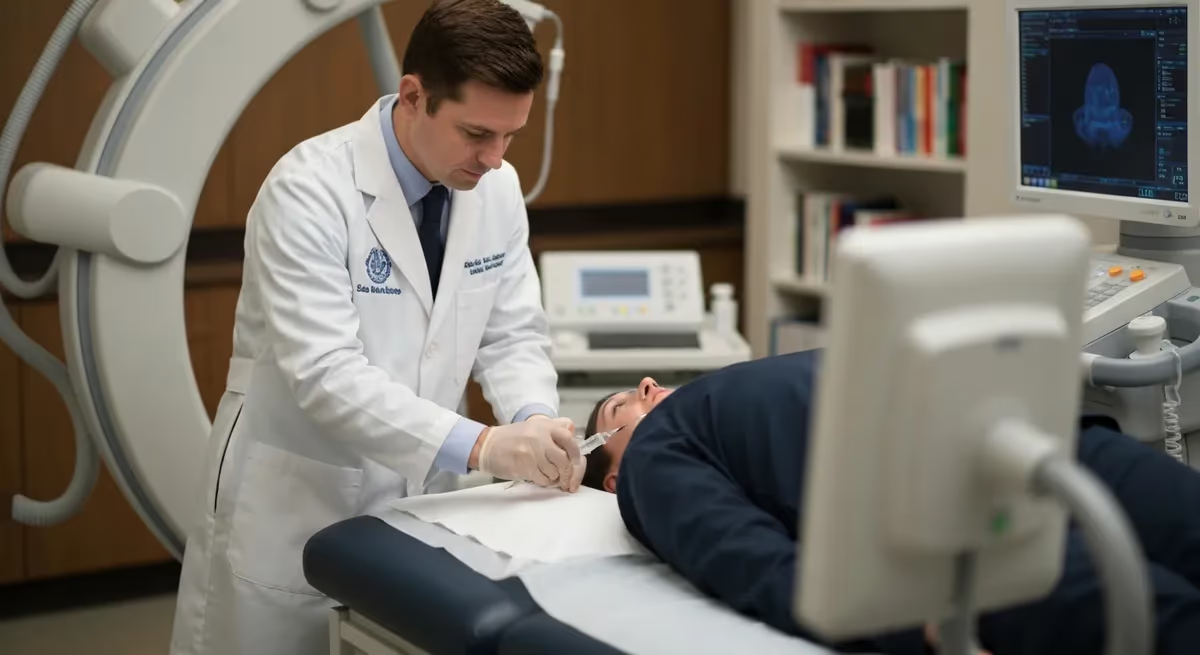
The (ABPM) American Board of Pain Medicine is a certifying organization that provides standards for professionals specializing in pain management. Board certification through ABPM demonstrates a physician's expertise in diagnosing, managing, and treating pain. If you're preparing for the ABPM exam or considering certification, it’s essential to understand the requirements, the process of verification, and the resources available, such as conferences and continuous learning opportunities. Practice with the free General practice test on PracticeTestGeeks (7 questions with answer explanations).
Healthcare professionals preparing for certification should also practice with our HESI entrance exam 2026, which covers the clinical reasoning, patient care, and pharmacology sections of the official exam.
Free General Study Tools
Interactive General resources on PracticeTestGeeks, free to start:
- CNA Practice Test exam 1 — 50 questions with answer explanations
- General flashcards — review key terms and concepts card by card
- General study guide — topic-by-topic overview of what the exam covers
- General cheat sheet — one-page printable summary for last-minute review

Key Takeaways
- The ABPM certification is a recognized credential for physicians specializing in pain medicine.
- Candidates must meet specific eligibility requirements, including completion of an accredited fellowship or significant experience in pain management.
- The ABPM certification exam assesses a physician’s knowledge and expertise in the field of pain medicine.
- Certification can be verified online, ensuring the legitimacy and credibility of the credential.
- Attending ABPM conferences helps physicians stay updated on industry trends and earn CME credits.
What is the ABPM Certification?
The ABPM certification is a prestigious credential that signifies expertise in pain medicine. Physicians certified by the ABPM demonstrate proficiency in various pain management approaches, including pharmacologic, interventional, and behavioral therapies. Certification by the ABPM is vital for physicians who wish to solidify their expertise in pain management and improve their credibility in the field.
- Key Focus: Pain management, patient care, and expertise in specialized treatments
- Validity: The certification lasts for 10 years and requires recertification to maintain the credentials.
ABPM-certified physicians are equipped with the necessary skills to address acute and chronic pain conditions, ensuring comprehensive care for their patients. Certification also validates a physician’s commitment to staying current in the field, as the ABPM is continuously updating its requirements to reflect advances in pain medicine.
- ✓Review the official General exam content outline
- ✓Take a diagnostic practice test to identify weak areas
- ✓Create a study schedule (4-8 weeks recommended)
- ✓Focus on your weakest domains first
- ✓Complete at least 3 full-length practice exams
- ✓Review all incorrect answers with detailed explanations
- ✓Take a final practice test 1 week before exam day
Eligibility Criteria for ABPM Certification
To apply for the ABPM certification, candidates must meet several stringent criteria that ensure they are adequately prepared for the responsibilities that come with the credential. The eligibility requirements focus on education, experience, and licensing.
Board Eligibility Requirements:
- A current, unrestricted medical license
- Completion of an accredited pain medicine fellowship or an equivalent program
- Completion of a residency in anesthesiology, neurology, psychiatry, or physical medicine and rehabilitation
Candidates must demonstrate that they have completed a minimum of one year of fellowship training in pain medicine or have significant experience in the field to be considered for certification. Additionally, candidates are required to submit verification of their training and professional practice.
ABPM Certification Exam: What to Expect
The ABPM certification exam assesses the knowledge and clinical expertise of pain management specialists. The exam evaluates the candidate’s understanding of various aspects of pain medicine, including diagnosis, treatment planning, and patient safety.
- Exam Format: Multiple-choice questions focusing on pain mechanisms, diagnosis, treatment, pharmacology, and procedural interventions
- Duration: The exam typically lasts a few hours, depending on the number of questions
- Content Areas Covered:
- Pharmacologic treatment of pain
- Interventional procedures, such as nerve blocks and spinal cord stimulation
- Pain conditions, including musculoskeletal, neuropathic, and cancer-related pain
- Behavioral approaches and psychological aspects of pain management
Adequate preparation is essential for success, and candidates should take advantage of review courses, textbooks, and clinical guidelines specific to pain medicine.
ABPM Certification Verification: Ensuring Authenticity
Once a physician has passed the ABPM certification exam, the credential must be verified to ensure it remains active and valid. Certification verification is an important process for hospitals, employers, and patients who want to confirm that a physician is board-certified.
Verification Process:
ABPM offers an online verification service for employers and patients to verify certification status. This service ensures that the physician's credentials are legitimate and up-to-date. The verification process also allows healthcare institutions to check for any restrictions or disciplinary actions related to a physician’s license or certification.
To verify a physician’s certification, interested parties can visit the ABPM’s official website. This process provides transparency and helps maintain high standards in the healthcare profession.
ABPM Conference: Professional Development and Networking
The ABPM hosts conferences and seminars focused on pain medicine to help physicians stay informed about the latest developments in the field. These conferences are excellent opportunities for continuing education and professional networking.
Conference Highlights:
- Expert speakers on pain medicine innovations
- Workshops on emerging treatments and technologies
- Sessions on regulatory changes affecting pain management practices
Attending these conferences allows physicians to earn Continuing Medical Education (CME) credits, which are often required to maintain board certification. These events are valuable for connecting with peers and staying updated on trends that shape the future of pain medicine.
Conclusion
ABPM certification is a critical credential for physicians focused on pain management. It signifies a physician’s expertise, dedication, and commitment to improving patient care. The certification process involves rigorous eligibility requirements and a comprehensive exam that evaluates a candidate’s proficiency in diagnosing and treating pain. By verifying certification status and attending relevant conferences, physicians can maintain their credentials and continue to advance their knowledge.
The ABPM offers excellent resources, including its certification program and conferences, to help physicians remain at the forefront of pain medicine. Certification from the ABPM ensures that physicians are well-prepared to address the complexities of pain management in modern healthcare.
- +Industry-recognized credential boosts your resume
- +Higher earning potential (10-20% salary increase on average)
- +Demonstrates commitment to professional development
- +Opens doors to advanced career opportunities
- −Exam preparation requires significant time investment (4-8 weeks)
- −Certification fees can be $100-$400+
- −May require continuing education to maintain
- −Some employers may not require certification
Sample General Practice Questions
Try these questions from our free General practice tests. The correct answer and an explanation follow each question.
Which communication style is most appropriate when delivering negative feedback to an employee?
- A. Send a group email to avoid one-on-one confrontation
- B. Use a private, face-to-face meeting with specific examples
- C. Post feedback anonymously on the company intranet
- D. Deliver feedback through a third-party intermediary
Answer: B. Use a private, face-to-face meeting with specific examples
Private, direct feedback with specific examples is most constructive and respectful to the employee.
A company CEO needs to announce a major, sensitive organizational restructuring that will involve layoffs. Which communication channel would be the MOST appropriate for this announcement?
- A. A post on the company's internal social media platform.
- B. A formal, company-wide email.
- C. A face-to-face meeting or a live, interactive video conference.
- D. An update in the weekly company newsletter.
Answer: C. A face-to-face meeting or a live, interactive video conference.
For sensitive and significant news like layoffs, a rich communication channel that allows for immediate feedback, nonverbal cues (like tone and empathy), and direct interaction is most appropriate. A face-to-face meeting or a live video conference allows leaders to convey the gravity of the situation, show empathy, and answer questions directly, which helps manage rumors and employee morale better than impersonal written channels.
Which of the following is an example of open-source software?
- A. Microsoft Office
- B. macOS
- C. Linux
- D. Adobe Acrobat
Answer: C. Linux
Linux is an open-source operating system whose source code is freely available for anyone to view, modify, and distribute.
If a number is increased by 40% and then decreased by 40%, what is the net change?
- A. 0%
- B. −4%
- C. −16%
- D. −20%
Answer: C. −16%
1.4 × 0.6 = 0.84, meaning the number is 84% of the original — a 16% decrease.
Take the full General practice test
General Questions and Answers
How this page was made: written with AI tools and published by Nathan Beja, founder of Practice Test Geeks, who is responsible for its content. We have not yet matched this exam's facts to an official source, so confirm fees, dates and rules with the exam body. Not reviewed by a subject-matter expert. Editorial policy