
Mastering the ABO NOCE Test: Your Guide to Becoming a Certified Optician
💯 Boost your Mastering the ABO NOCE exam score with practice questions and detailed answer explanations. Track progress with instant feedback.
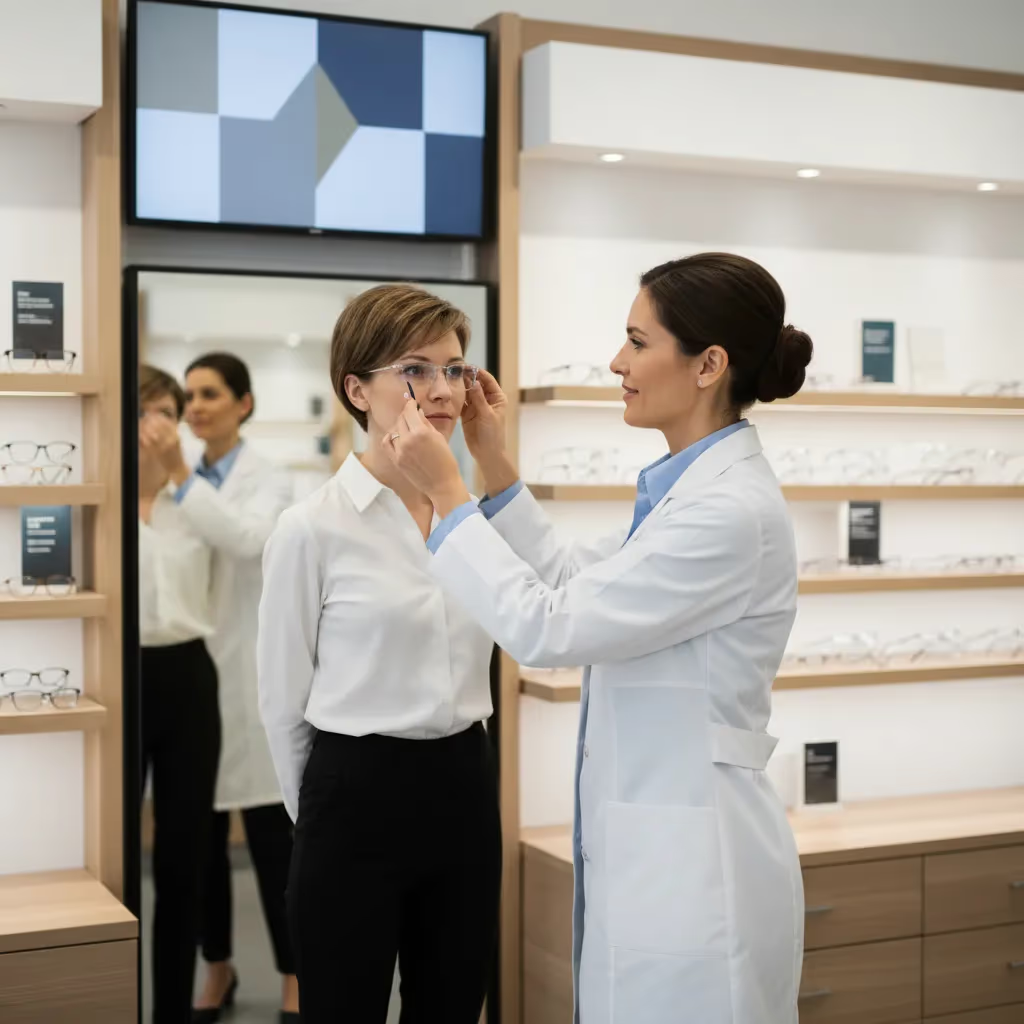
The American Board of Opticianry National Contact Lens Examiners (ABO NOCE) is a certification that holds significant weight in the field of opticianry. This certification is crucial for opticians who want to prove their expertise and competence in providing eye care, especially in the specialized area of contact lenses. It not only enhances an optician's professional credibility but also opens up various career opportunities in the optical industry.
As an optician, passing the ABO NOCE exam is essential to ensure that you are well-equipped to handle the demands of the job and provide top-tier service to your clients. Whether you're just beginning your career or looking to boost your qualifications, the path to success lies in proper preparation, which is where practice tests and resources come into play.
In this article, we will explore into the details of the ABO NOCE exam, why it's important, how to prepare for it, and where you can find helpful resources to guide your journey.

What is the ABO NOCE?
The American Board of Opticianry National Contact Lens Examiners (ABO NOCE) is a comprehensive certification exam designed to assess the knowledge and skills of opticians in various aspects of opticianry, particularly in fitting and designing contact lenses. It tests your understanding of optometric concepts, including lens design, materials, and fitting techniques.
Obtaining this certification signifies that you possess the necessary knowledge and practical experience to provide expert care to patients who require contact lenses. The exam covers a range of topics that are integral to the practice of opticianry, ensuring that certified professionals are prepared to work in an industry that demands high-level expertise.
Why is the ABO NOCE Important?
Career Advancement: The ABO NOCE certification is recognized nationally and is often a requirement for optician positions in many practices and hospitals. It demonstrates your expertise and commitment to maintaining high standards of care.
Professional Credibility: Being certified by the ABO NOCE shows employers and clients that you have passed rigorous standards in the field. It establishes you as a knowledgeable and trusted optician.
Increased Job Opportunities: With the increasing demand for optical services, having ABO NOCE certification can make you more competitive in the job market. Employers are more likely to hire someone who is certified, knowing they have passed the necessary qualifications.
Preparing for the ABO NOCE Exam
Preparation is key to passing the ABO NOCE exam. Here are some tips and resources to help you succeed:
Study the Official ABO NOCE Handbook: The ABO offers an official handbook that provides a detailed outline of the exam content. This handbook is essential for understanding what you will be tested on and the format of the exam.
Take Practice Tests: One of the best ways to prepare is by taking practice tests that simulate the real exam experience. You can find a variety of practice tests online, such as the ABO NOCE exam questions, which are designed to help you familiarize yourself with the types of questions you will encounter.
Review Key Concepts: Focus on the key concepts in optics, lens materials, and patient care. Revisit areas where you feel less confident to ensure you have a thorough understanding of the material.
Join Study Groups: Consider joining online forums or study groups where you can exchange ideas and ask questions about topics that are difficult to understand.
Use Online Resources: Websites offer practice tests, study guides, and exam prep resources to help you prepare effectively.
Opticians preparing for the NOCE exam often complement their study with nclex practice test materials to review anatomy and patient care fundamentals.

What Does the ABO NOCE Exam Entail?
The ABO NOCE exam consists of multiple-choice questions that cover various topics relevant to contact lenses, optics, lens materials, patient care, and other specialized areas of opticianry. The goal of the exam is to assess both theoretical knowledge and practical skills that are essential for success in the field.
The exam is typically divided into sections that test:
Optics: Questions that assess your understanding of light behavior, lens principles, and refractive errors.
Contact Lenses: A detailed section that covers contact lens fitting, types, care, and complications.
Lens Materials and Design: Questions focused on the various materials used in lenses and how they affect design and performance.
Patient Care: Assessing your ability to understand patient needs, provide counseling, and offer effective solutions for various eye conditions.
Resources for ABO NOCE Exam Preparation
There are numerous resources available online to help you prepare for the ABO NOCE exam. Here are some useful links:
National Opticianry Competency Exam (NOCE): A specific resource for those preparing for the NOCE certification exam.
NBEA Test: This website provides resources related to the National Board of Examiners in Optometry (NBEA), another certification exam that may be relevant to your career progression.

Blog: Pros and Cons
- +Blog certification validates expertise recognized by employers nationwide
- +Certified professionals typically earn 15-20% higher salaries
- +Opens doors to advanced positions and leadership roles
- +Demonstrates commitment to professional standards and ethics
- +Builds a strong professional network through certification communities
- −Exam preparation typically requires 2-4 months of dedicated study
- −Certification and exam fees can range from $150-$500+
- −Must complete continuing education to maintain active certification
- −Pass rates vary — thorough preparation is essential for success
- −Some certifications require prerequisite experience or education
Pros and Cons at a Glance
| Pros | Cons |
|---|---|
| Blog certification validates expertise recognized by employers nationwide | Must complete continuing education to maintain active certification |
| Opens doors to advanced positions and leadership roles | Pass rates vary — thorough preparation is essential for success |
| Demonstrates commitment to professional standards and ethics | Some certifications require prerequisite experience or education |
Sample Blog Practice Questions
Try these questions from our free Blog practice tests. The correct answer and an explanation follow each question.
Which element is most effective for hooking readers in a blog post introduction?
- A. Opening with a dictionary definition of the main topic
- B. Listing every subtopic the post will cover in bullet points
- C. Starting with a compelling question, anecdote, or surprising statistic
- D. Beginning with a lengthy description of the author's credentials
Answer: C. Starting with a compelling question, anecdote, or surprising statistic
A strong hook — such as a question, story, or startling fact — captures the reader's attention and motivates them to keep reading.
Which writing style is generally most effective for blog content?
- A. Formal academic language with complex, discipline-specific vocabulary
- B. Passive voice used consistently throughout the post
- C. Conversational, clear language written in the second person (addressing 'you')
- D. Third-person narrative that avoids any direct address to the reader
Answer: C. Conversational, clear language written in the second person (addressing 'you')
Conversational, second-person writing creates a personal connection with the reader and is easier to understand than formal or passive styles.
What is the primary benefit of maintaining an editorial calendar for a blog?
- A. It automatically generates new blog post ideas without any planning
- B. It ensures consistent publishing and organized content planning aligned with goals
- C. It eliminates the need for keyword research before writing
- D. It guarantees higher search engine rankings over competitors
Answer: B. It ensures consistent publishing and organized content planning aligned with goals
An editorial calendar helps bloggers plan topics in advance, maintain a consistent schedule, and align content with seasonal trends and business objectives.
Which blog post format is most commonly shared on social media platforms?
- A. Long-form, academic-style research reports
- B. Listicles (numbered or bulleted list-based posts)
- C. Technical documentation and how-to reference guides
- D. Commentary pieces responding to recent news events
Answer: B. Listicles (numbered or bulleted list-based posts)
Listicles are highly shareable because their structured, easy-to-scan format lets social media users quickly grasp the value before clicking or sharing.
Conclusion
The ABO NOCE exam is a significant step in your career as an optician. It validates your expertise and ensures that you are prepared to provide exceptional care to your patients, especially in the field of contact lenses. With thorough preparation and the right resources, passing the exam will open doors to exciting opportunities and advancements in the optical industry.
By using tools, you can better prepare yourself for the test, ensuring that you are ready to succeed. Don't forget to use reputable sources for study materials and practice tests to improve your chances of success.
Good luck with your preparation and your path toward becoming a certified optician!
About the Author

Educational Psychologist & Academic Test Preparation Expert
Columbia University Teachers CollegeDr. Lisa Patel holds a Doctorate in Education from Columbia University Teachers College and has spent 17 years researching standardized test design and academic assessment. She has developed preparation programs for SAT, ACT, GRE, LSAT, UCAT, and numerous professional licensing exams, helping students of all backgrounds achieve their target scores.