
Aat Level 2 Introduction to Bookkeeping Mock: Free ITBK Practice and Exam Guide
🎯 An AAT Level 2 Introduction to Bookkeeping mock is a 90-minute, computer-marked ITBK practice test with a 70% pass mark. Free questions, tips and facts.
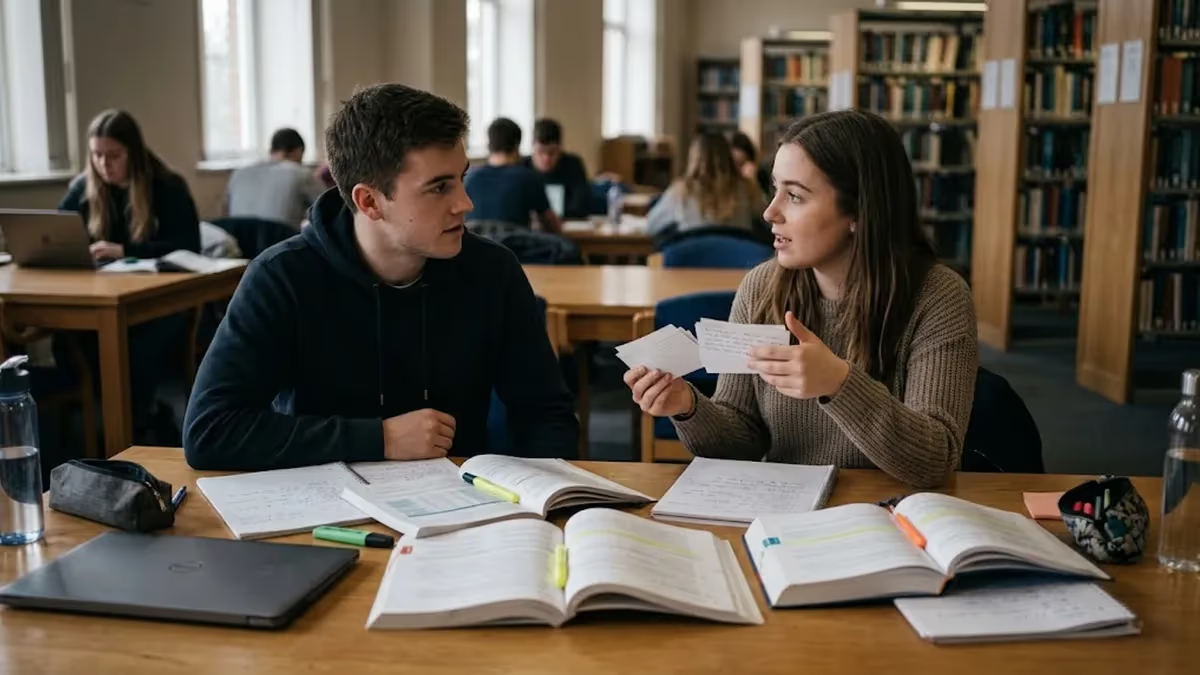
An AAT Level 2 Introduction to Bookkeeping mock is a practice version of the ITBK computer-based assessment: 90 minutes, computer-marked, with a 70% pass mark. Use it to rehearse double-entry, ledgers, VAT and the trial balance before sitting the real unit, which costs £67 from 1 September 2026 and is available on demand at approved centres.
Aat Level 2 Introduction to Bookkeeping Mock: Key Facts (Updated October 2026)
| Fact | Details | Source |
|---|---|---|
| Qualification | AAT Level 2 Certificate in Accounting (Ofqual 603/6338/1) | AAT |
| Unit | Introduction to Bookkeeping (ITBK): 65 guided learning hours, 25% weighting | AAT qualification specification |
| Duration and marking | 1 hour 30 minutes, computer-marked | AAT grading, results, times and fees |
| Pass mark and grades | 70% to pass; Pass 70–79%, Merit 80–89%, Distinction 90–100% | AAT grading, results, times and fees |
| Assessment fee | £67 per unit assessment from 1 September 2026 (synoptic assessment £72) | AAT 2026/27 fees |
| Scheduling | On demand all year at approved providers or venues, or by remote invigilation (£41 surcharge) | AAT assessments |
| Results | End of next working day at a centre; within 10 working days if taken remotely | AAT grading, results, times and fees |
If you want the full set of resources, our aat level 2 mock exam hub gathers free practice questions across every unit of the Certificate. This page narrows in on ITBK alone, because that is the unit most students sit first and the one where steady practice pays off fastest. Below you will find what the assessment covers, how to use mocks properly, and a clear routine for the final fortnight.
What Is the AAT Level 2 Introduction to Bookkeeping Mock Exam?
A mock is a timed rehearsal of the Introduction to Bookkeeping assessment, known as ITBK, which is the first unit of the AAT Level 2 Certificate in Accounting. It uses the same computer-based style as the live test, so you practise typing figures, choosing from drop-down lists and dragging entries into ledger accounts. Completing one under exam conditions shows whether your knowledge holds up against the clock, not just when you are reading notes at your own pace.
ITBK carries 65 guided learning hours and makes up 25% of the qualification, so it is a substantial building block rather than a warm-up. The assessment lasts 1 hour 30 minutes and is marked by computer, which means you receive a result quickly. Because every question is scored automatically, a mock gives you an honest percentage you can compare directly with the 70% pass mark that AAT applies to each of its Level 2 assessments.
Most learners meet the mock in one of three ways: a sample assessment on the AAT website, a practice paper supplied by their training provider, or free question sets from independent sites such as ours. Each has a role. Official material shows the exact screen layout, provider papers reflect what your tutor emphasises, and independent quizzes give you volume. Mixing all three prevents the common trap of memorising one paper instead of learning the underlying double-entry rules.
Who Should Sit an AAT Level 2 Introduction to Bookkeeping Mock?
Anyone booked to take ITBK should sit at least two mocks beforehand, whether they study at college, through an apprenticeship, or at home with an online provider. Career changers returning to numbers after years away benefit most, because the mock quickly reveals gaps in basics like debits and credits. School leavers often score higher on layout and lower on VAT, so the diagnostic detail matters more than the headline score for them.
A good mock result is not simply a pass or fail. Record your percentage, the time you finished and the topics where marks slipped, then repeat the exercise a week later. If you land above 80% on two separate papers under timed conditions, you have a comfortable buffer over the 70% threshold. If you hover around 65%, you have roughly the right knowledge but need sharper accuracy, so review errors before booking the real assessment.
Booking is the final step. From 1 September 2026 each unit assessment costs £67 through AAT, though your provider may bundle it into course fees, which commonly range from £600 to £2,000 for the whole Certificate. Remote invigilation adds a £41 surcharge, so many students prefer a centre. Since sittings are on demand all year, you can wait until your mock scores are consistently strong instead of guessing a date.
How Big Is the AAT Level 2 Introduction to Bookkeeping Exam?
What Does the AAT Level 2 Introduction to Bookkeeping Exam Cover?
You work with invoices, credit notes and receipts, then record them in sales and purchases day books and the cash book. Expect to calculate net, VAT and gross amounts accurately and to total the books correctly.
You post transactions to receivables, payables and general ledger accounts, deciding which side to debit and credit. Balancing accounts and carrying figures down correctly is a core skill that appears across many tasks.
Tasks cover recording receipts and payments, writing up the petty cash book, and calculating the amount needed to restore a float. Small slips with vouchers and balances are a frequent source of lost marks.
You extract balances from ledgers into a trial balance and spot why totals may not agree. Understanding how debits and credits must match gives you a reliable method for checking your own answers.
Can You Find AAT Past Papers for Level 2 Introduction to Bookkeeping?
Not in the traditional sense. AAT assessments are computer-based and drawn from banks of tasks, so the live papers are not published afterwards the way school exams are. When students search for aat past papers level 2 introduction, what they really need is realistic practice material. The closest equivalents are AAT's own sample assessments, provider mock exams and well-built question banks that copy the style of the live ITBK tasks.
AAT's sample assessments for students are free to use through its assessments pages and are the best guide to interface and wording. They are limited in number, though, so most learners exhaust them quickly. After that, provider mocks and printable sets such as our aat mock exams level 2 pack let you keep practising away from the screen, which is useful when you want to work through ledgers with a pen and calculator.
Be wary of anything claiming to be a leaked or real paper. Genuine sittings are monitored, and the question content changes, so recycled screenshots of unknown origin may be outdated or simply wrong. Outdated material can also reference earlier unit codes or older specification wording. Stick to official samples, your tutor's papers and reputable practice sites whose answers show full workings so that you can check your reasoning.
How Do You Take an AAT Level 2 Introduction to Bookkeeping Mock Exam Properly?
A mock only helps if you treat it like the real thing. Switch off your phone, set a 90-minute timer, and keep just a calculator on the desk. Work through every task in order, flag the ones you are unsure about, and return to them at the end. Stopping to look up answers might feel productive, but it hides the weaknesses a mock is meant to expose.
After finishing, spend at least as long reviewing as you did sitting. Mark each wrong answer with a reason: knowledge gap, misread question, arithmetic slip or time pressure. Patterns appear within a couple of papers. A student who keeps posting purchases to the wrong side of a ledger needs a different fix from one who knows the rule but rushes the final trial balance totals.
Keep a simple log with the date, paper, score and three actions for next time. For example, 68% on Monday with VAT errors becomes a Tuesday task of redoing ten VAT calculations at 20%, such as £850 net producing £170 VAT and £1,020 gross. When the next mock reaches 75% or more, you can see the improvement caused by your own targeted practice rather than luck.
Finally, pace yourself across the week rather than cramming. Two timed mocks spaced several days apart, with focused review between them, beat five papers in one weekend. The brain consolidates procedures like double-entry through repetition with gaps, and you will arrive at the real assessment calmer. If your provider offers a mock exam day, take it, because it practises the booking, ID checks and screen routine as well as content.
Where Can You Find AAT Level 2 Mock Questions and Past Papers?
AAT publishes sample assessments for students on its website, and these are the most reliable preview of the live ITBK screen. They show the exact task formats, wording and navigation you will meet, including how to enter figures and move between questions. Complete at least one before your real sitting so the interface holds no surprises.
The drawback is quantity. There are only a few official samples, so they work best as a final check rather than your main practice. Save one for the week before your assessment, sit it under strict timing, and use the result as your honest readiness test instead of burning through them early.
Are AAT Level 2 Mock Exams Worth Doing Before ITBK?
- +They reveal weak topics before you pay the £67 assessment fee
- +They build familiarity with computer-based question formats
- +Timed practice improves speed and calculation accuracy
- +Scores show how close you are to the 70% pass mark
- +Repetition makes debits and credits feel automatic
- +They reduce exam-day nerves by making the format routine
- −Free papers can differ in difficulty from the live assessment
- −A high mock score may create false confidence
- −Reviewing mistakes properly takes extra time
- −Some unofficial papers lack clear workings
- −Doing too many mocks can replace learning the theory
- −Practice questions may not match your provider's emphasis
How Do You Pass the AAT Level 2 Introduction to Bookkeeping Exam?
- ✓Sit a cold diagnostic mock to find your baseline score.
- ✓Aim for 80% or more on two timed mocks before booking.
- ✓Practise VAT at 20% until net, VAT and gross come quickly.
- ✓Write a one-page debit and credit rules sheet and rewrite it from memory.
- ✓Redo every wrong answer a few days later without notes.
- ✓Complete at least one official AAT sample assessment.
- ✓Use a calculator only, and keep your desk clear during mocks.
- ✓Read each task twice before typing any figures.
- ✓Confirm your booking, ID and remote-invigilation setup in advance.
- ✓Log every mock with date, score and three next actions.
Aim for 80%, not 70%
The real pass mark is 70%, but mocks are slightly more forgiving than a nervous live sitting. Scoring 80% or higher on two timed papers gives you a safety buffer, and it puts a Merit within reach.
How Is the AAT Level 2 Introduction to Bookkeeping Exam Marked and Graded?
The assessment is computer-marked, so scoring is immediate and consistent. You need 70% to pass, and the grade bands run Pass 70–79%, Merit 80–89% and Distinction 90–100%. Scoring below 70% leaves the unit unclassified. This marking pattern applies to every Level 2 assessment, so it is worth learning once. A mock that uses the same bands tells you not only whether you would pass but how close a Merit might be.
Results timing depends on how you sit. At an approved centre, computer-marked unit results are normally available by the end of the next working day. With remote invigilation, AAT allows up to ten working days. If you are working to a deadline such as an apprenticeship milestone or a job start date, factor that wait into your booking instead of assuming you will see the outcome on the same afternoon.
Overall qualification grades come from your unit results combined, with the synoptic Business Environment assessment carrying 30% and ITBK 25%. That makes ITBK one of the two heaviest unit weights alongside Principles of Bookkeeping Controls, also 25%. A strong ITBK score therefore lifts your final grade noticeably, and failing any unit leaves the whole qualification unclassified until you resit it successfully. Mocks are cheap insurance against that outcome.
Retake rules and any waiting periods are set by AAT and your training provider, so confirm them before you book instead of relying on forum posts. Each new attempt carries another assessment fee, which is £67 for ITBK from 1 September 2026. That cost alone is a strong argument for sitting extra mocks first. A free practice paper costs an hour of your time, whereas a failed attempt costs money and confidence.
Question styles in ITBK typically mix numerical entry, drop-down selection, matching and ledger completion. Read each instruction carefully, particularly whether figures should be entered to the nearest pound and whether amounts include VAT. A surprising number of lost marks come from correct arithmetic placed in the wrong box or entered with the wrong sign. Move on quickly from any task that stalls you, and return later.
Accessibility matters too. If you need extra time or other adjustments, request them through your provider well ahead of the booking, because approval can take time and cannot usually be arranged on the day. Practise your mock in the same conditions you will use in the real assessment, for example with the same screen size or reader, so no part of the experience is a surprise.
Finally, check the current qualification specification on AAT's website before you start. The specification was updated to version 5.6 on 1 September 2026, and no replacement Level 2 qualification has been announced. Your ITBK mock material therefore remains relevant, but confirm with your provider that practice papers match today's unit content, and browse our aat level 2 past papers hub for further practice sets.
Fees, retake rules and remote-invigilation charges can change each academic year. The £67 ITBK fee applies from 1 September 2026, but your provider may charge differently, so confirm the final cost and conditions before you pay.
How Hard Are AAT Level 2 Introduction to Bookkeeping Mock Tests?
Most students find ITBK manageable but unforgiving of careless mistakes. The content is foundational: recording transactions, balancing accounts and extracting a trial balance. None of it requires advanced maths. The difficulty lies in precision, because one transposed digit or reversed debit can ripple through several tasks. Mock tests reveal this quickly, which is why a few timed attempts are far more valuable than rereading a textbook chapter for another evening.
A typical mock task might give you a sales invoice for £1,200 plus VAT at 20% and ask you to record it in the day book and ledgers. You calculate £240 VAT, a gross total of £1,440, then debit receivables and credit sales and VAT. It sounds simple, but under time pressure learners often post the VAT to the wrong side or forget it altogether.
Cash and bank tasks are another common stumbling block. A petty cash float of £150 with vouchers of £38.40, £22.60 and £41.00 leaves £48.00, so you need £102.00 to restore the float. Students who rush often calculate the closing balance but omit the top-up entry. Practising these small reconciliations repeatedly makes them automatic, freeing time for harder ledger and trial balance questions near the end.
Compare your results with the 70% threshold rather than with other learners. A group of apprentices can sit similar mocks yet score very differently because of prior experience. Someone who has worked in accounts payable may breeze through documents but struggle with the theory of the trial balance. Use your own trend line across at least three papers, and read the question feedback carefully instead of fixating on one disappointing session.
ITBK feeds directly into Principles of Bookkeeping Controls, which carries the same 25% weight, and later into costing. If your foundations are shaky, you pay for it twice. That is why many tutors recommend finishing ITBK with 80% or more in mocks, not just scraping 70%. If you want extra volume, work through our aat level 2 itbk mock exam question sets alongside your course.
Confidence also matters. Many learners know the material but lose marks from nerves, particularly if the real test is their first computer-based assessment. A mock exposes you to the timer, the navigation and the habit of checking your work. After two or three, the interface feels ordinary. Treat the first attempt as a data-gathering exercise, not a verdict, and you will relax enough to perform closer to your true level.
As a rough guide, if you are scoring 60-65% on your first mock, plan about two more weeks of targeted revision. Between 70% and 79%, tighten your weakest topic and sit one more paper. At 80% or above on two consecutive timed mocks, you are ready to book. These bands are not official AAT guidance, only a practical rule used by many tutors, so adapt them to your own situation.
How Should You Prepare With AAT Level 2 Mock Questions?
Start with a diagnostic. Take one full mock cold, with no revision, to find your baseline. Then build a schedule from the results rather than from the textbook order. If you get ledgers right but lose marks on VAT, spend your first week on VAT and your second on mixed practice. Targeted work is far more efficient than rereading every chapter equally, particularly when your exam date is only a few weeks away.
Use a mix of free resources. AAT's own sample assessments show the real interface, our practice quizzes give you quick topic drills, and printable papers allow offline practice. If you are searching for an aat mock exam online free, begin with the official samples, then add our six Bookkeeping Controls quizzes for extra repetition. Always check that explanations show full double-entry workings, not only the final answer.
Build speed with short bursts. Set a ten-minute timer and complete five or six questions on one topic, such as sales and purchase day books. Short bursts fit around work and family, and they improve recall better than one long evening. Over a fortnight, those bursts add up to hours of practice, and your calculation accuracy rises because you stop reinventing the method each time.
Create a one-page rules sheet: assets and expenses increase with debits; liabilities, income and capital increase with credits; VAT at 20% means net multiplied by 0.2; gross divided by 1.2 gives net. Rewrite it from memory every few days. The act of recalling beats rereading, and you will notice which rules are still shaky. Do not take the sheet into the exam, since only approved materials are allowed.
In the final week, complete two timed mocks and nothing heavier. Review mistakes, rest properly and check logistics: ID requirements, venue address or remote-invigilation technology check, and your calculator policy. Remote sittings need a quiet room and a stable connection, and the £41 surcharge applies, so confirm the setup beforehand. Arriving calm and prepared is worth several marks, and it costs nothing.
On the day, read each task twice before typing. Check whether you are asked for net, VAT or gross amounts, and whether the account should be debited or credited. Answer the easy tasks first, flag the awkward ones, and leave five minutes to review. If a trial balance does not agree, look for a single transposition error before panicking, because a difference divisible by nine often points to that.
After the assessment, whatever the outcome, note what helped. A pass moves you towards Principles of Bookkeeping Controls and the rest of the Certificate, where the same habits apply. If you fall short, use your score to focus the next study block, and rebook only when mocks show consistent results above 75%. Steady, honest practice beats hope every time, and your mock log will show exactly how far you have come.
AAT L2 Questions and Answers

About the Author

Educational Psychologist & Academic Test Preparation Expert
Columbia University Teachers CollegeDr. Lisa Patel holds a Doctorate in Education from Columbia University Teachers College and has spent 17 years researching standardized test design and academic assessment. She has developed preparation programs for SAT, ACT, GRE, LSAT, UCAT, and numerous professional licensing exams, helping students of all backgrounds achieve their target scores.