Taking The WMATA Test 2025


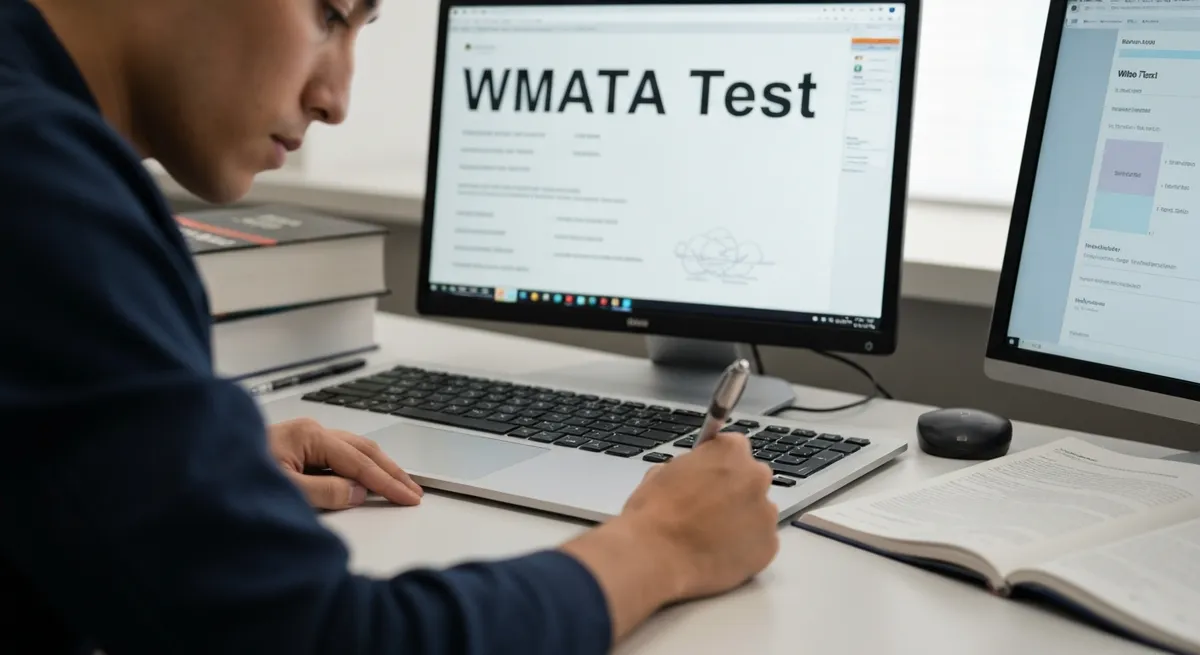
WMATA Test is a test to qualify you to be a bus driver or bus mechanic. You can find the test on the internet or at the WMATA office. This test will determine if you are fit to work on a bus and if you are willing to commit to working on a bus or rail for many years. It is also a test to ensure that you are in good physical condition.

Free WMATA Practice Test Online

WMATA Assessment Test

WMATA is a transportation hub in the DC metropolitan area. Among its many laudable feats of engineering is its newest train system, the Metrorail. The agency has a well-deserved reputation for fostering a high-performing workforce. It is not surprising then that the agency is a magnet for ambitious employees. In order to retain the coveted talent, the agency has devised a variety of programs and initiatives. Among the many is the aforementioned eponymous, an apprenticeship scheme. Other notable initiatives include an employee benefits program and an employee assistance program to name but a few. A slew of other responsibilities are tasked to the agency’s HR department, including a fair number of employee training and evaluation programs. The organization’s website is a treasure trove of information and is a great resource for employees, prospective employees and vendors looking to find a foot in the door.

WMATA Transit Guide
What is WMATA?WMATA (Washington Metropolitan Area Transit Authority) operates the DC Metro rail system and Metrobus service across Washington DC, Maryland, and Virginia.
What does WMATA stand for?WMATA stands for Washington Metropolitan Area Transit Authority, the agency that operates public transit in the greater Washington DC region.
Is WMATA a federal agency?No, WMATA is not a federal agency. It's an interstate compact agency created by DC, Maryland, and Virginia, though it receives federal funding.
Who owns WMATA?WMATA is jointly owned by the District of Columbia, Maryland, and Virginia through an interstate compact agreement established in 1967.
How much does WMATA cost?WMATA Metro fares range from $2.00 to $6.00 depending on distance and time of travel. Bus fare is a flat $2.00 per ride.
How much is WMATA bus fare?WMATA Metrobus fare is a flat $2.00 per ride using SmarTrip. Express bus routes cost $4.25 per ride.
What are WMATA Metro fares?Metro rail fares vary by distance and peak vs. off-peak times, ranging from $2.00 to $6.00 per trip with SmarTrip card.
How does the WMATA fare calculator work?The WMATA fare calculator lets you enter your origin and destination stations to estimate your trip cost based on distance and travel time.
What is WMATA SmarTrip?SmarTrip is WMATA's reloadable fare card used to pay for Metro rail and bus rides. It's required for all Metro travel.
Where to buy a WMATA SmarTrip card?SmarTrip cards are available at Metro station fare machines, the WMATA store, CVS, Giant, and other retail locations throughout the region.
How to add money to a WMATA card?Add value to your SmarTrip online at wmata.com, through the SmarTrip app, at Metro station fare machines, or at participating retailers.
Can you add WMATA card to Apple Wallet?Yes, you can add SmarTrip to Apple Wallet on compatible iPhones and Apple Watches to tap and pay for Metro rides directly.
What time does WMATA open?Metro opens at 5:00 AM on weekdays, 7:00 AM on Saturdays, and 8:00 AM on Sundays. Metrobus hours vary by route.
What time does WMATA close?Metro closes at 11:30 PM Sunday through Thursday and midnight on Friday and Saturday nights.
When does WMATA stop running?The last Metro trains depart terminal stations approximately 30 minutes before closing time. Check schedules for your specific station.
How late does WMATA run?Metro runs until 11:30 PM on weeknights and midnight on weekends. Late-night bus service is available on some routes.
How much do WMATA bus drivers make?WMATA bus drivers earn approximately $50,000 to $75,000 annually depending on experience, with full benefits and pension eligibility.
What is the WMATA CEO salary?The WMATA General Manager/CEO earns approximately $400,000 to $500,000 annually, making it one of the highest-paid transit positions.
How to apply for WMATA jobs?Apply for WMATA positions through their careers portal at wmata.com/careers. Create an account and submit your application online.
Does WMATA hire felons?WMATA conducts background checks for all positions. Hiring decisions depend on the offense type, time elapsed, and job requirements.

WMATA Bus Operator Assessment Test

Getting a job as a bus operator or train conductor requires the ability to maneuver a large vehicle. If you’re looking to get the job, you will need to pass the MTA Bus Operator Examination (BOE), pass a physical, pass a drug test, and pass a background check.

For a new hire, you will have to pick up Bus Operator supplies, report to work, and take on the mantle of Bus Operator while also operating a variety of City buses. You may also be assigned to work weekends or holidays.

The MTA Bus Operator examination is one of the most popular MTA employment tests. You will be tested on your knowledge of basic traffic and road safety, basic mechanics, and the physics of the motor vehicle. In addition, you will also be tested on the BOSS (Buses Operational Systems) acronym, which is a series of multiple-choice tests that evaluate your knowledge of the various facets of bus operation. Depending on the number of open positions and the candidate pool, you may be called for an interview.

WMATA Elevator Apprenticeship Test

Applicants for elevator industry apprenticeships are required to pass an elevator aptitude test as part of their application process. Candidates must also pass a tool recognition exam. These tests are administered by the Joint Apprenticeship Committee. Applicants who pass these tests will be scheduled for an interview. The interview is held by two members of the JAC, one from the employer side and one from the International Union of Elevator Constructors (IUEC).

The Elevator / Escalator Apprenticeship Program is a nationally recognized program. It requires completion of formal training, on-the-job training and formal testing. It is a four-year apprenticeship program that culminates in the assignment of a certified journeyman. Applicants must be 18 years old and have a high school diploma or GED. They must have a valid driver’s license from a jurisdiction in which they reside.

Candidates must also have a valid photo ID and be physically able to perform the essential functions of the apprenticeship program. New employees must complete a pre-employment medical appointment and be fully vaccinated. They must also obtain a commercial driver’s license.

WMATA Bus Mechanic Test

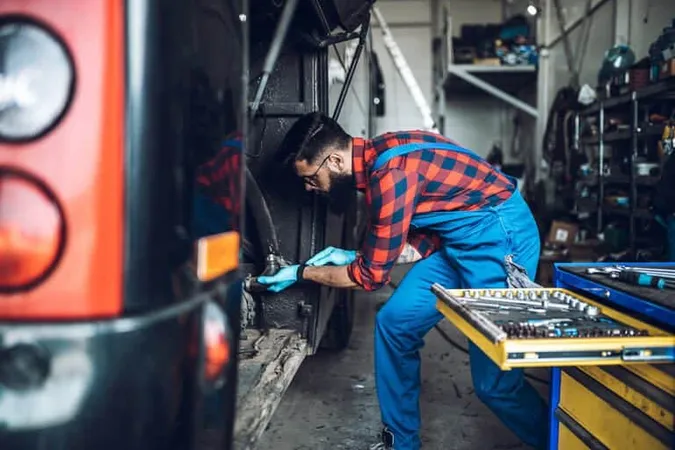
Getting a job as a bus mechanic isn’t easy, but the WMATA bus mechanic test is a good way to get noticed. The mechanics of the Washington Metro Area Transit Authority (WMATA) are charged with diagnosing problems on their fleet of diesel, hybrid and electric buses. As part of their annual maintenance roadeo, these mechanics show off their abilities, and share their tips and tricks.

The Washington Metropolitan Area Transit Authority (WMATA) conducts a yearly maintenance roadeo, in which the agency’s bus and train mechanics compete in an event that tests their problem solving skills. The competition isn’t limited to mechanics, as train operators compete for the best training course, and bus drivers are given a mandatory training course before they are tested for their driving abilities. The WMATA bus mechanic test is a fun way to get noticed and a good way to see the mechanics of the future.

Taking the WMATA bus mechanic test is merely the first step in a long journey toward a job with one of the nation’s largest transit agencies. The next step is to fill out an application. Fill out your application, and upload your resume. You’ll then be contacted if your application is selected for an interview. The interview will be a panel interview, and you will be asked to give examples of your experience and what you would consider to be the most important things to know about your position.

WMATA Drug Test

WMATA drug test rules were enacted in 1982. The testing plan was designed to detect the presence of illegal drugs and alcohol in employees. The tests consisted of blood and urine samples. The testers did not exercise their discretion when conducting the tests. WMATA employees who were involved in on-the-job accidents were escorted to a medical facility. A positive result from the post-incident medical examination was considered evidence of intoxication. If the employee tested positive for any substance, he or she was subjected to a 60-month random testing period. WMATA employees who had a second violation of any detectable level of intoxication were terminated.

The Amalgamated Transit Union Local 689, the union representing WMATA bus and train operations, filed a grievance. The collective bargaining agreement called for a grievance process when an employee is denied or unable to pursue a remedy. The union filed a complaint against WMATA for alleged violations of the collective bargaining agreement, including a breach of contract and negligence. In the suit, the plaintiffs argued that WMATA’s rule was invalid because it was unreasonable, without a reasonable factual basis, and that WMATA had no statutory or common law authority to enforce the rule.

WMATA Physical Ability Test

During the application process, candidates are tested on a variety of skills and abilities ranging from physical agility to firearm safety. The WMATA physical ability test (PAT) is a required preliminary test for applicants. It tests the physical abilities of applicants to the best of the department’s ability. This includes the ability to drag and push objects, climb stairs, and operate a firearm in a safe and secure manner. Applicants must pass the PAT to be considered for employment. The test can be administered in the applicant’s home, at the WMATA Training Center, or at a local community college. In order to pass the test, applicants must complete the full-length, 20-minute test in under one hour.

The WMATA is one of many municipalities that test applicants for physical ability. Although the PAT is mandatory for employment, some municipalities do not rank candidates based on CPAT performance. It is a good idea to read the applicant preparation handbook carefully to get the most out of your test. It’s also a good idea to ask for reasonable accommodations if you are a qualified applicant with a disability.

WMATA RWP Test

WMATA and its ilk is on the upswing. With the introduction of the tastfull o’s, a more openly minded approach has been able to make it more likable. Unlike the old guard, WMATA is no longer beholden to the whims of its predecessor, and can now focus on a more strategic path towards better service and a more competitive cost of service. WMATA will soon be the most innovative provider in the region. This includes a $6 billion capital funding agreement, an aggressive hiring program and the aforementioned tastfull o’s. WMATA will also soon be announcing a formalized program of customer service and employee education. Unlike previous years, WMATA’s top-down approach will make a more positive impact on customer service, resulting in happier and healthier passengers and employees.

WMATA Transit Police Test

Applicants are required to create an account on the WMATA website. Once they have completed this, they will be able to upload their resume and fill out the application form. After submitting this, they will be contacted to schedule a phone interview. This interview will be one-on-one and will focus on their background and resume.

The Metro Transit Police are responsible for protecting the Metro system, including both Metrorail and Metrobus systems. Officers also provide law enforcement services to local communities. As a part of the police force, they are trained to respond to terrorist threats. Among the weapons they carry are submachine guns and long rifles, pepperball launchers, and shotguns. They also have a dedicated explosive disposal team. These teams are often tasked to conduct security sweeps of the rail system.

The Metro Transit Police have developed a three-pillar approach to transit safety. This includes enforcement, prevention, and education. These three pillars develop solutions to the problems that lead to crime. The enforcement pillar increases visibility and deterrent to criminal activity. The prevention pillar develops solutions by identifying and addressing the underlying issues that lead to crime.

WMATA Test Questions and Answers

WMATA Frequently Asked Questions

Access the WMATA trip planner at wmata.com or through the Metro app. Enter your starting point and destination to get route options, travel times, and fare estimates for both Metro rail and bus connections.

Yes, WMATA offers an official mobile app for iOS and Android. The app provides real-time train and bus arrivals, trip planning, service alerts, and the ability to manage your SmarTrip card balance.

WMATA offers several pass options including the 7-Day Regional Bus Pass and unlimited ride options for frequent commuters. Passes can be loaded onto your SmarTrip card online or at fare machines.

View WMATA service alerts on wmata.com, through the Metro app, or by following @Metrorailinfo on Twitter. Sign up for MetroAlerts to receive email or text notifications about delays and track work.

WMATA headquarters is located at 300 7th Street SW in Washington, DC, near the L'Enfant Plaza Metro station. The agency also operates rail yards and facilities throughout the region.

Metro rail opens at 7:00 AM on Saturdays, two hours later than weekday service. Metrobus schedules vary by route on weekends, so check your specific bus line for Saturday departure times.

WMATA receives funding from passenger fares, federal grants, and contributions from DC, Maryland, and Virginia. Each jurisdiction provides operating and capital funding based on a formula tied to ridership and population.

WMATA Metro is a physical rail system, but you can plan trips, purchase fare value, and manage your SmarTrip card online at wmata.com. Virtual SmarTrip cards can be added to mobile wallets for contactless payment.

Contact WMATA customer service by calling 202-637-7000 for general inquiries. For lost items, visit wmata.com/lostandfound. You can also reach them through social media or submit feedback online.

WMATA parking rates vary by station and time. Most stations charge around $5.20 for all-day parking, with lower rates at less busy locations. Parking is free on weekends and federal holidays at most facilities.