
What is OSCP? 2026 September
Pass the What is OSCP? exam with confidence. Practice questions with detailed explanations and instant feedback on every answer. 🆕
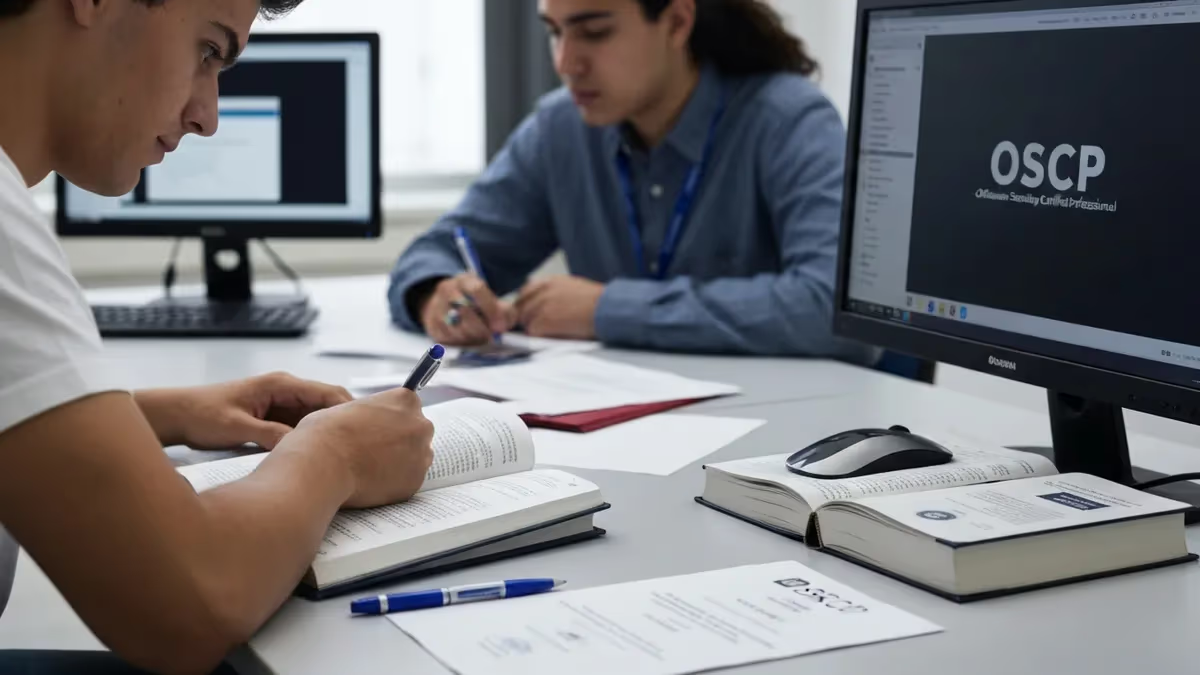
One unique aspect of OSCP is its emphasis on penetration testing skills. Candidates are required to solve a series of complex challenges within a 24-hour timeframe, simulating real-life scenarios where time pressure plays a significant role. This not only showcases technical knowledge but also tests the ability to perform under stress and think creatively in order to exploit vulnerabilities. Furthermore, what sets OSCP apart from other certifications is its focus on self-learning and exploration. The course materials provide a foundation of knowledge, but they encourage students to go beyond the given resources and engage in independent research. This approach allows candidates to develop problem-solving skills while gaining exposure to different tools and techniques used by real-world hackers.
Overall, OCSP has gained significant recognition among professionals seeking employment opportunities as it demonstrates practical skills instead of simply theoretical knowledge. Owning an OCSP role signifies the individual has successfully completed challenging practical assessments, and they have acquired the technical skills needed in today's fast-paced cyber security industry. Additionally, it signifies their capabilities in identifying and exploiting vulnerabilities and recommending solutions.
Key Takeaway: OSCP certification demonstrates expertise in this field. Most candidates spend 4-8 weeks preparing with practice tests and study guides before taking the exam.
- ✓Review the official OSCP exam content outline
- ✓Take a diagnostic practice test to identify weak areas
- ✓Create a study schedule (4-8 weeks recommended)
- ✓Focus on your weakest domains first
- ✓Complete at least 3 full-length practice exams
- ✓Review all incorrect answers with explanations
- ✓Take a final practice test 1 week before exam day

OSCP Practice Test Questions
Prepare for the OSCP - Offensive Security Certified Professional exam with our free practice test modules. Each quiz covers key topics to help you pass on your first try.
OSCP Buffer Overflow
OSCP Exam Questions covering Buffer Overflow. Master OSCP Test concepts for certification prep.
OSCP Kali Linux
Free OSCP Practice Test featuring Kali Linux. Improve your OSCP Exam score with mock test prep.
OSCP Network Scanning and Enumeration
OSCP Test Prep for Network Scanning and Enumeration. Practice OSCP Quiz questions and boost your score.
- +Industry-recognized credential boosts your resume
- +Higher earning potential (10-20% salary increase on average)
- +Demonstrates commitment to professional development
- +Opens doors to advanced career opportunities
- −Exam preparation requires significant time investment (4-8 weeks)
- −Certification fees can be $100-$400+
- −May require continuing education to maintain
- −Some employers may not require certification
About the Author

Senior Cloud Architect & Cybersecurity Certification Trainer
Stanford UniversityDavid Chen holds a Master of Science in Computer Science from Stanford University and has earned over 25 professional certifications across AWS, Microsoft Azure, Google Cloud, cybersecurity, and enterprise architecture domains. He works as a solutions architect and now focuses on helping IT professionals pass cloud, security, and technical certification exams.
Join the Discussion
Connect with other students preparing for this exam. Share tips, ask questions, and get advice from people who have been there.
View discussion (7 replies)