

Procreate Practice Test
Updated for September 2026Procreate Digital Illustration App Questions and Answers
- Prepare Your Artwork To begin, you will have to select an already-existing illustration from which you would like to create an animated version (or, if you prefer, you can start from scratch and create one). Swiping to the right on the canvas icon and clicking the “duplicate” button will create a second copy of the illustration that can be used for animation. If you ever need to adjust the initial design or use it, you will always have access to an unaltered version of your illustration that contains all its layers.
- Activate the Animation Assist function. After that, you will need to activate the animation tool included in Procreate, known as Animation Assist. Navigate to the icon that looks like a wrench in the top left corner of the screen, clicks on the word “canvas,” and then turn on the feature that says “Animation Assist.” This will show a new toolbar for animation at the bottom of the screen when you click this.
- Add a Frame and Slightly Adjust the Image After that, you will start making incremental adjustments by creating duplicate frames of the image you have already prepared. Holding down the “add frame” button on the Animation Assist toolbar will cause a second frame to appear, which you can then use to duplicate the current frame. Proceed to the fourth step. Adding New Frames and Making Adjustments You will be able to create an animation that is longer and more fluid if you add more frames.
- You will need to carry out the steps outlined However, before making adjustments to the animation, ensure that you have a copy of the most recent frame you have created rather than the frame that was used initially.
- Finalize You might notice that it has a jerky appearance because of the movement you created, but this is completely up to you. This occurs because the default setting for the animation in Procreate is to loop the movement. This means that it plays the animation from beginning to end and then begins playing from the beginning once more. The sixth step is to export and share. When you’re finished with your GIF and happy with how it turned out, Procreate makes it simple to broadcast your work to the rest of the world. You can choose to share an animated GIF, animated PNG, or animated MP4 file by clicking the wrench icon in the upper left corner of the screen, then clicking “share.” A drop-down menu will then provide you with these three format options.
- To move the cursor, press the arrow button. It is located in the upper menu bar on the left side of the page.
- At the very bottom of the screen, a menu bar will appear.
- Click the “Freeform” button.
- You now can either horizontally or vertically mirror your drawing.
- Select the layers tab by clicking on its icon. Tap the icon in the upper right corner of your Procreate toolbar that looks like two squares stacked on top to gain access to this feature.
- Choose the layer you want to remove from the image. Click on the layer you want to remove, either with your finger or your Apple Pencil.
- Swipe left. Swipe to the left on the layer that you have selected, either with your finger or the Apple Pencil if you have it.
- Click Delete. Simply selecting the Delete button will remove your layer.
- To begin, tap the tool icon. This is located in the upper-left-hand corner of the Procreate window. This brings up the Actions menu in the menu bar.
- Tap Canvas. It is the icon that looks like a folder that is located at the very top of the Actions menu.
- Tap Edit Drawing Guide. It belongs to the second category of possible settings. After that, you’ll see the Drawing Guides screen.
- Tap the button labeled “Symmetry.” This is on the right side of the bar at the bottom of the screen. A vertical symmetry guide will appear in the middle of the canvas as the Guide Options window expands further.
- Pick a symmetry guide to go in which direction. When you use a symmetry guide, whatever you draw on one side of the guide will automatically appear symmetrically on the other side. 6. Make adjustments to the guides. You can change the location of the mirroring by dragging any of the guides to a different position. The placement of the guides is not fixed in any way. 7. To alter the reflection, activate the rotational symmetry setting (optional). The default symmetry mode, referred to as Mirror Symmetry, will rotate and mirror anything you draw on the opposite side of the guide. If you would rather flip and rotate (that is, flipping both horizontally and vertically), you can turn on “Rotational Symmetry” by toggling the switch to the “On” position. 8.To return to the canvas, tap the Done button. At this point, your guides will appear on the canvas. This indicates that you are prepared to begin drawing symmetrical lines. 9. You can use your finger or a stylus to draw. While you are drawing, the symmetrical mirror image of your creation will appear on the opposite side of the guide (s).
- Create a new document in square format. This is of the utmost significance. If you begin with a rectangle canvas, the stamp brush you end up with will have an angled appearance. Draw your design. If this is your first time creating a brush in Procreate, start with a straightforward design.
- Draw your design. If this is your first time creating a brush in Procreate, start with a straightforward design.
- Click the copy canvas button in the actions panel (the wrench in the top left corner).
- Begin painting with a new brush.
- Click the paste shape button after the shape editor has been opened.
- To flip the colors, tap the picture with two fingers at the same time.
- In the menu for the stroke path, adjust the spacing so that it reads “max.”
- If you want more jitter, turn up the volume. I set mine to 107%.
- Raise the scatter value in the menu for the shape. I set mine to 57%. (If you do not want the stamp brush styles to be dispersed randomly, you should leave this setting at 0).
- Increase the amount of rotation. I set mine to 30%. (Once more, if you want your stamp to remain facing a particular direction, you should keep this value at 0.)
- In the settings for the Apple pencil, reduce the amount of opacity to 0. (If you want transparent shapes, keep them at their maximum value.) You are also free to experiment with the sizes.
- Utilize the “Use stamp preview” option, which can be found in the properties menu. You also can alter the minimum and maximum sizes in this section. I have my maximum set at 434%.
- Create a New Blank Canvas At the bottom of the menu, you’ll find an option to create a custom canvas size. For a sticker sheet, the size can be up to 1571 pixels by 2367 pixels at a resolution of 300 dpi.
- Draft your sticker. Tap the symbol that looks like a brush near the top right corner of the screen to select a brush to use for sketching. This makes the Brush Library available to use. You will find a variety of brushes to choose from in the section labeled “Sketching.”
- Add Color To activate a new layer, touch the icon that looks like overlapping squares, and then touch the plus sign in the screen’s upper-right corner. This will result in the creation of “Layer 2.” You have the option of renaming your layers something like “sketch” and “color,” or you can leave them in their current state.
- Group the layers. After you have completed coloring all of the layers of the sketch to your liking, you can combine the layers by tapping on the top layer and selecting the “merge down” option from the contextual menu that appears. Select the Sticker, and then Move It to the Desired Location. After that, click the “select” icon at the top of your screen. It looks like a ribbon to me. Choose Freehand from the drop-down menu that appears when the selection panel opens. This feature enables you to draw a dotted line around your drawing, select it, and then relocate it anywhere you like on the screen.
- When you select multiple layers, the Group option will become visible in the top right corner of the Layers panel. If you tap it, the selected layers will be gathered into a Group.
- You can expand or collapse the group at any time by using the arrow located to the right of the Group.
- You can select a Group in the same way you select layers—as either a Primary or Secondary selection.
- iPad Pro 12.9-inch (1st, 2nd, 3rd, 4th, and 5th generation)
- iPad Pro 11-inch (1st, 2nd, and 3rd generation)
- iPad Pro 10.5-inch.
- iPad Pro 9.7-inch.
- iPad (9th generation)
- iPad (8th generation)
- iPad (7th generation)
- iPad (6th generation)
- Open Files App.
- Navigate to the iCloud Drive app.
- Make a new folder on your computer and name it “Procreate.”
- You can store the files you create in Procreate in the iCloud Drive folder titled “Procreate.”
- To get started, make a radial gradient using three different colors. Launch the Procreate app and select a color to use as your base to get started. I’ve decided to draw the circle in red for this tutorial. Make sure the circle is big enough to cover the entire canvas, and once it’s the right size and centered on the canvas, fill in the edges with the same color to complete the effect. To keep things straightforward, I’ll draw the next circle on the same layer as the previous one. After deciding on a second color, draw a second circle and adjust its size to your liking. You can make it any size you like. You can make changes to the shape after you have drawn it. Then, add a contrasting color in the middle by drawing a circle in the center and filling it with yellow. This will complete the process. Creating the gradient is a child’s play at this point. Select Gaussian blur at the layer level from your adjustments menu. This will be your first step. The amount of blur you want to create can be determined by dragging your pencil across the page in the desired direction. You can set the gradient to be very smooth or slightly blurry in appearance. Both are fantastic options for setting the scene or providing depth to a character. And that concludes our walkthrough of creating radial gradients in Procreate.
- Procreate’s Step-by-Step Guide to Making Linear Gradients The next type of gradient that can be made in Procreate is a linear gradient, which resembles a sunset in some ways. The process is extremely comparable. To begin, peel away the first layer and then paint the entire surface with the same red color. You have a few different choices to make regarding this gradient. The simplest method is to select three colors and create a band for each color that runs across the canvas. There is no need to worry about being extremely precise at this point. If you want to add variety to your sunset, you could do some waves. The last step is to blur it by dragging the Gaussian blur tool over the layer that contains your colors. You now have a lovely background on which you can superimpose a drawing or silhouette.
- Sketch out the shape. Making a rough sketch of a person and their hair is one of the most important steps you want to do. This will help you not only determine where the hair should go but also help you visualize the flow of the hair and where dark and lighter areas of the hair are.
- Make a hair base. Going to the “Layers” panel, we want to add a new layer for our “Hair base.” This will be the main color you will use to build on, adding darker and lighter strands. With the new layer created, select the color for the base. Using the “Script” brush to outline the shape of the hair and fill it in with the same color, making a solid shape of the hair.
- Add base undertones. We are going to add some dark undertones to support our base color. We want to keep this on a separate layer and use the clipping mask function. This will allow us to add color to the hair base and make corrections if needed without touching the hair base.
- Add layers of color. In this step, we will layer for layer and add a shade of color to build it up to a completed look. We aren’t using clipping masks for this step, as we want some of our curls to go over the base shape. We are also changing the brush to “Thin” to make the individual strands/sections of the hair.
- Making adjustments. If you want to adjust or fix one of the color layers, this is when to do it. We will work with layer opacity and blend modes on the mid and deep tones layers. You can change the colors of your layers but adjust the layers to get some nifty effects that you can’t get when changing colors. Going into the “Layers” panel, select a color layer you want to lower the opacity.
- Create the Drawing Guide Create the drawing guide by employing the character pose stamp brushes appropriately. There are a stamp brush for the head, torso, arms, hands, legs, and feet. There is also a stamp brush for the hands. Adjust the size of the stamp brush as required. The torso should be added first. Ensure the Symmetry Guide is turned on for the hands, feet, arms, and legs. Because of this, it is much simpler, and you won’t have to draw each component separately. Adding the head and limbs to the torso should be done in separate layers. At long last, add the hands and feet on separate layers of their own.
- Outline the person. Adjust the opacity of the drawing guide layers, so they are less visible. Draw a caricature of the person’s outline. Turn on the Symmetry Guide and use it whenever you feel it’s necessary. You are not required to adhere to the guide in its entirety. You are welcome to sketch in any color you like. -Sketch the garments. Cover up the body’s guide layers with a mask. Create a sketch of the clothes on a new layer. Enable and make use of the Symmetry Guide in places that seem appropriate.
- Draw the actual lines of the body and the clothes Draw the head, the body, and the clothes in separate layers, referring to the sketch as you go. Once more, turn on the Symmetry Guide in any place where it could be useful.
- Make a face and add the hair. The head stamp brushes come with lines that indicate the appropriate placement of the eyes, nose, and lips. Using the stamp brushes included in Design Bundles, add the nose stamp and the lips stamp to separate layers of the image. The eyes should be added using realistic eyes stamp brushes on a new layer, which should have the Symmetry Guide turned on. Draw the eyebrows on a new layer with the Symmetry Guide turned on. Choose and use whichever hairstyle stamp brush best complements the shape of your face.
- Adding Color and Shading Turn off visibility for the guide and sketch layers. Add some color to give your character more personality. You can give your character any skin tone you want by using the color palettes for skin tones in Procreate.
- Open your Actions menu. Simply opening the Actions menu requires a click on the tool icon.
- Click on the button labeled Canvas. In the Actions menu, a button labeled “Canvas” is located two spots to the left of the menu’s leftmost position. Make sure you click on it.
- To rotate your canvas, you must first click the button.
- Start sketching from your shoulder.
- This is a very common trick based on traditional drawing techniques that professional artists have utilized for a long time. When drawing a line, you should not just use your wrist to move; you should try to make a move with your entire arm. The motion should be made with the entirety of your arm, beginning at your shoulder. Because you are engaging more muscles in action, you will have increased control over the movement due to what you are doing. You can exert greater control and precision over your lines if you do not rotate your wrist as you draw them.
- Adjust the slider for the StreamLine effect. This straightforward technique uses the engine built into Procreate to smooth your lines as you draw them automatically. It’s almost like magic; it can transform even the waviest line into a graceful and even stroke. Navigate to the settings of the brush you like to use the most. Proceed to the menu labeled “Stroke Path.” Bring the StreamLine slider to the right.
- Use a drawing glove Gloves are the ideal solution for the problem of making it easier to slide your hand across the screen. When drawing on paper, some traditional artists find that wearing gloves helps them avoid having their sweaty hands cling to the surface of the paper and prevents their charcoal from becoming smudged. When you’re creating a work of digital art on a glass surface, wearing a glove reduces the friction between your hand and the screen. This makes it easier for you to move smoothly across the surface.
- Start with a Blank Canvas When designing on the iPad, I almost always work in a square 8 inches by 8 inches and uses 300 dots per inch resolution. This size appeals to me because a swatch on Spoonflower is 8 inches by 8 inches, but when I print it at 300 dots per inch, I have more leeway to adjust the proportions of my design.
- Stay Within the Boundaries of the Canvas If you want to keep things straightforward, don’t let any of your work run off the side; instead, make sure that everything is contained within the borders of the canvas. After drawing all the lovely pictures, you want to see on your canvas, select a large brush and bring the opacity slider down to about half.
- Identify the Four Corners Draw a dot in each of the four corners of your canvas, taking great care not to let any of the elements in your drawing touch or overlap. Next, access the Layers panel, swipe left on the layer you want to duplicate, and click the Duplicate button (note for artists working with multiple layers: combine your layers into a group, then select and duplicate the group).
- Arrange the Individual Layers Click the “Transform” tool in the top left corner while you have one layer selected. Snapping and magnetics can be activated by turning the switch in the bottom left corner. Then, move the piece of art that has been selected up and off the canvas until yellow guides appear both vertically and horizontally as well as along both sides. Your image will be cut in half and removed from the canvas. De-select only after you have gained complete visibility of the guidelines.
- Perform a Snapping Test Now, select the second layer, click the Transform button, and move it in the opposite direction until the yellow and blue guides appear. After that, deselect the layer. The dots you added into the corners will now meet up in a clean and orderly fashion on opposite sides of the canvas. If you want to double-check that it worked, zoom in to take a closer look at those dots. The dots should be touching cleanly, and if you see a dark or white line where the dots meet, your image hasn’t snapped correctly. Tap with two fingers to undo what you just did, then try it again. You might also want to check all four sides of your canvas for white edges, which indicates that the image might not have been properly snapped to the side in the first place.
- Combine Your Different Layers Combine your two different layers into one. If you are working with two groups that contain many layers, you will need to drag the layers out of the groups and merge them one at a time before proceeding with your work. Fill in the blank areas but stay away from the sides of the canvas as you draw.
- Continue Positioning Repeat steps 3-6, but this time drag the layers to the left or right. This will complete the process. Check that everything snapped correctly by looking for overlapping areas in your dots and white edges on the canvas. Remember to check that everything snapped correctly. You are free to draw whatever you like in these blank spaces.
- Put Your Reps to the Test In my work, I frequently check the repeat by importing it into an application that enables me to tile 4 or 8 squares together in a short amount of time. For this purpose, I make use of Instagram’s Layout feature. You can save the image locally to your Images folder by selecting JPG after clicking the Share button in the tool panel. Keep your canvas open in Procreate and launch Layout before beginning the tiling process. After that, you can return to the window you were working in earlier in Procreate and make changes if something isn’t functioning properly.
- Post the completed design to the website. When satisfied with your design, you can easily upload it to Spoonflower from your device by following the on-screen instructions. Select Photo Library from the drop-down menu, and then look for the tile in your collection of photographs. After the image has been uploaded, you can change the dimensions, give it a title, and even order a sample without leaving the comfort of your couch.
- Flowers and Plants.
- Simple Animated Art.
- Recreating Photos Into Digital Watercolor.
- Abstract Designs.
- Handcrafted Lettering.
- Tattoo Designs.
- Personalized Drawings.
- Water Droplet Drawing.
Procreate Practice Test Questions
Prepare for the Procreate exam with our free practice test modules. Each quiz covers key topics to help you pass on your first try.
Procreate Basic
Procreate Exam Questions covering Basic. Master Procreate Test concepts for certification prep.
Procreate Introduction
Free Procreate Practice Test featuring Introduction. Improve your Procreate Exam score with mock test prep.
Procreate Animation and Time-lapse
Procreate Mock Exam on Animation and Time-lapse. Procreate Study Guide questions to pass on your first try.
Procreate Brushes and Painting Tools
Procreate Test Prep for Brushes and Painting Tools. Practice Procreate Quiz questions and boost your score.
Procreate Color Theory and Management
Procreate Questions and Answers on Color Theory and Management. Free Procreate practice for exam readiness.
Procreate Export and File Management
Procreate Mock Test covering Export and File Management. Online Procreate Test practice with instant feedback.
Procreate Layers and Masks
Free Procreate Quiz on Layers and Masks. Procreate Exam prep questions with detailed explanations.
Key Takeaway: Procreate certification demonstrates expertise in this field. Most candidates spend 4-8 weeks preparing with practice tests before taking the exam.
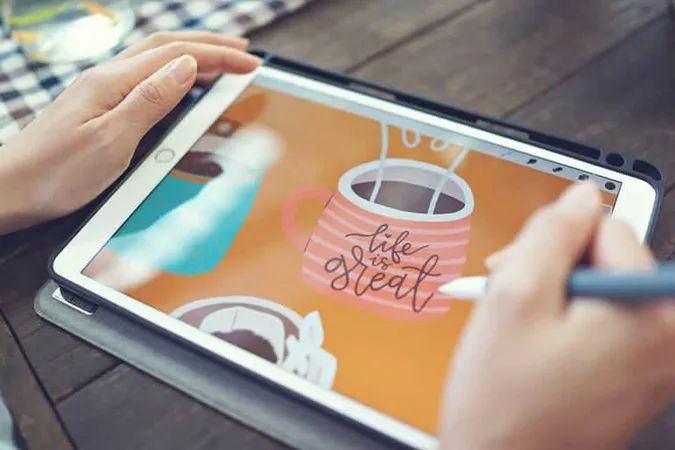

Procreate Drawing Ideas
Procreate: Pros and Cons
- +Procreate credential is recognized by employers and industry professionals
- +Higher earning potential compared to non-credentialed peers
- +Expanded career opportunities and professional advancement
- +Structured learning path builds comprehensive knowledge
- +Professional development that stays current with industry standards
- −Preparation requires significant time and study commitment
- −Associated costs for exams, materials, and renewal fees
- −Continuing education needed to maintain credentials
- −Competition for advanced positions can be challenging
- −Requirements and standards may vary by state or region
About the Author

Certified Professional Development Expert & Niche Certification Advisor
University of Pennsylvania Graduate School of EducationDr. Alexandra Kim holds a PhD in Professional Studies from the University of Pennsylvania and is a Certified Professional in Learning and Performance (CPLP) and Certified Professional in Talent Development (CPTD). With 17 years of corporate training and professional certification advisory experience, she helps professionals navigate specialized, emerging, and cross-industry certification programs.