
Online BLS: Complete Guide to Getting Your Basic Life Support Certification
What is a BLS certification & how do you get it online? Full guide to AHA & Red Cross courses, exam tips, renewal & more. ✅

If you have ever wondered what is a BLS certification and whether you can complete the training entirely online, you are not alone. Basic Life Support — or BLS — is one of the most widely required credentials in American healthcare, and the demand for flexible online BLS programs has exploded in recent years. From registered nurses and paramedics to dental hygienists and medical students, hundreds of thousands of professionals must obtain or renew this certification every two years to meet employer and regulatory requirements.
Online BLS programs blend digital coursework with in-person skills verification, making it easier than ever to fit certification into a busy schedule. The American Heart Association (AHA) and the American Red Cross — the two dominant credentialing bodies in the United States — both offer blended-learning formats that let you complete the cognitive, theory-heavy portion at your own pace before showing up to a short hands-on session. Understanding how each provider structures its program is the first step toward choosing the right path for your career and schedule.
What does BLS stand for? BLS stands for Basic Life Support, a standardized set of emergency interventions designed to sustain life during cardiac arrest, respiratory failure, or airway obstruction until advanced medical care arrives. These interventions include high-quality CPR, automated external defibrillator (AED) use, and relief of foreign-body airway obstructions in adults, children, and infants. The skills are evidence-based and updated roughly every five years by the International Liaison Committee on Resuscitation (ILCOR).
A common point of confusion is whether BLS is the same as CPR. Is BLS the same as CPR? Not exactly. CPR — cardiopulmonary resuscitation — is a core component of BLS, but BLS also encompasses AED operation, bag-mask ventilation, team dynamics, and recognition of life-threatening emergencies. A standard community CPR class teaches layperson-level skills, while a BLS certification course is designed for healthcare providers and covers more advanced techniques, two-rescuer scenarios, and in-hospital response protocols. If you need a credential for clinical employment, a basic CPR card will almost never suffice; you need a full BLS certification.
Basic life support for healthcare providers is the phrase you will see on most job postings, hospital credentialing checklists, and state licensing requirements. It signals that the employer wants an AHA BLS Provider card or an equivalent from a recognized body like the Red Cross.
Facilities increasingly verify that this card was issued by an accredited provider, so purchasing a cheap online-only certificate from an unrecognized vendor — one with no in-person skills component — could result in your card being rejected at hire or during a credential audit. You can explore online bls practice resources to sharpen your knowledge before the exam.
The landscape of online BLS options has grown significantly since the COVID-19 pandemic accelerated the adoption of remote learning in healthcare education. Both the AHA and Red Cross updated their blended learning offerings, and many accredited training centers now offer highly flexible scheduling for the hands-on skills check, sometimes completing it in as little as 30 to 60 minutes once you have finished the online modules. Understanding what to expect from each stage of the process — online modules, skills session, and written exam — will help you walk in confident and walk out certified.
This guide covers everything you need to know about obtaining and renewing your BLS credential through an online-blended program, including course formats, costs, exam content, renewal timelines, and practical study strategies. Whether you are a first-time candidate or someone looking to streamline your basic life support online renewal, the information below will help you prepare efficiently and pass with confidence.
Online BLS Certification by the Numbers

Online BLS Course Formats Explained
Complete the cognitive portion — videos, reading, and knowledge checks — online at your own pace. Then schedule a brief in-person skills session (30–60 min) with an authorized instructor to demonstrate CPR, AED use, and bag-mask ventilation. Both AHA and Red Cross offer this format.
Attend a full 3–4 hour in-person class where a certified instructor guides you through both the content and skills. This remains the most widely available format and is especially useful for those who prefer hands-on learning from the start without any pre-work.
Some vendors advertise fully online BLS certificates with no skills component. These cards are NOT accepted by most hospitals, clinics, or state licensing boards. Always verify acceptance with your employer before purchasing any fully-remote-only certificate to avoid costly mistakes.
For experienced providers who have already completed BLS training recently, some ATC sites offer a standalone skills verification session. You must have completed the online modules to qualify. This option speeds up renewal for healthcare providers who are very familiar with the content.
Understanding exactly what is covered in a BLS course — both online and in person — helps you study smarter and avoid surprises during the skills session. The curriculum for the American Heart Association BLS Provider course is organized around the Chain of Survival concept, a framework that describes the sequence of actions needed to maximize survival rates from sudden cardiac arrest. The links in this chain — early recognition and activation of emergency response, early CPR, rapid defibrillation, advanced resuscitation, and post-cardiac arrest care — serve as the backbone of the entire course.
The online modules for the AHA HeartCode BLS program are divided into several self-paced lessons covering adult CPR, child CPR, infant CPR, AED operation, rescue breathing, and choking relief. Each module concludes with a short knowledge check that must be passed before you can advance. The adaptive-learning technology in the AHA's platform adjusts the content based on your responses, giving you additional practice on concepts where you demonstrate weakness and allowing you to move faster through material you have already mastered.
The basic life support exam American Heart Association component consists of a written or computer-based knowledge assessment that typically includes 25 questions. Most AHA training centers administer this test at the end of the in-person skills session, although some blended-learning formats include it as part of the online module sequence. The passing score is 84%, meaning you can miss no more than four questions on a standard 25-question test. Questions focus on compression rate and depth, ventilation timing, AED operation steps, two-rescuer coordination, and recognition of special situations such as pregnancy, drowning, and opioid overdose.
The AHA BLS exam aha basic life support exam content has been updated to reflect the 2020 American Heart Association Guidelines for CPR and Emergency Cardiovascular Care, which remain the current standard. Key updates from previous guidelines include the formalization of opioid overdose response protocols, increased emphasis on dispatch-assisted CPR, updated guidance on compression-only CPR for lay rescuers, and refined compression-to-ventilation ratios.
As a candidate, you should be prepared for questions that test your knowledge of these updated protocols, especially the 30:2 compression-to-ventilation ratio for single-rescuer scenarios and the continuous compressions with asynchronous ventilation for two-rescuer scenarios with an advanced airway in place.
Beyond the written exam, the skills verification component is where many candidates feel the most anxiety. During the in-person session, an AHA-certified instructor evaluates your ability to perform high-quality CPR — including correct hand placement, adequate compression depth (at least 2 inches for adults, 2 inches for children, 1.5 inches for infants), appropriate rate (100–120 compressions per minute), full chest recoil between compressions, and minimal interruptions. You will also demonstrate proper mask seal and ventilation technique using a bag-mask device, and show that you can correctly operate an AED through a simulated scenario.
The American Red Cross basic life support course covers very similar content and carries equivalent acceptance at most employers, though there are minor formatting and branding differences. The Red Cross eLearning platform delivers content through simulation-based modules and short video demonstrations.
Red Cross instructors use a simulation learning approach during the in-person session, walking you through realistic emergency scenarios that require you to integrate multiple skills simultaneously. The red cross basic life support course also includes content on team roles, effective communication during resuscitation efforts, and when to stop CPR — important practical knowledge that is sometimes overlooked in last-minute cramming.
One important nuance to understand before enrolling: the AHA BLS Provider course is distinct from the AHA Heartsaver CPR AED course. Heartsaver is designed for non-healthcare laypersons such as teachers, coaches, and security personnel. The BLS Provider course is specifically for healthcare professionals and includes more advanced skills, two-rescuer CPR protocols, and bag-mask ventilation. If your employer or licensing board requires basic life support for healthcare providers, make sure you are enrolling in the correct course — the BLS Provider version — rather than the simpler Heartsaver course.
AHA vs. Red Cross vs. Other Providers: Which BLS Certification Is Right for You?
The American Heart Association BLS Provider course is the gold standard for healthcare professionals in the United States. Accepted universally by hospitals, clinics, EMS agencies, dental offices, and nursing programs, the AHA card is the safest choice if you are unsure which certification your employer requires. The HeartCode BLS blended-learning format allows you to complete the online portion anytime, anywhere before attending a brief skills session at an AHA Training Center near you. Course materials are evidence-based and updated on a five-year cycle aligned with ILCOR guidelines.
The AHA BLS Provider certification is valid for two years from the date of your skills session — not the date you completed the online modules. Renewal courses are available in both blended and traditional classroom formats. If your card expires, you must complete the full provider course again rather than just a renewal class, so staying on schedule is important. Costs typically range from $40 to $75 for the blended format, though this varies by training center and region. Some employers reimburse the cost as part of their credentialing benefit programs.

Online BLS Training: Pros and Cons Compared to Traditional Classes
- +Complete the cognitive portion on your own schedule — evenings, weekends, or during breaks
- +Reduce total in-person time to as little as 30–60 minutes for the skills session
- +Repeat online modules as many times as needed to master difficult concepts
- +Adaptive learning technology tailors the content to your specific knowledge gaps
- +Often less expensive than full-day classroom courses at some AHA Training Centers
- +Ideal for busy healthcare professionals with unpredictable shift schedules
- −Still requires an in-person skills session — fully remote certificates are not accepted
- −Online module access may expire if you do not schedule your skills session promptly
- −Some candidates find it harder to stay engaged without a live instructor present
- −Technical issues (browser compatibility, video loading) can delay your progress
- −Quality of the in-person skills session varies by Training Center and instructor
- −Not ideal for complete beginners who benefit most from live, in-person coaching from the start
BLS Renewal Checklist: Everything You Need Before Your Card Expires
- ✓Locate your current BLS card and confirm the exact expiration date — do not guess.
- ✓Verify with your employer or licensing board which provider (AHA or Red Cross) they accept.
- ✓Enroll in a basic life support renewal class or blended HeartCode BLS renewal course at least 30 days before expiration.
- ✓Complete all online modules and pass each knowledge check before scheduling your skills session.
- ✓Bring a valid photo ID to the in-person skills session — some sites also require your prior BLS card.
- ✓Review the 2020 AHA Guidelines update: compression rates, depth, opioid response, and two-rescuer protocols.
- ✓Practice compressions on a home CPR manikin or with a study partner before your skills check.
- ✓Confirm the skills session location, instructor credentials, and whether the site is an authorized AHA Training Center.
- ✓Request your new BLS Provider card or eCard immediately after passing — do not leave without proof of completion.
- ✓Enter your new expiration date in your phone calendar and set a reminder 60 days before it expires.
Your BLS Card Dates From the Skills Session, Not the Online Modules
Many candidates complete their online BLS modules weeks before finding an available skills session, then are surprised to discover their two-year certification clock starts the day of the skills check — not the day they finished the eLearning. This means delaying your skills session by two months effectively shortens your certification window. Schedule your in-person session as soon as possible after finishing the online portion to maximize your full two-year coverage.
Preparing strategically for the BLS written exam is the single most effective thing you can do to guarantee a first-attempt pass. While the overall first-time pass rate for prepared candidates sits around 84%, those who walk in without reviewing the 2020 AHA Guidelines — or who have not practiced their skills — are far more likely to need a remediation session. The good news is that the BLS exam is not designed to trick you; it tests practical knowledge that a healthcare provider should have immediately available during an emergency response.
Start your study process by downloading or bookmarking the AHA BLS Provider handbook, which is included with most course enrollments. The handbook outlines every skill and knowledge area that will be assessed. Read through the sections on adult, pediatric, and neonatal resuscitation carefully, paying special attention to the tables that list compression depth and rate by age group, the algorithms for pulseless cardiac arrest, and the sequences for foreign-body airway obstruction. These are high-yield areas that appear on virtually every BLS exam.
Next, focus on the areas where BLS diverges most significantly from what many healthcare workers assume they already know. The most commonly missed topics include: the correct compression rate (100–120 per minute — a range that many providers underestimate or overestimate), full chest recoil between compressions (hands must not remain pressed on the chest at the top of each compression), and the protocol for two-rescuer CPR with an advanced airway in place (continuous compressions at 100–120 per minute with one breath delivered every 6 seconds, without pausing compressions for ventilation).
Practice questions are an invaluable tool for BLS exam preparation. Working through sets of multiple-choice questions — especially scenario-based ones — forces you to apply knowledge rather than simply recall it. Scenario questions are the most realistic type on the actual AHA exam and the most commonly missed, because they require you to integrate information about patient presentation, team roles, and protocol sequence simultaneously. Using timed practice sessions also helps you build the speed and confidence needed to work through the exam without second-guessing yourself.
Do not underestimate the value of physical practice before the skills session. Even if you have performed CPR clinically, skills drift is real — studies show that BLS psychomotor skills degrade measurably within 3 to 6 months of training without reinforcement. If you have access to a CPR manikin through your workplace simulation lab, spend 15–20 minutes reviewing compression mechanics: hand placement, arm position, compression depth, and release. If a manikin is not available, practice the motions on a firm surface to build muscle memory for the correct hand-heel position.
Special situations deserve extra study time because they are both high-stakes clinically and frequently tested. The BLS exam regularly includes questions about CPR in pregnancy (displace the uterus to the left while performing compressions on a pregnant patient), drowning victims (early rescue breathing is prioritized given the hypoxic mechanism), suspected opioid overdose (administer naloxone if available and call 911 before or while initiating CPR), and patients with implanted devices such as pacemakers or ICDs (do not place AED pads directly over the device). Memorizing these special-case protocols will give you a meaningful edge on exam day.
Finally, arrive at your skills session well-rested and plan to be there for the full allotted time. Even if the session is scheduled for just 30 minutes, instructors may run short remediation drills if they observe technique errors. Wear comfortable clothing that allows you to kneel and lean forward comfortably — BLS skills checks involve physically getting on the floor or leaning over a manikin on a table.
Bring water, arrive five minutes early, and mentally commit to demonstrating your best technique from the very first compression. Confidence and composure during the skills check make a measurable difference in instructor perception and scoring.

An expired BLS card can result in immediate removal from clinical duties, suspension of patient care privileges, or delays in licensure renewal at the state board level. Many hospitals require an active BLS card as a condition of employment — not just at hire, but continuously. If your card expires even by a single day, you may be required to complete the full initial certification course rather than the shorter renewal format, adding both cost and time to the process.
Once you have passed your BLS exam and skills check, understanding how to maintain and document your certification is just as important as earning it in the first place. The AHA now issues eCards — digital certification cards delivered via email — as its standard format, though some Training Centers still provide physical laminated cards. Store your eCard in a secure digital folder and share the verification link with your employer's credentialing department rather than just emailing a screenshot, since the link allows HR to independently verify authenticity through the AHA's registry.
Employer credentialing teams, hospital medical staff offices, and state licensing boards are increasingly using automated systems to track provider certifications. In many health systems, your BLS expiration date is entered directly into the employee credentialing database, and the system automatically flags you for renewal 90 days out. Even so, it is your personal responsibility to ensure your card does not lapse — do not assume the system will catch an error. Keep your own calendar reminder set for 90, 60, and 30 days before expiration.
If you lose your AHA eCard or physical card, visit the AHA's official website to access your training record and request a replacement. You will need the email address associated with your original course enrollment and, in some cases, the name and location of the Training Center where you completed your skills session. Replacement eCards are typically issued within a few business days. For Red Cross cards, a similar replacement process is available through the Red Cross Learning Center account you created when enrolling.
Some healthcare providers hold multiple certifications — BLS plus ACLS (Advanced Cardiovascular Life Support) or PALS (Pediatric Advanced Life Support) — and it is easy for renewal dates to become staggered. A practical strategy is to align your BLS renewal with your ACLS or PALS renewal whenever possible, since ACLS and PALS courses include BLS competency verification as a prerequisite. Renewing at the same time reduces the number of separate scheduling sessions you need each year and helps you build a consistent annual review habit.
Continuing education beyond the minimum required for renewal can significantly strengthen your emergency response skills. Many healthcare organizations offer simulation-based resuscitation training, mock codes, and debriefing sessions that go well beyond what is covered in a standard BLS renewal. Participating in these programs has been shown in peer-reviewed research to improve actual patient outcomes during in-hospital cardiac arrest events. If your workplace offers these programs, take advantage of them — they are among the highest-value professional development opportunities available to healthcare providers at any level.
For those pursuing career advancement, BLS certification is typically just the foundation. Nurses moving into critical care, paramedics advancing to flight medicine, and physicians entering emergency or cardiovascular specialties will all need ACLS as well. BLS serves as the prerequisite for ACLS enrollment, so maintaining an active BLS card is not just about compliance — it is the gateway to higher-level emergency training and more advanced clinical roles. Think of BLS renewal not as a bureaucratic checkbox, but as the scheduled maintenance that keeps your life-saving skills sharp and your career options open.
Whether you are completing your first BLS certification or your fifth renewal, approaching the process with intentionality — choosing the right provider, studying the current guidelines, practicing your skills, and staying ahead of your expiration date — ensures you are always prepared when a patient's life depends on it. Use every available resource, including high-quality practice question banks, to build the exam confidence that translates to real-world performance under pressure.
Building a sustainable BLS study routine in the days leading up to your exam and skills session is one of the most practical steps you can take to ensure success. Rather than cramming the night before, aim for three to five short sessions of 20 to 30 minutes spread over a week.
Each session should combine content review — reading through a specific section of the BLS Provider handbook — with active recall practice using sample questions. This spaced-repetition approach takes advantage of how human memory consolidates information and produces dramatically better retention than a single long study marathon the night before your test.
When reviewing content, prioritize the highest-yield topics by frequency of appearance on past BLS exams. The compression-to-ventilation ratio (30:2 for single rescuer in adults, children, and infants; continuous compressions with a breath every 6 seconds for two rescuers with an advanced airway), AED pad placement for adults versus infants, and the rhythm recognition prerequisites for defibrillation are among the most consistently tested areas. Knowing these cold — not just vaguely — is the difference between answering quickly with confidence and second-guessing yourself mid-exam.
Team dynamics and communication skills are increasingly prominent in the BLS curriculum and appear more frequently on the written exam than many candidates expect. The AHA emphasizes closed-loop communication, clear role assignment, and constructive intervention during resuscitation. Expect at least one or two scenario questions where the correct answer involves the team leader's communication behavior, the role of the compressor versus the airway manager, or the appropriate way to intervene when a team member is performing a skill incorrectly. These questions are easy to miss if you have only reviewed the technical CPR content and skipped the team dynamics sections.
Many candidates also benefit from watching high-quality BLS demonstration videos in the days before their skills session. The AHA's official YouTube channel and the course platform include demonstration videos for each skill station. Watching and mentally rehearsing the sequence — especially for infant CPR, which requires a different hand position (two-finger technique for single rescuer, two thumb-encircling hands technique for two rescuers) — can prevent the hesitation and self-correction that sometimes leads instructors to note skill deficiencies during the evaluation.
On the day of your skills session, focus on deliberate, controlled technique rather than speed. Instructors are evaluating your adherence to the protocol, not your enthusiasm.
Common mistakes that result in required remediation include: compressions that are too shallow (less than 2 inches for adults), leaning on the chest between compressions rather than allowing full recoil, ventilations that are too forceful or too slow, and failure to minimize interruptions in compressions when transitioning between single-rescuer and two-rescuer protocols. Slow down slightly, focus on depth and recoil, and maintain your pace at 100–120 compressions per minute — count out loud if it helps regulate your rate.
After the skills session, most instructors will provide brief feedback before issuing your card. If they point out a technique error that was minor enough not to require remediation, take note of it and practice correcting it before your next renewal. BLS is a perishable skill, and the minor errors that instructors observe during a relatively calm certification session tend to become more pronounced under the stress of a real emergency. The goal of certification is not just a card — it is the confidence and competence to actually save a life when the moment demands it.
Finally, share your BLS knowledge with colleagues and teammates. Healthcare environments with high BLS competency across the entire team — not just the primary responder — have demonstrably better outcomes during resuscitation events. If your unit hosts informal skill refreshers, participate and encourage peers to do the same. The collective readiness of a healthcare team is ultimately a product of each individual member's commitment to maintaining and practicing these foundational life-saving skills throughout the entire two-year certification cycle, not just in the weeks before renewal.
BLS Questions and Answers
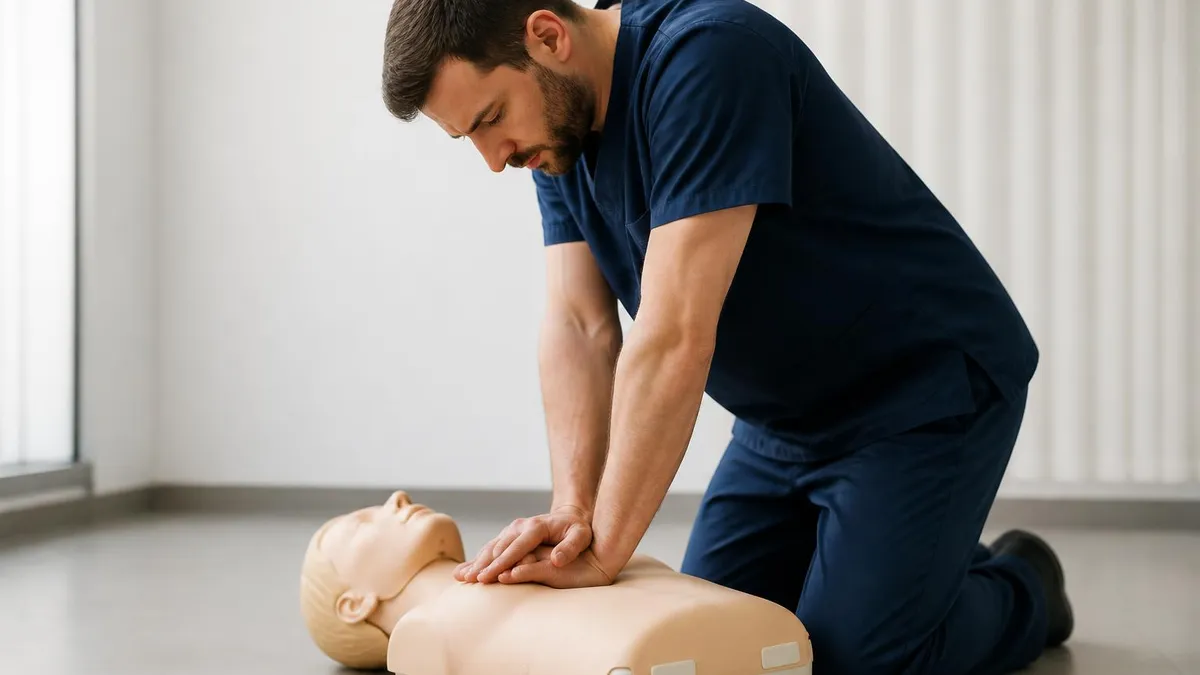
BLS Exam: Complete 2026 Guide to Passing Your Basic Life Support Certification Test
Free Basic Life Support MCQ Questions and Answers Guide
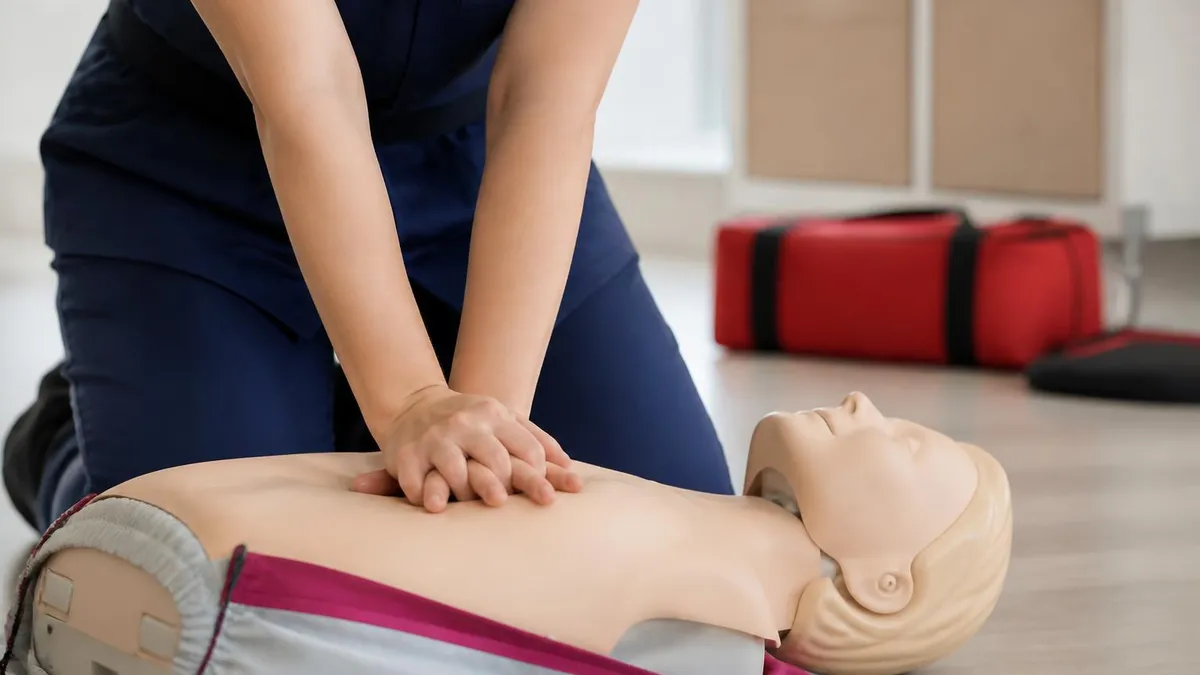
AHA BLS Certification: Course, Renewal, and Exam Guide
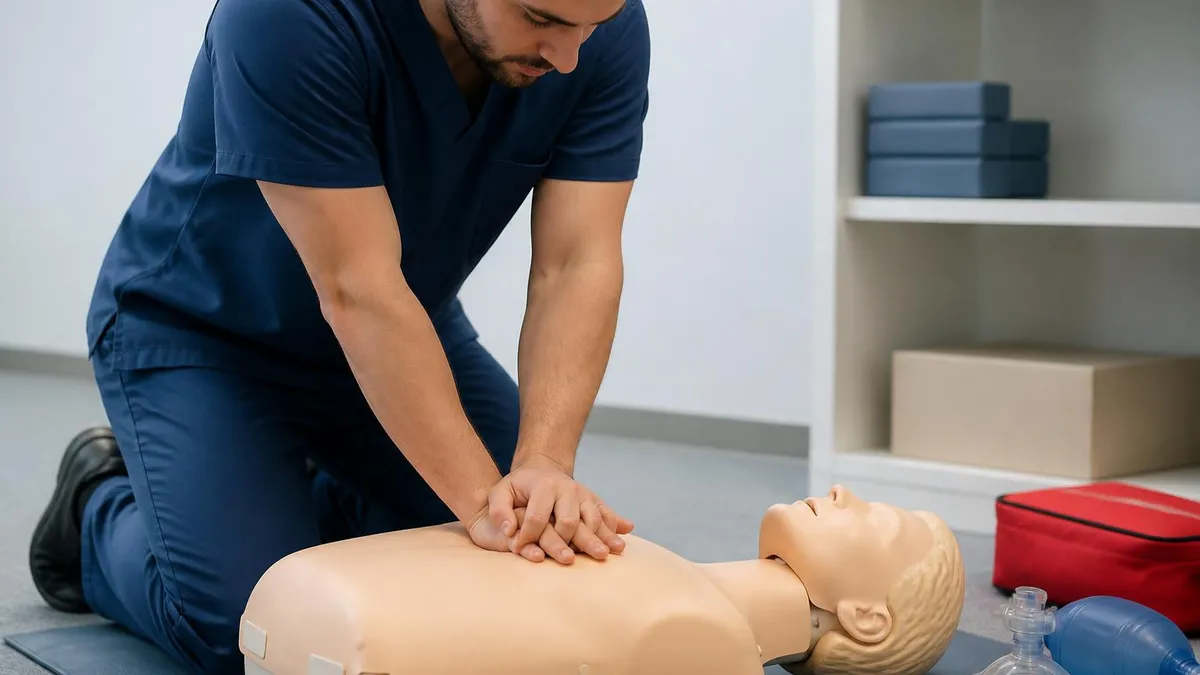
BLS Training: Course Content, Format & How to Get Certified
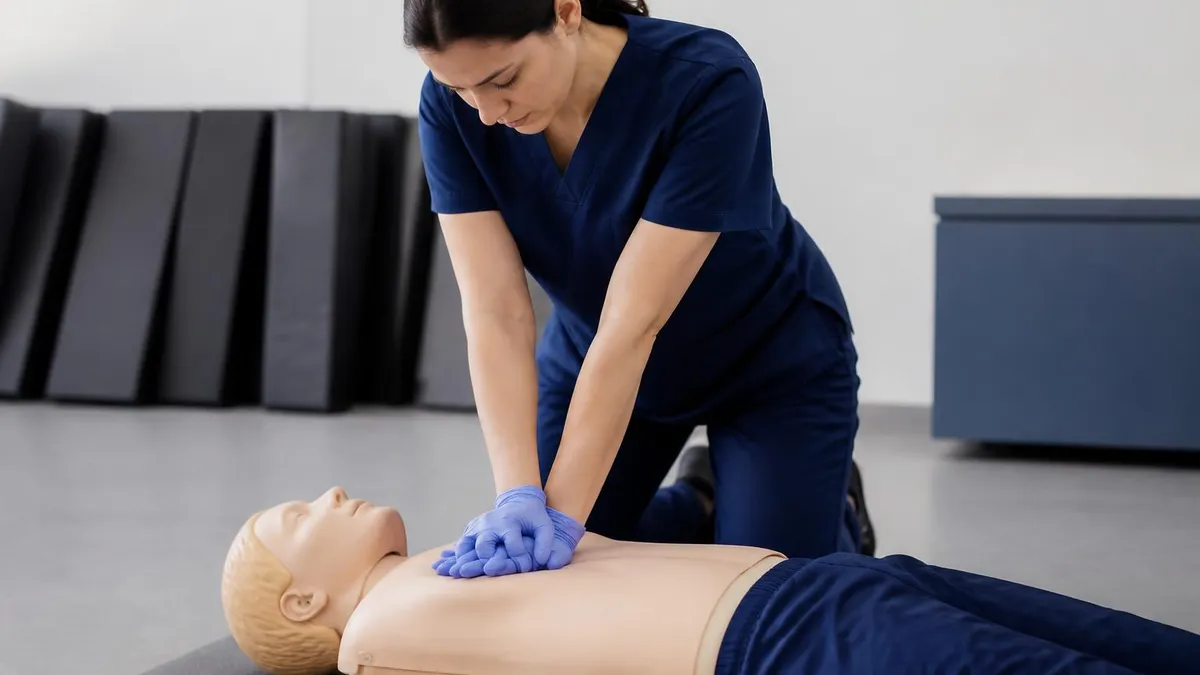
BLS Card Lookup: What Is a BLS Certification, How Long It Lasts, and Everything You Need to Know
About the Author

Registered Nurse & Healthcare Educator
Johns Hopkins University School of NursingDr. Sarah Mitchell is a board-certified registered nurse with over 15 years of clinical and academic experience. She completed her PhD in Nursing Science at Johns Hopkins University and has taught NCLEX preparation and clinical skills courses for nursing students across the United States. Her research focuses on evidence-based exam preparation strategies for healthcare certification candidates.
Join the Discussion
Connect with other students preparing for this exam. Share tips, ask questions, and get advice from people who have been there.
View discussion (8 replies)