

MMC Practice Test
Updated October 2026Facts verified Oct 24, 2026 against U.S. Coast Guard National Maritime Center
- The Merchant Mariner Credential Rules of the Road: Inland and International module (Q100) has 50 questions.[1]
- The Merchant Mariner Credential Deck General Part I module (Q101) has 50 questions and a 70% passing score.[1]
- Candidates must score 90% to pass the Merchant Mariner Credential Rules of the Road module (Q100), while most other deck modules require 70%.[1]
- A mariner who must take a complete Merchant Mariner Credential officer re-examination after failing has to pay a new examination fee.[2]
- A Merchant Mariner Credential officer candidate who fails one or two exam sections may retest those sections twice within the next 3 months.[2]
- A Merchant Mariner Credential rating candidate may retest at any time but must wait 90 days after failing the exam a third time, and must finish all exams within 1 year of approval.[3]
- A U.S. Coast Guard Merchant Mariner Credential is valid for 5 years from the date it is issued.[4]
- A Merchant Mariner Credential can be renewed at any time while it is valid and for up to 1 year after it expires.[5]
- Merchant Mariner Credential exams are taken in person at a Coast Guard Regional Exam Center after the NMC issues an Approval to Test letter; open-book renewal exams are sent by email.[6]
Numbers in brackets link to the official sources listed under Sources & last verified. Dates that have passed are removed automatically.
MMC Exam at a Glance
| Item | Detail | Source · Verified |
|---|---|---|
| Number of questions (Rules of the Road (Q100)) | 50 questions[1] | U.S. Coast Guard National Maritime Center · Oct 20, 2026 |
| Passing score (Deck General (Q101)) | 70%[1] | U.S. Coast Guard National Maritime Center · Oct 20, 2026 |
| Passing score (Rules of the Road (Q100)) | 90%[1] | U.S. Coast Guard National Maritime Center · Oct 20, 2026 |
| Retake fee (Officer endorsement) | New exam fee required for a complete re-examination[2] | ecfr.gov · Oct 24, 2026 |
| Retake policy (Officer endorsement) | 1–2 failed sections: 2 retests within 3 months[2] | ecfr.gov · Oct 24, 2026 |
| Retake policy (Rating endorsement) | Retest any time; 90-day wait after 3rd failure[3] | ecfr.gov · Oct 24, 2026 |
| Validity | 5 years[4] | ecfr.gov · Oct 24, 2026 |
| Renewal | Renew any time while valid or up to 1 year after expiry[5] | ecfr.gov · Oct 24, 2026 |
| Delivery | In person at a USCG Regional Exam Center (renewal exams are open-book by email)[6] | U.S. Coast Guard National Maritime Center · Oct 20, 2026 |
| Eligibility (Officer endorsement) | U.S. citizenship required (OUPV on undocumented vessels excepted)[7] | ecfr.gov · Oct 24, 2026 |

The MMC (Merchant Mariner Credential) Test is a key certification for individuals looking to pursue a career in the maritime industry. Whether you're aspiring to become a captain, engineer, or deckhand, this credential is essential for working aboard U.S. vessels. The MMC certifies that a mariner has met the necessary requirements to serve in specific roles within the merchant marines. Practice with the free Merchant Mariner Credential practice test on PracticeTestGeeks (9 questions with answer explanations).
Free Merchant Mariner Credential Study Tools
Interactive Merchant Mariner Credential resources on PracticeTestGeeks, free to start:
- Merchant Mariner Credential flashcards — review key terms and concepts card by card
- Merchant Mariner Credential study guide — topic-by-topic overview of what the exam covers
- Merchant Mariner Credential cheat sheet — one-page printable summary for last-minute review
According to U.S. Coast Guard National Maritime Center, “Q100- Rules of the Road: Inland and International 50 90”[1]
MMC Practice Test Questions
Prepare for the MMC - Merchant Mariner Credential exam with our free practice test modules. Each quiz covers key topics to help you pass on your first try.
MMC Cargo Operations & Handling
MMC Exam Questions covering Cargo Operations & Handling. Master MMC Test concepts for certification prep.
MMC Communication & Stakeholder Management
Free MMC Practice Test featuring Communication & Stakeholder Management. Improve your MMC Exam score with mock test prep.
MMC Maritime Law & Regulations
MMC Mock Exam on Maritime Law & Regulations. MMC Study Guide questions to pass on your first try.
MMC Navigation & Charting
MMC Test Prep for Navigation & Charting. Practice MMC Quiz questions and boost your score.
MMC Professional Standards & Ethics
MMC Questions and Answers on Professional Standards & Ethics. Free MMC practice for exam readiness.
MMC Quality Assurance & Continuous Improve...
MMC Mock Test covering Quality Assurance & Continuous Improvement. Online MMC Test practice with instant feedback.
MMC Regulatory Compliance & Legal Framework
Free MMC Quiz on Regulatory Compliance & Legal Framework. MMC Exam prep questions with detailed explanations.
Worked examples: how to reason through MMC questions
These are practice questions written for this site, not questions from the real exam. Each explanation shows why the right answer is right and why the others are wrong.
Example 1
Question: What ethical consideration is most relevant to quality assurance & continuous improvement in MMC practice?
- Prioritizing personal advancement over professional duties
- Maintaining confidentiality and acting in the best interest of stakeholders
- Avoiding all professional development activities
- Following only those rules that are convenient
Answer: B. Maintaining confidentiality and acting in the best interest of stakeholders
Explanation:
The correct answer is B. Keeping confidences and acting in the best interest of the people you serve is the core of ethical practice. Option A puts personal advancement ahead of duty, which is the opposite of professional responsibility. Option C rejects professional development, which ethical practice normally supports. Option D follows only convenient rules, which defeats the purpose of having rules.
The general rule: when a question asks what is ethical, choose the answer that protects others and respects your duties. Be wary of options built on absolutes such as avoiding everything or following only some rules. This is our own practice question, not a real Coast Guard exam item.
Example 2
Question: Which of the following best describes a key competency required for regulatory compliance & legal framework in MMC certification?
- Ability to work independently without any oversight
- Critical thinking and evidence-based decision making
- Memorization of all relevant regulations verbatim
- Delegation of all complex tasks to supervisors
Answer: B. Critical thinking and evidence-based decision making
Explanation:
The correct answer is B. Rules and situations vary, so sound decisions come from thinking critically and weighing evidence. Option A is wrong because working with no oversight is not a competency, and accountability structures exist for good reasons. Option C is wrong because reciting regulations word for word is not the same as knowing how to apply them. Option D is wrong because handing every hard task to a supervisor avoids the responsibility the role carries.
The general rule: compliance work rewards understanding and judgment over rote recall. When you study regulations, ask what each rule is for and when it applies, not only what it says. This is our own practice question, not a real exam item.
Example 3
Question: Which documentation practice is most important for communication & stakeholder management in the MMC field?
- Recording only successful outcomes
- Maintaining complete, accurate, and timely records
- Documenting only when legally required
- Using informal notes instead of official records
Answer: B. Maintaining complete, accurate, and timely records
Explanation:
The correct answer is B. Complete, accurate and timely records let others verify what happened, support accountability, and protect everyone involved if a decision is questioned later. Option A is wrong because recording only successes hides the problems that need attention. Option C is wrong because documenting only when the law requires it leaves gaps that matter in practice. Option D is wrong because informal notes are hard to verify and do not replace official records.
The general rule: good records are honest, full and made at the time of the event. Reject answers that are selective, minimal or informal. This is our own practice question, not a real exam item.
How to use these practice tests
Start with the official material. Read the Coast Guard National Maritime Center's exam guide for your endorsement so you know which modules you need and what each one covers. Treat that as your syllabus, and use our sets to find weak spots against it.
Then work through our sets by topic. Begin with Maritime Law & Regulations and Navigation & Charting, since rules and chart work usually carry the most weight. Add Shipboard Safety & Emergency Procedures, Ship Construction & Stability and Cargo Operations & Handling as your endorsement requires.
For each question you miss, read the explanation, then find the matching rule in the official material and read it there. Write down the rule in your own words. Return to the same set a few days later and see whether the miss repeats.
Our questions are written by us, not taken from the real exam, and the professional-practice sets are general in nature. Use them to build habits and find gaps, not to predict exact questions. Since Rules of the Road has a higher passing score than most modules, give it extra repetition. In the last days, retake the sets where you still miss questions.
Key Takeaways
Free MMC Practice Test Online
The MMC (Merchant Mariner Credential) Test is a crucial certification for those pursuing careers in the U.S. maritime industry. It consolidates various qualifications into a single document.
Obtaining an MMC requires passing written exams, a medical evaluation, and background checks. Specific training programs are also mandatory depending on the desired endorsement.
Joining the Merchant Marines offers a pathway to a fulfilling career, with opportunities to work in various capacities aboard commercial and military-supporting vessels.
MMC Meaning: Understanding the Merchant Mariner Credential
The Merchant Mariner Credential (MMC) is a federal document issued by the United States Coast Guard (USCG). It serves as a mariner’s license and identification, ensuring that the holder is qualified to perform specific tasks on a merchant vessel. The MMC consolidates various documents like licenses, certificates of registry, and merchant mariner documents (MMDs) into one credential.
Why is the MMC Important?
Legal Requirement: For individuals seeking employment aboard ships operating in U.S. waters or abroad, having an MMC is a legal requirement.
Safety Compliance: The MMC ensures that mariners possess the necessary skills and training to operate safely and in compliance with maritime laws.
What is an MMC?
An MMC is a qualification document that serves multiple purposes for mariners. It’s more than just an ID card—it verifies that the individual holding it has passed all necessary exams, medical evaluations, and training programs required to work on a merchant vessel. The MMC covers all maritime positions, from ordinary seamen to captains, and outlines the specific qualifications of the holder.
MMC Structure:
Endorsements: Each mariner’s specific qualifications are listed as endorsements on their MMC, such as deck, engine, radio operator, or steward positions.
Validity: An MMC is valid for 5 years and must be renewed before it expires to continue working legally in the maritime industry.
Security Features: The credential has built-in security measures to prevent fraud and ensure only qualified personnel are permitted aboard vessels.
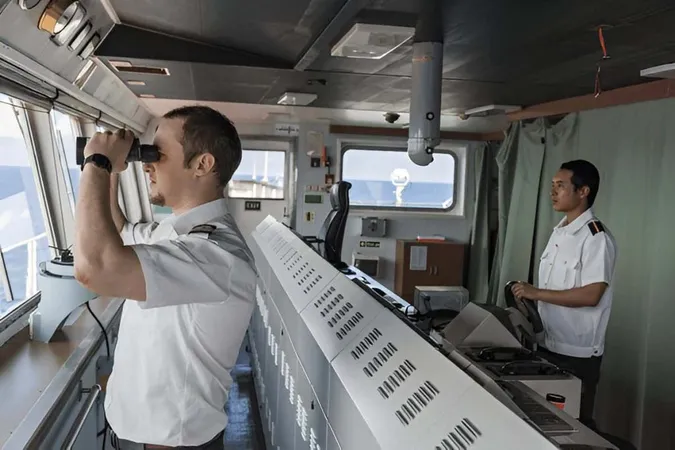
MMC Certificate: The Certification Process
Obtaining an MMC involves a comprehensive application process that requires passing tests, medical evaluations, and background checks. The U.S. Coast Guard oversees the application process to ensure that mariners are fit to work on board.
Steps to Obtain an MMC Certificate:
Application:
Fill out the official MMC application through the National Maritime Center (NMC). You must provide identification, proof of citizenship, and pay the required application fees.Medical Evaluation:
Mariners are required to undergo a physical examination to confirm that they meet medical standards for sea service. This includes vision, hearing, and general health assessments.Background Check:
A thorough criminal background check is conducted to ensure the applicant meets character requirements for working in a sensitive environment like maritime operations.Examinations:
Depending on the endorsement, mariners may need to pass several written exams covering subjects such as navigation, vessel operations, safety protocols, and engineering.Training Requirements:
Most MMC applicants must complete Basic Safety Training (BST) and additional courses such as firefighting, first aid, and personal survival techniques.
How to Join the Merchant Marines
The Merchant Marines is a fleet of civilian-owned commercial ships that engage in domestic and international trade. Merchant mariners operate and maintain these vessels, carrying cargo, passengers, and supporting military operations during times of war.
Steps to Join the Merchant Marines:
Meet Basic Requirements:
Applicants must be at least 18 years old, possess a high school diploma or GED, and be U.S. citizens or permanent residents.Obtain an MMC:
The first official step is obtaining an MMC, which will qualify you to work on merchant vessels in different capacities.Complete Training:
Many maritime jobs require specialized training from approved maritime academies or schools. This training may take anywhere from several months to a few years, depending on the role.Enroll in a Maritime Program:
Some prospective mariners choose to enroll in programs offered by state or federal maritime academies, which provide more structured paths to becoming merchant mariners.Join a Union:
Joining a maritime union like the Seafarers International Union (SIU) can help mariners find jobs and provide career resources.
How to Become a Merchant Marine
Becoming a merchant marine involves gaining the necessary education, certifications, and experience to operate aboard U.S. vessels. While the process can seem daunting, it provides a rewarding career for those passionate about the maritime industry.
Educational Requirements:
Maritime Academies: Many mariners choose to attend a U.S. Merchant Marine Academy or a state maritime academy to receive comprehensive training and degrees in marine transportation, engineering, or logistics.
On-the-Job Training: Entry-level positions like deckhands often require less formal education but may still require specific maritime training programs.
Experience and Career Advancement:
Apprenticeships: Many mariners begin their careers as apprentices or deckhands, working their way up to more advanced positions like engineers or captains through on-the-job training and additional certifications.
Advancement Opportunities: As mariners gain experience and complete additional courses, they can qualify for higher endorsements on their MMC, enabling them to take on greater responsibilities and earn higher salaries.

Conclusion
The Merchant Mariner Credential (MMC) is more than just a certification—it’s your key to unlocking opportunities within the maritime industry. By understanding the certification process, training requirements, and steps to joining the Merchant Marines, you can start on a career that allows you to travel the world while playing a vital role in global trade and national defense. Whether you're just starting or looking to advance your career, earning your MMC will equip you with the knowledge and qualifications needed to succeed in this rewarding field.
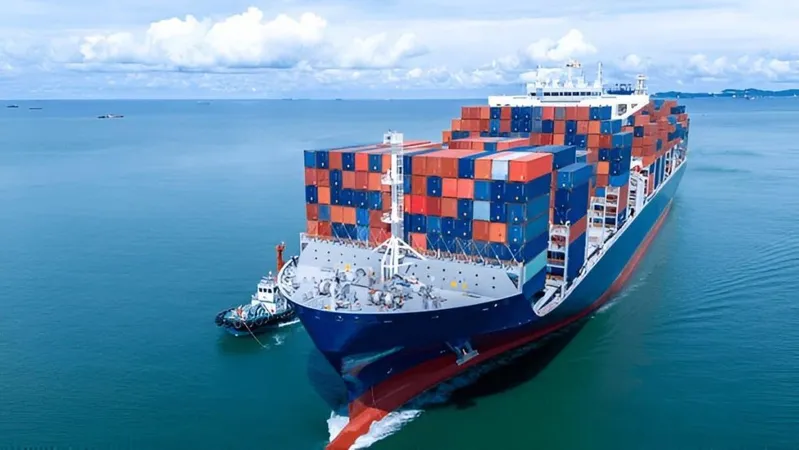
MMC: Pros and Cons
- +MMC certification validates expertise recognized by employers nationwide
- +Certified professionals typically earn 15-20% higher salaries
- +Opens doors to advanced positions and leadership roles
- +Demonstrates commitment to professional standards and ethics
- +Builds a strong professional network through certification communities
- −Exam preparation typically requires 2-4 months of dedicated study
- −Certification and exam fees can range from $150-$500+
- −Must complete continuing education to maintain active certification
- −Pass rates vary — thorough preparation is essential for success
- −Some certifications require prerequisite experience or education
Pros and Cons at a Glance
| Pros | Cons |
|---|---|
| MMC certification validates expertise recognized by employers nationwide | Must complete continuing education to maintain active certification |
| Opens doors to advanced positions and leadership roles | Pass rates vary — thorough preparation is essential for success |
| Demonstrates commitment to professional standards and ethics | Some certifications require prerequisite experience or education |
Sample Merchant Mariner Credential Practice Questions
Try these questions from our free Merchant Mariner Credential practice tests. The correct answer and an explanation follow each question.
Which quality improvement method is most applicable to communication & stakeholder management in Merchant Mariner Credential?
- A. Ignoring feedback and maintaining status quo
- B. Making changes only when mandated by regulators
- C. Plan-Do-Check-Act (PDCA) continuous improvement cycle
- D. Implementing changes without measuring outcomes
Answer: C. Plan-Do-Check-Act (PDCA) continuous improvement cycle
The PDCA cycle is widely recognized as the most effective quality improvement method, allowing MMC professionals to systematically improve communication & stakeholder management practices.
What is a common challenge professionals face when applying regulatory compliance & legal framework principles in Merchant Mariner Credential?
- A. Balancing theoretical knowledge with practical application
- B. Having too much support from colleagues
- C. Excessive simplicity of industry regulations
- D. Lack of any professional development opportunities
Answer: A. Balancing theoretical knowledge with practical application
Balancing theoretical knowledge with practical application is a well-recognized challenge, as real-world scenarios often present complexities not covered in standard training.
What is a common challenge professionals face when applying communication & stakeholder management principles in Merchant Mariner Credential?
- A. Balancing theoretical knowledge with practical application
- B. Having too much support from colleagues
- C. Excessive simplicity of industry regulations
- D. Lack of any professional development opportunities
Answer: A. Balancing theoretical knowledge with practical application
Balancing theoretical knowledge with practical application is a well-recognized challenge, as real-world scenarios often present complexities not covered in standard training.
What is a common challenge professionals face when applying quality assurance & continuous improvement principles in Merchant Mariner Credential?
- A. Balancing theoretical knowledge with practical application
- B. Having too much support from colleagues
- C. Excessive simplicity of industry regulations
- D. Lack of any professional development opportunities
Answer: A. Balancing theoretical knowledge with practical application
Balancing theoretical knowledge with practical application is a well-recognized challenge, as real-world scenarios often present complexities not covered in standard training.
Take the full Merchant Mariner Credential practice test
(MMC) Merchant Mariner Credential Questions and Answers
Sources & last verified
- U.S. Coast Guard National Maritime Center — number of questions, passing score (official source). “Q100- Rules of the Road: Inland and International 50 90” Verified Oct 20, 2026.
- ecfr.gov — retake fee, retake policy (official source). “If the applicant does not successfully complete these sections within the 3-month period, a complete re-examination must be taken at least 3 months from the…” Verified Oct 24, 2026 · source checked Oct 24, 2026.
- ecfr.gov — retake policy (official source). “However, an applicant who fails an examination for the third time must wait 90 days before re-testing. All examinations and retests must be completed within…” Verified Oct 24, 2026 · source checked Oct 24, 2026.
- ecfr.gov — validity (official source). “An MMC is valid for a term of 5 years from the date of issuance.” Verified Oct 24, 2026 · source checked Oct 24, 2026.
- ecfr.gov — renewal (official source). “A credential may be renewed at any time during its validity and for 1 year after expiration.” Verified Oct 24, 2026 · source checked Oct 24, 2026.
- U.S. Coast Guard National Maritime Center — delivery (official source). “After you receive your letter, examinations can be scheduled using our online appointment scheduler on the Schedule Exam/REC Appointment tab of the Examinations webpage.” Verified Oct 20, 2026.
- ecfr.gov — eligibility (official source). “Only individuals with valid U.S. citizenship may apply for officer endorsements, except individuals applying for endorsements as Operator of Uninspected Passenger Vessels (OUPV) authorizing service…” Verified Oct 24, 2026 · source checked Oct 24, 2026.
How we verify: editorial & fact-checking policy. Report an error: contact us.
How this page was made: written with AI tools and published by Nathan Beja, founder of Practice Test Geeks, who is responsible for its content. Exam facts are checked against the official sources listed below. Not reviewed by a subject-matter expert. Editorial policy
Sources & references
Exam facts on this page (fees, format, dates, passing scores) are checked against these official sources; the date is our last check. Editorial policy
- ecfr.gov — Retake policy, score validity, eligibility, retake fee, renewal · verified Oct 2026
- dco.uscg.mil — Test delivery, exam format, passing score · verified Oct 2026