
Laser Facial Hair Removal 2026
Get ready for your Laser Facial Hair Removal certification. Practice questions with step-by-step answer explanations and instant scoring. 📚
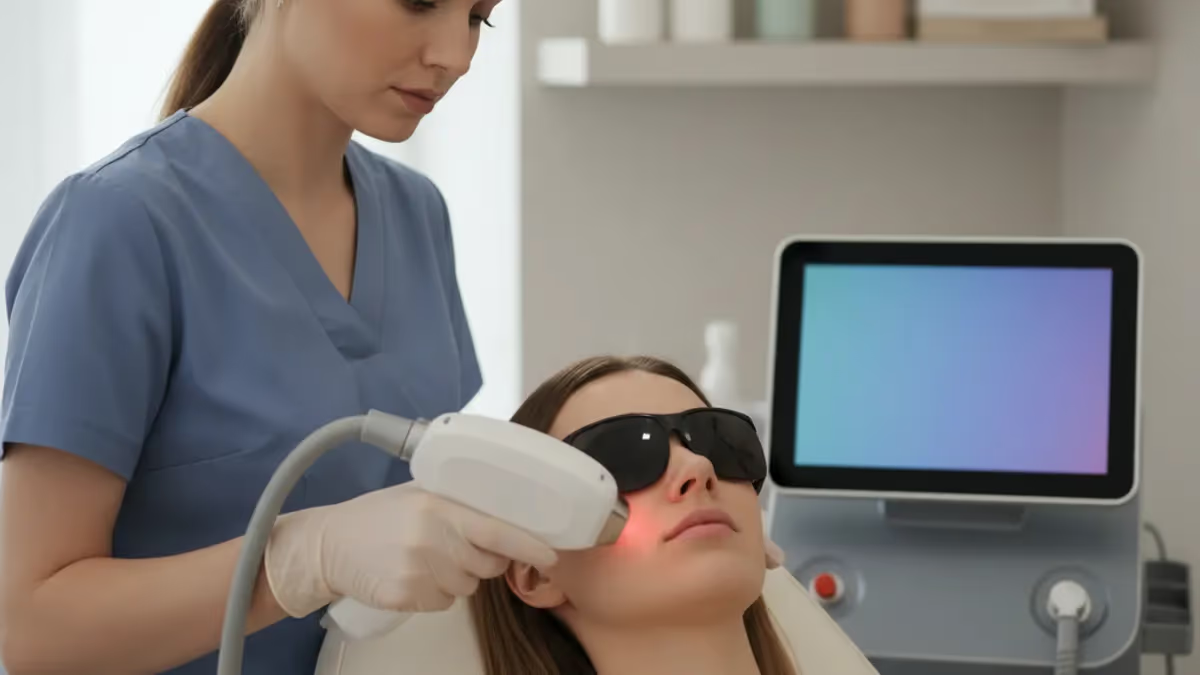
Laser facial hair removal has become an incredibly popular method for getting rid of unwanted facial hair. Gone are the days of tedious plucking, painful waxing, and messy creams - laser technology offers a quick, efficient, and long-lasting solution. One of the major advantages of laser facial hair removal is its precision. Unlike traditional methods, which often result in stray hairs or patchy areas, lasers can target specific areas with unparalleled accuracy. This means that you can say goodbye to those frustrating missed spots and hello to smooth, even skin all over your face.
Another fascinating aspect of laser facial hair removal is its ability to provide long-lasting effects. While other methods may offer temporary relief that lasts only a few weeks or months, lasers have the potential to permanently reduce hair growth over time. By targeting the root of each hair follicle with intense light pulses, lasers weaken the follicles and prevent future regrowth. Laser facial hair removal is revolutionizing the way we approach unwanted facial hair. With its precision and potential for long-term results, it offers a convenient alternative to traditional methods that often fall short in terms of effectiveness and convenience. Say hello to smoother skin without the hassle - give laser facial hair removal a try!
Did You Know? Passing the Facial Hair Removal exam on your first attempt saves both time and money. Start with diagnostic practice tests to identify your weak areas.
- ✓Confirm your exam appointment and location
- ✓Bring required identification documents
- ✓Arrive 30 minutes early to check in
- ✓Read each question carefully before answering
- ✓Flag difficult questions and return to them later
- ✓Manage your time — don't spend too long on one question
- ✓Review flagged questions before submitting

Facial Hair Removal: Pros and Cons
- +Facial Hair Removal credential is recognized by employers and industry professionals
- +Higher earning potential compared to non-credentialed peers
- +Expanded career opportunities and professional advancement
- +Structured learning path builds comprehensive knowledge
- +Professional development that stays current with industry standards
- −Preparation requires significant time and study commitment
- −Associated costs for exams, materials, and renewal fees
- −Continuing education needed to maintain credentials
- −Competition for advanced positions can be challenging
- −Requirements and standards may vary by state or region
Pros and Cons at a Glance
| Pros | Cons |
|---|---|
| Facial Hair Removal credential is recognized by employers and industry professionals | Preparation requires significant time and study commitment |
| Higher earning potential compared to non-credentialed peers | Associated costs for exams, materials, and renewal fees |
| Expanded career opportunities and professional advancement | Continuing education needed to maintain credentials |
| Structured learning path builds comprehensive knowledge | Competition for advanced positions can be challenging |
| Professional development that stays current with industry standards | Requirements and standards may vary by state or region |
Sample Facial Hair Removal Practice Questions
Try these questions from our free Facial Hair Removal practice tests. The correct answer and an explanation follow each question.
What does the term 'fluence' refer to in laser hair removal?
- A. The color of the laser beam
- B. The energy density delivered to the skin, measured in J/cm²
- C. The number of pulses per second
- D. The wavelength of the laser
Answer: B. The energy density delivered to the skin, measured in J/cm²
Fluence (energy density) determines how much energy the target tissue receives, directly affecting treatment efficacy and safety.
What is the purpose of a patch test before performing laser hair removal on the face?
- A. To check the laser is working
- B. To assess how the client's skin reacts to the laser settings before full treatment
- C. To count the number of hairs in the area
- D. To satisfy insurance requirements only
Answer: B. To assess how the client's skin reacts to the laser settings before full treatment
A patch test identifies adverse reactions, appropriate fluence levels, and skin sensitivity before full facial treatment.
What pre-treatment instruction is essential before facial laser hair removal?
- A. Tan the skin to boost melanin
- B. Avoid sun exposure and tanning for at least 4–6 weeks prior
- C. Apply self-tanner to darken the hair
- D. Bleach the facial hair for better contrast
Answer: B. Avoid sun exposure and tanning for at least 4–6 weeks prior
Sun exposure increases epidermal melanin, raising the risk of burns, hyperpigmentation, and reduced treatment efficacy.
Why does laser hair removal require multiple sessions?
- A. Each session uses a different laser type
- B. Hair only responds to laser during the active (anagen) growth phase
- C. The laser weakens with each use
- D. Insurance requires multiple visits
Answer: B. Hair only responds to laser during the active (anagen) growth phase
Laser energy destroys follicles most effectively during the anagen phase, and not all hairs are in this phase simultaneously.
About the Author

Licensed Cosmetologist & Beauty Licensing Exam Specialist
Paul Mitchell SchoolsMichelle Santos is a licensed cosmetologist with a Bachelor of Science in Esthetics and Salon Management from Paul Mitchell School. She has 16 years of salon industry experience and 8 years preparing students for state cosmetology board exams in theory, practical skills, and sanitation. She specializes in licensure preparation for cosmetologists, estheticians, and nail technicians.