
Facial Hair Removal Cream 2026
Pass your Facial Hair Removal Cream exam on the first attempt. Practice questions with detailed answer explanations, hints, and instant scoring. ✍🏼
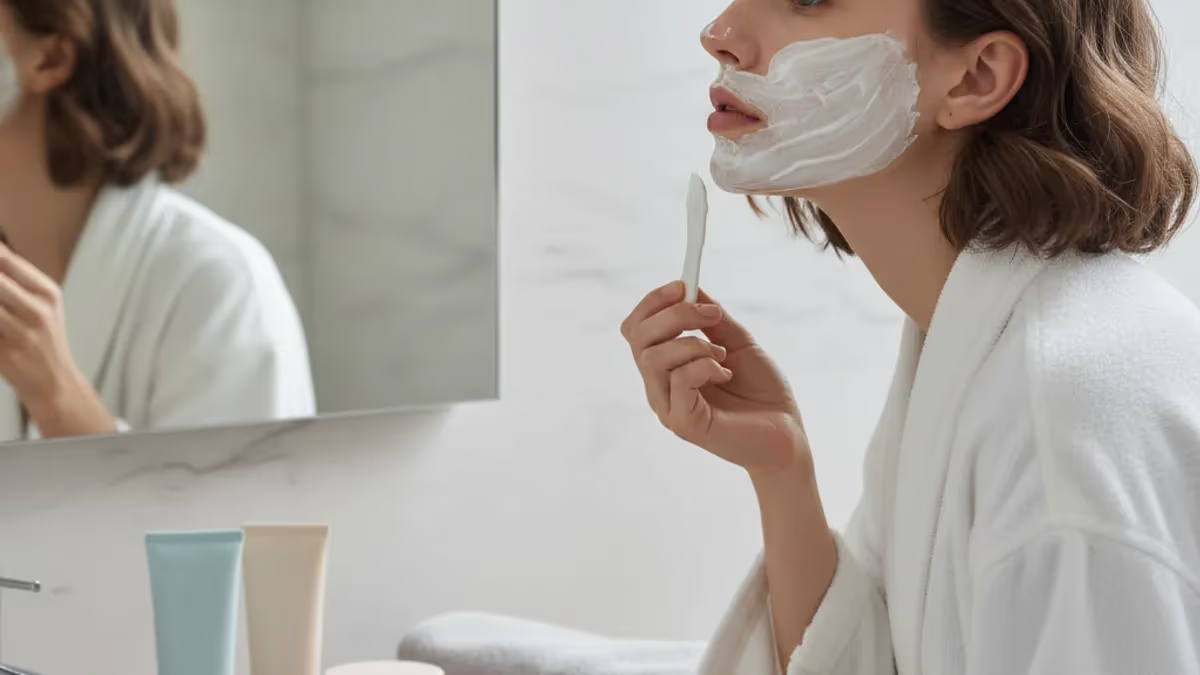
Facial hair removal cream has become a popular choice among men and women seeking a quick and painless way to get rid of unwanted facial hair. Unlike other methods such as shaving or waxing, using a facial hair removal cream offers a hassle-free solution that can be done at home. One of the biggest advantages is its ability to remove hair from the root, providing longer-lasting results compared to other options. One common misconception about facial hair removal creams is that they only work on thin or light-colored hair. However, advancements in technology have made it possible for these creams to target even coarse or dark hairs effectively. This means that individuals with different types of skin and hair can benefit from using these products without worrying about adverse effects or limited effectiveness.
In addition, many modern formulas now include nourishing ingredients like aloe vera or vitamin E, which help soothe the skin and prevent irritation commonly associated with traditional methods. Facial hair removal creams offer versatility when it comes to usage. They can be applied easily on various areas of the face, including the upper lip, chin, cheeks, or even eyebrows if desired. The absence of sharp blades reduces the risk of accidental cuts while providing an efficient way to achieve smooth and silky skin. With just a few minutes of application time, one can effortlessly eliminate unwanted facial hair without leaving behind stubble or harsh regrowth that may occur with shaving.
Key Takeaway: Facial Hair Removal preparation requires consistent practice. Use our practice tests to identify and strengthen your weak areas.
- ✓Review the exam content outline
- ✓Take a diagnostic practice test
- ✓Create a study schedule
- ✓Focus on weak areas
- ✓Complete full practice exams
Sample Facial Hair Removal Practice Questions
Try these questions from our free Facial Hair Removal practice tests. The correct answer and an explanation follow each question.
Which facial area should be avoided when using depilatory creams due to risk of serious injury?
- A. Upper lip (outer only)
- B. Eyelids, inside the nostrils, and mucous membrane areas
- C. Forehead
- D. Cheeks
Answer: B. Eyelids, inside the nostrils, and mucous membrane areas
Depilatories near the eyes, inside the nose, or on mucous membranes can cause severe chemical burns or damage to sensitive tissue.
What pH range do most chemical depilatory creams fall into?
- A. Acidic (pH 3–5)
- B. Highly alkaline (pH 11–13)
- C. Neutral (pH 7)
- D. Mildly acidic (pH 5–6)
Answer: B. Highly alkaline (pH 11–13)
Depilatories must be highly alkaline (pH 11–13) to effectively break the disulfide bonds in the hair's keratin protein.
What should be done if a client experiences burning or irritation during depilatory cream application?
- A. Leave it on longer to ensure all hair is dissolved
- B. Remove the cream immediately with cool water and discontinue use
- C. Apply a second layer over the first
- D. Cover with plastic wrap to accelerate results
Answer: B. Remove the cream immediately with cool water and discontinue use
Burning indicates that the chemical is damaging the skin, and immediate removal with water is necessary to minimize the injury.
What is the maximum recommended time most facial depilatory creams should remain on the skin?
- A. 30 seconds
- B. 5–10 minutes per the manufacturer's instructions
- C. 30–60 minutes
- D. Overnight
Answer: B. 5–10 minutes per the manufacturer's instructions
Leaving depilatory cream on longer than directed risks chemical burns and significant irritation to the skin.
About the Author
Licensed Cosmetologist & Beauty Licensing Exam Specialist
Paul Mitchell SchoolsMichelle Santos is a licensed cosmetologist with a Bachelor of Science in Esthetics and Salon Management from Paul Mitchell School. She has 16 years of salon industry experience and 8 years preparing students for state cosmetology board exams in theory, practical skills, and sanitation. She specializes in licensure preparation for cosmetologists, estheticians, and nail technicians.