

CWS Practice Test
Updated November 2026Facts verified Nov 23, 2026 against American Board of Wound Management
CWS Exam Questions and Answers
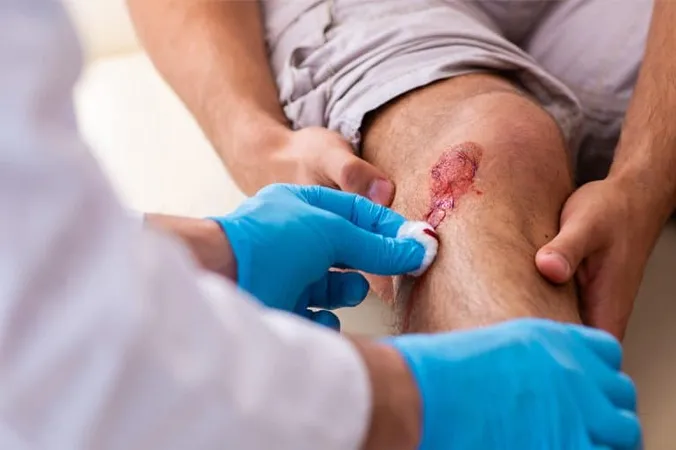
An expert in the care and treatment of acute, chronic, and non-healing wounds is known as a wound specialist. Burns, animal bites, and surgical cuts are examples of acute wounds. Pressure sores and diabetic ulcers are examples of chronic wounds. Practice with the free CWS practice test on PracticeTestGeeks (7 questions with answer explanations).
The most inclusive certification is the wound care certified (WCC) one, which allows doctors of diverse specialties and educational backgrounds to take the training and take the exam.
CNAs and nursing assistants can now obtain a number of wound care certificates. The training material covers fundamental wound care and prevention. A national board certification exam is open to CNAs, nursing assistants, home health aides, and medical assistants.
– Get a high school diploma or something like
– Obtain a CNA certification by completing a program
– Through the National Healthcare Association, obtain certification as a wound care technician
– Obtain experience working in a healthcare environment and develop powerful communication and interpersonal skills
– Having the ability to lift and transfer patients
– Keep abreast of changes in the market
As of January 26, 2026, the average Wound Care Specialist pay in the United States is $95,896, although the normal salary range is $68,920 to $114,207.
Nurses, physicians, and physical therapists can all be wound experts. The fact that they have received specialized training in the therapy and care is crucial.
An expert in the care and treatment of acute, chronic, and non-healing wounds is known as a wound specialist.
– Redness and swelling at the area, along with pain there.
– Fever, fluid discharge, and odor.
– Skin near the margin of the wound darkens.
– Acquire a nursing degree. To work as a wound care nurse, you must possess a bachelor’s degree in nursing from an accredited university or an advanced nursing degree.
– Obtain your registered nurse license.
– Obtain professional nursing experience.
– Take a course in wound care.
– Obtain a certification in wound care.
The CWS is frequently cited as the most difficult wound care certification to pass. Only 60% of those who take the CWS exam right now succeed on their first attempt. The CWS certification test has 150 questions. 150 exam questions, 25 of which are not graded.
Take the CWCA®, CWS®, or CWSP® Practice Exam to test your familiarity with the subject matter of each exam, gain exam-taking experience, study sample material, and gain knowledge of the question format, style, and level of difficulty.
CWS: upcoming dates and official changes
- Jul 4, 2026: ABWM's 25% first-time application discount (code WHAM2026) was valid only for applications by July 4, 2026, so it has ended. (American Board of Wound Management)
- Updated Nov 23, 2026: Delivery is now Computer-based at 300+ Pearson VUE test centers (previously Computer-based at 300+ Pearson test centers).
- Updated Nov 23, 2026: Eligibility is now Licensed healthcare professional with Bachelor's/Master's/Doctoral degree (or licensed RN with Associate's) plus 3+ years clinical wound care experience (previously Licensed healthcare professional with a Bachelor's, Master's or Doctoral degree (or a licensed RN with an Associate's degree) plus 3+ years of clinical wound care experience).
- Updated Nov 23, 2026: Number of questions is now 150 questions (125 scored, 25 pretest) (previously 150 questions (125 scored, 25 non-scored pre-test)).
Facts verified Nov 23, 2026 against American Board of Wound Management. Dates that have passed are removed automatically.
- The CWS exam consists of 150 multiple-choice items, of which 125 are used to compute applicants' scores. (American Board of Wound Management)
- Applicants have up to three hours to answer the 150 multiple-choice questions on the CWS exam. (American Board of Wound Management)
- The CWS exam passing point is set using a criterion-referenced technique, and ABWM does not publish a fixed percentage. (American Board of Wound Management)
- The CWS (Certified Wound Specialist) first-time application costs $595 through ABWM. (American Board of Wound Management)
- A CWS (Certified Wound Specialist) re-test application costs $275 through ABWM. (American Board of Wound Management)
- The CWS certificate is active for ten years, after which the Certified Wound Specialist must retake the CWS exam to maintain certification. (American Board of Wound Management)
- ABWM Associates and Diplomates, including Certified Wound Specialists, renew annually with a $175 fee and six hours of continuing education. (American Board of Wound Management)
- The CWS (Certified Wound Specialist) exam is delivered by computer at over 300 Pearson VUE test centers across the Americas, by appointment only. (American Board of Wound Management)
- To sit for the CWS exam, ABWM requires a licensed healthcare professional with a Bachelor's, Master's or Doctoral degree, or a licensed RN with an Associate's degree, plus 3 or more years of clinical wound care experience. (American Board of Wound Management)
Facts verified Nov 23, 2026 against American Board of Wound Management. Dates that have passed are removed automatically.
CWS Exam at a Glance
| Item | Detail | Official source |
|---|---|---|
| Number of questions | 150 questions (125 scored, 25 pretest) | American Board of Wound Management |
| Time limit | 3 hours | American Board of Wound Management |
| Passing score | Criterion-referenced passing point (no fixed percentage published) | American Board of Wound Management |
| Exam fee | $595 first-time application | American Board of Wound Management |
| Retake fee | $275 per re-test application | American Board of Wound Management |
| Validity | Recertify every 10 years | American Board of Wound Management |
| Renewal | $175 per year; 6 CE hours a year | American Board of Wound Management |
| Delivery | Computer-based at 300+ Pearson VUE test centers | American Board of Wound Management |
| Eligibility | Licensed healthcare professional with Bachelor's/Master's/Doctoral degree (or licensed RN with Associate's) plus 3+ years clinical wound care experience | American Board of Wound Management |
| Score release | Immediately after the exam | American Board of Wound Management |
| Registration deadline | 15 business days before desired exam date | American Board of Wound Management |
| Testing window | 90 days after approval | American Board of Wound Management |
Facts verified Nov 23, 2026 against American Board of Wound Management. Dates that have passed are removed automatically.
Free CWS Exam Study Tools
Interactive CWS Exam resources on PracticeTestGeeks, free to start:
- CWS Exam flashcards — review key terms and concepts card by card
- CWS Exam study guide — topic-by-topic overview of what the exam covers
- CWS Exam cheat sheet — one-page printable summary for last-minute review
According to American Board of Wound Management, “The passing point for each exam is established using a criterion-referenced technique.”[1]
CWS content outline and where to practise each area
The content areas below are copied from the official CWS content outline published by American Board of Wound Management. The right-hand column shows which of our practice sets covers it.
| Official content area | Practice on this site |
|---|---|
| Assessment and Diagnosis[6] | CWS Wound Assessment and Dressing Selectio... Practise describing wound type, tissue and signs of infection, and matching findings to the likely diagnosis and dressing choice. |
| Etiological Considerations[6] | CWS Wound Care Practise separating arterial, venous, pressure and diabetic causes, and the factors that keep each kind of wound from healing. |
| Patient Management[6] | CWS Certified Wound Specialist Test Practise choosing next steps for a given patient, including treatment, referral and follow-up decisions. |
| Professional Issues[6] | CWS Certified Wound Specialist MCQ Test Practise scenario questions on documentation, scope of practice and ethical or legal responsibilities, and compare your reasoning with the official outline. |
| Wound Healing Environment[6] | CWS Wound Care Trivia Practise the phases of healing and how moisture, infection and other local conditions help or hinder repair. |
CWS Practice Test Questions
Prepare for the CWS Exam exam with our free practice test modules. Each quiz covers key topics to help you pass on your first try.
CWS 802.11 Standards and Protocols
CWS Exam Questions covering 802.11 Standards and Protocols. Master CWS Test concepts for certification prep.
CWS Basic RF Principles
Free CWS Practice Test featuring Basic RF Principles. Improve your CWS Exam score with mock test prep.
CWS WLAN Roaming and QoS Questions and Ans...
Free CWS Practice Test featuring CWS WLAN Roaming and QoS Questions and Answers. Improve your CWS Exam score with mock test prep.
CWS WLAN Troubleshooting
CWS Test Prep for CWS WLAN Troubleshooting. Practice CWS Quiz questions and boost your score.
CWS Wound Assessment and Dressing Selectio...
CWS Questions and Answers on CWS Wound Assessment and Dressing Selection Questions and Answers. Free CWS practice for exam readiness.
CWS MAC Layer Functions
CWS Mock Test covering MAC Layer Functions. Online CWS Test practice with instant feedback.
CWS Organizational WLAN Goals
Free CWS Quiz on Organizational WLAN Goals. CWS Exam prep questions with detailed explanations.
CWS Site Survey Fundamentals
CWS Practice Questions for Site Survey Fundamentals. Build confidence for your CWS certification exam.
CWS Wi-Fi Service Sets
CWS Test Online for Wi-Fi Service Sets. Free practice with instant results and feedback.
CWS Wireless Client Devices
CWS Study Material on Wireless Client Devices. Prepare effectively with real exam-style questions.
CWS WLAN Hardware and Antennas
Free CWS Test covering WLAN Hardware and Antennas. Practice and track your CWS exam readiness.
CWS WLAN Security Concepts
CWS Exam Questions covering WLAN Security Concepts. Master CWS Test concepts for certification prep.
CWS Certified Wound Specialist MCQ Test
CWS Mock Exam on Certified Wound Specialist MCQ Test. CWS Study Guide questions to pass on your first try.
Worked examples: how to reason through CWS questions
These are practice questions written for this site, not questions from the real exam. Each explanation shows why the right answer is right and why the others are wrong.
Example 1
Question: A patient with a diabetic foot ulcer has a probe-to-bone test that is positive. What does this most likely indicate?
- Peripheral arterial disease
- Osteomyelitis
- Charcot neuroarthropathy
- Deep vein thrombosis
Answer: B. Osteomyelitis
Explanation:
Osteomyelitis is correct. In a diabetic foot ulcer, a sterile probe that reaches bone suggests the infection has gone deep enough to involve bone, and a positive result raises suspicion for osteomyelitis. Peripheral arterial disease is a perfusion problem and is assessed with pulses and vascular testing, not a probe. Charcot neuroarthropathy changes the shape of the foot and joints, but the probe test does not identify it. Deep vein thrombosis is a clot in a deep vein and has nothing to do with an open ulcer. The rule to remember: a probe that touches bone points to bone infection until imaging or other findings say otherwise.
Example 2
Question: Which AC_BK (Background) traffic characteristic distinguishes it from AC_BE (Best Effort)?
- AC_BK uses a larger CWmin and longer AIFS, resulting in lower priority than AC_BE
- AC_BK uses stronger encryption
- AC_BK is reserved for management frames
- AC_BK has a shorter TXOP limit than AC_VO
Answer: A. AC_BK uses a larger CWmin and longer AIFS, resulting in lower priority than AC_BE
Explanation:
This question belongs to our Wi-Fi networking sets, not wound care, so it will not help with the Certified Wound Specialist exam. The correct option is that AC_BK uses a larger CWmin and longer AIFS, which gives it lower priority than AC_BE. A larger contention window and longer wait mean background traffic transmits less often. Stronger encryption is not how access categories differ. Management frames are not what AC_BK is reserved for. A shorter TXOP limit than AC_VO is not the feature that separates background from best effort. The general rule: lower priority means longer waits before transmitting.
Example 3
Question: Which phase of wound healing is characterized by collagen remodeling and scar maturation lasting up to 2 years?
- Hemostasis
- Inflammatory phase
- Proliferative phase
- Remodeling phase
Answer: D. Remodeling phase
Explanation:
Remodeling phase is correct. This is the stage where collagen is reorganised, type III collagen is replaced by type I, and the scar matures. It can continue for up to 2 years after injury. Hemostasis comes at the very start and is about stopping bleeding through clotting. The inflammatory phase follows and clears bacteria and debris. The proliferative phase builds new tissue, with granulation, new vessels and wound contraction, but it is not about maturing scar. The rule to remember: match the phase to its main job. Clotting is hemostasis, cleanup is inflammation, building is proliferation, and strengthening the scar is remodeling.
How to use these practice tests
Start with the official content areas from the American Board of Wound Management and read each one before you answer any questions. This tells you what the exam is built around.
Next, take the wound assessment and wound care sets in untimed mode. Read the explanation for every question, including the ones you got right, and write down any rule you could not state from memory. Group your misses by content area so you can see where the gaps are.
Then spend your study time on the weakest area. Go back to the official outline, review the topic, and retake only the questions you missed. Use the Certified Wound Specialist test and MCQ sets for mixed practice once you have covered every area.
Closer to your test date, run a mixed set against the clock. The real exam allows 3 hours, so practise sitting through a long session without breaks in focus. Review pacing as well as accuracy: note where you spent too long on a single question.
Keep in mind that our questions are written by us and are not real exam questions. Use them to find weak spots and build reasoning habits, and rely on the official material for the exact scope. Skip the Wi-Fi sets, since they cover a different subject.
- ✓Confirm your exam appointment and location
- ✓Bring required identification documents
- ✓Arrive 30 minutes early to check in
- ✓Read each question carefully before answering
- ✓Flag difficult questions and return to them later
- ✓Manage your time — don't spend too long on one question
- ✓Review flagged questions before submitting
CWS Exam Pattern
The Certified Wound Specialist Exam is a specialized certification test that measures the skills of the wound care practitioner. The exam focuses on several areas, including physiology, therapeutics, and the psychosocial issues that patients encounter after wound healing.
The CWS exam is a challenging exam that tests a candidate's knowledge of the complexities of the wound. It also tests the ability to assess and treat wounds in a way that produces excellent patient outcomes.
You can choose to take the CWS exam online or in a classroom setting. Both options have their benefits, but the latter is more convenient.
After you’ve chosen the type of test you want to take, you’ll need to register for the exam. You can do this by going to the CWNP website and logging in.
Once you have logged in, select the date and time for your test. You’ll receive a confirmation email with all the details about your appointment.
Taking a simulated exam like the CWS practice test is a great way to gauge your performance and develop a better study strategy. This way, you can prepare for the real test and maximize your chances of success.
CWS: Pros and Cons
- +CWS exam preparation strengthens your knowledge across all domains
- +Passing the exam proves competency to employers and clients
- +Study materials and practice tests are widely available
- +Exam-based credentials are portable across states and employers
- +Clear exam objectives help focus your study plan effectively
- −Exam anxiety can affect performance — practice tests help reduce it
- −Registration fees are non-refundable if you miss your test date
- −Limited retake opportunities may apply with waiting periods
- −Exam content updates periodically — use current study materials
- −Testing center availability may require advance scheduling
Pros and Cons at a Glance
| Pros | Cons |
|---|---|
| CWS exam preparation strengthens your knowledge across all domains | Exam anxiety can affect performance — practice tests help reduce it |
| Passing the exam proves competency to employers and clients | Registration fees are non-refundable if you miss your test date |
| Study materials and practice tests are widely available | Limited retake opportunities may apply with waiting periods |
| Exam-based credentials are portable across states and employers | Exam content updates periodically — use current study materials |
| Clear exam objectives help focus your study plan effectively | Testing center availability may require advance scheduling |
Sample CWS Exam Practice Questions
Try these questions from our free CWS Exam practice tests. The correct answer and an explanation follow each question.
Which dressing type is most appropriate for a heavily exudating wound requiring high absorbency?
- A. Alginate dressing
- B. Transparent film dressing
- C. Hydrocolloid dressing
- D. Non-adherent contact layer
Answer: A. Alginate dressing
Alginate dressings, derived from seaweed, form a gel upon contact with exudate and are highly absorbent, making them ideal for heavy-exudate wounds.
Which EAP method uses a server-side certificate and a client-side certificate for mutual authentication?
- A. EAP-MD5
- B. PEAP
- C. EAP-TLS
- D. LEAP
Answer: C. EAP-TLS
EAP-TLS requires both the RADIUS server and the client to present valid X.509 certificates, providing strong mutual authentication.
What security risk is introduced when clients auto-connect to remembered SSIDs?
- A. WPA3 downgrade to WPA
- B. Susceptibility to evil twin or karma attacks from rogue APs broadcasting the saved SSID
- C. Increased beacon collision
- D. DHCP exhaustion
Answer: B. Susceptibility to evil twin or karma attacks from rogue APs broadcasting the saved SSID
When a device probes for known SSIDs or auto-connects to any matching SSID, a rogue AP broadcasting that SSID can intercept the connection.
Hypergranulation tissue (proud flesh) in a wound is BEST managed by:
- A. Applying topical corticosteroids or foam dressings with compression
- B. Debridement with a scalpel to baseline tissue
- C. Increasing wound moisture with hydrogel
- D. Initiating systemic antibiotics
Answer: A. Applying topical corticosteroids or foam dressings with compression
Topical steroids reduce inflammation driving hypergranulation, while foam dressings with compression physically flatten the tissue.

Written and edited by Nathan Beja, founder of Practice Test Geeks, with AI assistance. Exam facts are checked against the official sources linked below. Editorial policy
Sources & references
Exam facts on this page (fees, format, dates, passing scores) are checked against these official sources; the date is our last check. Editorial policy
- abwmcertified.org — Registration deadline, renewal, score release, test dates, test delivery, fees, exam format, passing score, time limit, score validity · verified Nov 2026