
AS Associate In Science Degree 2026
Pass your AS Associate In Science Degree 2026 exam on the first attempt. Practice questions with detailed answer explanations, hints, and instant scoring.
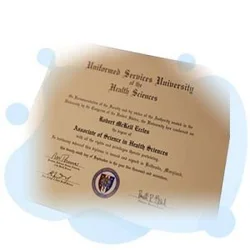
An associate degree is a great way to get started in the workforce. It can also help you transfer to a bachelor’s degree program. For example, an AS in psychology prepares students to work as a psychiatric aide or a dental hygienist.
Typically, an AS is like the first two years of a four-year degree. So, it’s a good choice if you’re thinking about going back to school.
Candidates targeting this certification can strengthen their exam readiness with our Associate of Arts degree guide 2026, which covers the key content areas and question formats tested in the official exam.
AS Practice Test Questions
Prepare for the AS - Associate In Science Degrees exam with our free practice test modules. Each quiz covers key topics to help you pass on your first try.
Associate Of Science In Biology
AS Exam Questions covering Associate Of Science In Biology. Master AS Test concepts for certification prep.
Associate Of Science In Chemistry
Free AS Practice Test featuring Associate Of Science In Chemistry. Improve your AS Exam score with mock test prep.
Associate Of Science In Environmental Science
AS Mock Exam on Associate Of Science In Environmental Science. AS Study Guide questions to pass on your first try.
Associate Of Science In Mathematics
AS Test Prep for Associate Of Science In Mathematics. Practice AS Quiz questions and boost your score.
Associate Of Science In Psychology
AS Questions and Answers on Associate Of Science In Psychology. Free AS practice for exam readiness.
Associate Degree In Computer Science
AS Mock Test covering Associate Degree In Computer Science. Online AS Test practice with instant feedback.
Associate Degree In Applied Science
AAS programs are ideal for students who want to pursue careers in specialized fields. These degrees can help them secure well-paying jobs that offer flexibility in their careers. These programs are often shorter than traditional bachelor’s degree programs. They can also provide a bridge to a bachelor’s degree in the same field.
Students who have completed an AAS degree are prepared for a career in the field of science, technology, engineering, and mathematics. These two-year undergraduate degrees are offered by community colleges and junior colleges. The program may take up to two years to complete and can lead to a variety of careers.
Unlike general associate degrees, AAS programs allow for more generous credit transfer to a four-year university. In addition, most AAS degrees are part of the Comprehensive Articulation Agreement, which allows students to transfer with junior status. The AAS is a great option for students who are interested in transferring to a four-year university to earn a bachelor’s degree. Students who graduate with an AAS can find a number of careers in the field of science, technology, engineering, mathematics, and healthcare.

AA Degree Vs AS
Both AA and AS degrees are two-year undergraduate programs that can be obtained by students who want to start their career or further their education. Both degrees have similar course requirements, including general education classes. Students must also complete laboratory classes and attend lectures. In addition to these courses, they must also submit assignments and participate in group study.
Some AS programs offer lab-intensive classes that require a weekly commitment to classroom and lab time. These courses typically award four credits each, which is different from other three-credit non lab courses. In many cases, these classes are more hands-on and require more home study. These programs are often offered by community colleges.
An AS degree is a great option for people who are looking to get into skilled occupations that pay well. This is because these degrees are designed to serve as stepping stones to bachelor’s degree programs. They can be completed in a shorter period of time than a bachelor’s degree, which can be useful for students who need to find employment right away.
Associate In Science Questions and Answers
Jobs with an associate’s degree in science:
- Nursing Assistant
- Medical transcriptionist or scribe
- Phlebotomist
- Medical assistant
- Emergency medical technician (EMT)
- Administrative assistant
- Medical biller
- Pharmacy technician
- Laboratory assistant
- Engineering technician
According to accepted guidelines, 60 semester or 90 quarter credits are the minimal amounts needed to earn an associate’s degree.
A science associate’s degree offers a foundation of expertise and information that can be useful across a range of fields. For entry-level occupations, healthcare careers, technical or technology positions, skill development, certifications, and licensing, it can be utilized as a stepping stone to a bachelor’s degree. There are many options, including transfer to a four-year college, entry-level employment, a career in healthcare, a technical or technician position, skill development, certifications, and licensure.
A degree in science is aimed toward careers in math and science, as you may have already surmised. As opposed to associate of arts (AA) degrees, which typically include a wide range of courses in the humanities, an associate of science degrees place a strong emphasis on technical abilities that will help prepare students for further study in the scientific or technological fields.
A mix of general education requirements, science core courses, math courses, laboratory requirements, and elective courses are often needed to complete an associate’s degree in science. English composition, mathematics, social sciences, humanities, and natural sciences are only a few examples of the areas covered in general education classes. Science foundational subjects are the main emphasis of core courses in biology, chemistry, physics, and earth science. Skills in quantitative reasoning are developed in mathematics lessons. Laboratory courses offer practical experience, and elective courses let students focus on particular areas of interest. However, depending on the college or organization sponsoring the program, the precise course requirements may change. For exact details on the courses needed to earn an associate’s degree in science, it is advised to speak with an academic advisor or the curriculum.
A two-year college degree at the associate level called an associate of applied science, or AAS, focuses on a specific field of applied science or technical expertise. Technical courses that are closely relevant to the students’ chosen field of study make up the majority of their coursework.
Associate of Science degree programs prepare students for professional achievement. It allows them to develop their abilities. This qualifies them for jobs with excellent earning potential. They offer instruction for careers with attractive earnings in a variety of areas.
If you are pursuing or have already completed an Associate of Applied Science (AAS) degree, which is intended for students who intend to enter the workforce following graduation, you may choose to transfer into a four-year program.
With a focus on Associate Degree in Nursing (ADN) or Associate of Science in Nursing (ASN) programs, an associate’s degree in science can be used to pursue a career as a nurse. These courses integrate classroom learning with clinical experience and often last two to three years to complete. After receiving their diplomas, graduates are qualified to sit for the NCLEX-RN exam in order to earn their nursing license and work as registered nurses (RNs) in a variety of healthcare facilities. An associate’s degree in nursing can lead to entry-level nursing work, while a BSN may be desired or necessary for some professions or prospects for promotion. For proper information, it’s crucial to examine the local specifications and speak with academic advisors or nursing regulatory organizations.
Computer science associate degrees are available. Typically, an associate’s degree in computer science imparts a core knowledge of computer systems, programming languages, software development, data structures, and computer networking. The normal length of the curriculum is two years and it blends theoretical knowledge with actual hands-on practice. Individuals with an associate’s degree in computer science are qualified for entry-level professions such as computer support specialist, web developer, and software tester. It is essential to note, however, that a bachelor’s degree is typically required for more advanced employment and professional advancement in the field of computer science.
Follow these procedures to acquire an associate’s degree in science:
- Conduct research and pick an appropriate curriculum.
- Meet the admission standards, such as possessing a high school diploma or its equivalent.
- Complete general education courses including English, mathematics, and the social sciences.
- Take science foundational classes including biology, chemistry, physics, and mathematics.
- Attend all needed classes, labs, and complete all required assignments.
- Acquire the required number of credit hours by completing course prerequisites.
- Maintain acceptable academic progress by abiding by college norms and requirements.
- Apply for graduation upon completion of all criteria.
Numerous criteria, such as your job objectives, career timeline, ability to devote time and money, and personal interests, will determine whether or not this degree is the right option for you.
An associate’s degree in science can provide a variety of job prospects in science and technology-related sectors. Graduates are eligible to apply for entry-level careers in fields such as healthcare, laboratory technology, environmental science, information technology, and engineering. They can work as technicians, supporting scientists in conducting experiments, evaluating data, and maintaining equipment. Some people may decide to continue their education and transfer their credits toward a bachelor’s degree to increase their employment opportunities. In addition, certificates in phlebotomy, medical coding, network administration, and software development are available. Overall, an associate’s degree in science provides a foundation for a variety of job pathways and serves as a springboard for future educational and professional development.
Individuals interested in pursuing professions in the science and technology industries can benefit from an associate’s degree in science. It gives a strong foundation of information and abilities that can lead to several opportunities. Healthcare, laboratory technology, environmental science, information technology, and engineering are fields where graduates can obtain entry-level employment. They can work as technicians, supporting scientists in conducting experiments, evaluating data, and maintaining equipment. The degree can also serve as a stepping stone to further study, with many students transferring credits to pursue a bachelor’s degree in a science-related profession. In addition to general qualifications, there are certifications in specialized fields. Overall, an associate’s degree in science provides a gateway to a job in science and technology and serves as a significant basis for future educational and professional development.
Students who complete a health science associate degree program will have the fundamental know-how and abilities needed to work in the healthcare industry. It covers a variety of topics, including anatomy and physiology, medical terminology, administration of healthcare, and patient care techniques. Graduates of the program are prepared for entry-level jobs as medical assistants, healthcare administrators, and medical office assistants in a variety of healthcare settings. Additionally, it acts as a springboard for subsequent study in healthcare-related subjects. In general, an associate’s degree in health science gives students the groundwork they need to start a job in healthcare or seek further education in the area.
The finishing program for the Associate of Applied Science in Business Administration equips you to meet the responsibilities and requirements of entry-level business administration positions. You can look for work as an administrative assistant, human resources assistant, payroll specialist, or customer service expert.
An associate’s degree in criminal justice administration prepares students for employment in sectors that employ security professionals. Possibilities for graduates include asset or loss prevention and security. A significant number of students pursue a bachelor’s degree in criminal justice administration.
The fundamental distinction between an associate of arts and associate of science degree is the academic concentration. The majority of AA programs emphasize liberal arts coursework, whereas AS programs emphasize math and science.
With an associate’s degree in science, you can work in a variety of fields and positions that need a fundamental knowledge of scientific concepts. You could work as a laboratory technician, research assistant, environmental technician, quality control technician, health and safety technician, technical support specialist, pharmaceutical sales representative, science education assistant, biotechnology laboratory assistant, or agriculture technician. The specific employment alternatives rely on your area of expertise and the regional labor market. To find opportunities that fit your interests and abilities, it’s crucial to research sectors and job postings in those areas.
Typically, the abbreviation for an Associate of Science degree is “A.S.” This acronym represents “Associate of Science.”
Arizona 8th-grade science students can prepare for the AzSCI state assessment with our free Arizona science assessment practice test — covering life science, physical science, and Earth science standards.
Illinois students can prepare for the state assessment with our free ISAT Illinois Science Assessment practice test — aligned to NGSS standards covering life science, physical science, and engineering design.
Child development professionals also prepare with our counselor preparation comprehensive exam 2026 to broaden their understanding of child and adolescent development.

AS: Pros and Cons
- +AS credential is recognized by employers and industry professionals
- +Higher earning potential compared to non-credentialed peers
- +Expanded career opportunities and professional advancement
- +Structured learning path builds comprehensive knowledge
- +Professional development that stays current with industry standards
- −Preparation requires significant time and study commitment
- −Associated costs for exams, materials, and renewal fees
- −Continuing education needed to maintain credentials
- −Competition for advanced positions can be challenging
- −Requirements and standards may vary by state or region
AS Associate In Science Degrees Questions and Answers
About the Author
Certified Professional Development Expert & Niche Certification Advisor
University of Pennsylvania Graduate School of EducationDr. Alexandra Kim holds a PhD in Professional Studies from the University of Pennsylvania and is a Certified Professional in Learning and Performance (CPLP) and Certified Professional in Talent Development (CPTD). With 17 years of corporate training and professional certification advisory experience, she helps professionals navigate specialized, emerging, and cross-industry certification programs.